Hungary

Kata TÜTTŐ
Member
Member of the General Assembly of Budapest Capital

PES (Party of European Socialists)


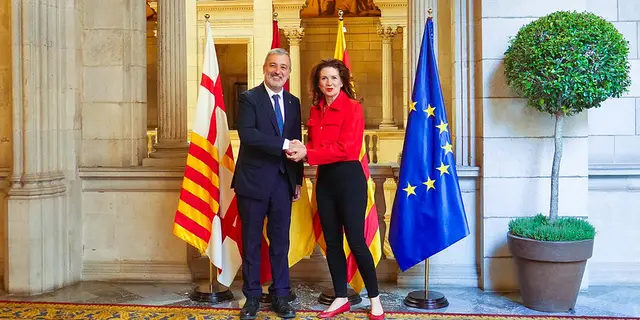
The proposal for the EU long-term budget post-2027 presented by the European Commission put regional policy at risks, warned the President of the European Committee of the Regions, Kata Tüttő, and the President of the Government of Catalonia, Salvador Illa. President Tüttő travelled to Barcelona on 25 and 26 September, where she met representatives of the Catalan government as well as the mayor of Barcelona Jaume Collboni.
Keeping Cohesion Policy decentralised, covering every European territory, with regions and cities fully involved in its design and delivery, was at the heart of the discussions between the CoR President Tüttő and the President of the Government of Catalonia, Salvador Illa, last week in Barcelona.
The publication of the proposal on the Multiannual Financial Framework (MFF) 2028-34 by the European Commission, on 16 July, includes the merge of Cohesion Policy funds with Common Agricultural Policy funds and other instruments into a single huge fund which worth 44% of the proposed MFF, with a decrease of approximately 20% compared to the current MFF 2021-27.
The negative effects of the proposal for regions and cities were assessed by President Tüttő also during her meeting with the Minister for European Union and Foreign Action of Catalonia, Jaume Duch. Both Catalonia President Illa and Minister Duch are members of the European Committee of the Regions.
The President of the European Committee of the Regions, Kata Tüttő, said: “I came to Barcelona to share this message, rooted in conviction: that cohesion policy must remain open, accessible, and embracing all regions of the European Union. The heartbeat of Europe is in its regions, and here, in the hands of regional and local authorities, the design and delivery of EU programs must continue to flourish. To centralize power in capitals would mean to dim the light of subsidiarity, and that must be resisted. The architecture of our dedicated cohesion and transition funds is not mere bureaucracy, but a framework of purpose. To merge them into a single planning instrument would risk entangling complexity, blurring priorities, and losing the clarity of vision. I am encouraged to see that the regional government of Catalonia shares this view, echoing the belief that Europe’s strength lies in our territories.”
During her mission to Barcelona, CoR President Tüttő also met the mayor Barcelona Jaume Collboni, with whom she shared concerns and possible solutions to the housing crisis in Europe. Mayor Collboni is rapporteur of an opinion on the role of cities and regions in the EU Affordable Housing Plan, adopted in May by the plenary of the European Committee of the Regions.
Additionally, on 25 September President Tüttő met the Minister for Equality and Feminism of Catalonia, Eva Menor, together with leading women from the academic, institutional, associative and international spheres to share reflections on the challenges in the field of gender equality and strengthen collaboration between Catalonia and European institutions.
Hungary
Member
Member of the General Assembly of Budapest Capital
The Committee of the Regions welcomes the Affordable Housing Act proposed by the European Commission as an important step towards providing cities and regions with the legal certainty they have long…
The President of the European Committee of the Regions (CoR), Kata Tüttő, and the CoR’s rapporteur on Housing Plan, Jaume Collboni, Mayor of Barcelona, had welcomed the publication today of the…

The President of the European Committee of the Regions (CoR), Kata Tüttő, and the CoR rapporteur Isabelle Boudineau, addressed EU Ministers gathered for an informal meeting in Warsaw, calling for a…
