The State of Regions and Cities in the European Union
A snapshot of the most pressing challenges faced by regions and cities across the Union, that helps to inform EU policy decisions.
Brussels (Belgium)
14:00 - 16:30 (Brussels time)
On this page
State of Regions and Cities address
"This annual report shows the pain and pressure points of our people and our territories — but it also recognises ambition, leadership, creativity, and innovation capacity. It shows how Cohesion Policy is helping us keep Europe strong from the inside. This policy is Europe’s most concrete, decentralised, and long-term stabilising tool, that binds us together through values and through shared investments in each other’s futures. It is Europe’s resilience strategy. The new budget proposal threatens to nationalise it, defund it, and disconnect it from Brussels, forcing regions and farmers into a “Hunger Games” competition for resources. This is why we are all mobilised for the future of cohesion."
Kata TÜTTŐ, President of the European Committee of the Regions
On 13 October 2025, the European Committee of the Regions published the sixth edition of its EU Annual Report on the State of Regions and Cities. This report offers a comprehensive snapshot of the most urgent challenges facing Europe’s territories, alongside local solutions that inform policy decisions for the Union’s future.
The President of the European Committee of the Regions, Kata TÜTTŐ, held the "State of Regions and Cities" address during the opening of the European Week of Regions and Cities, drawing on the findings of the annual report.
In line with the new political priorities of the CoR for 2025–2030, the 2025 annual report takes stock of how regions and cities perceive and respond to the climate and energy crisis, demographic transition, investment needs, their future competitiveness and preparedness for future crises. It also underscores the pivotal role of local and regional authorities in delivering Europe’s long-term transformations and in building a more cohesive, resilient, and closer Union.

©European Union / Vincent Duterme
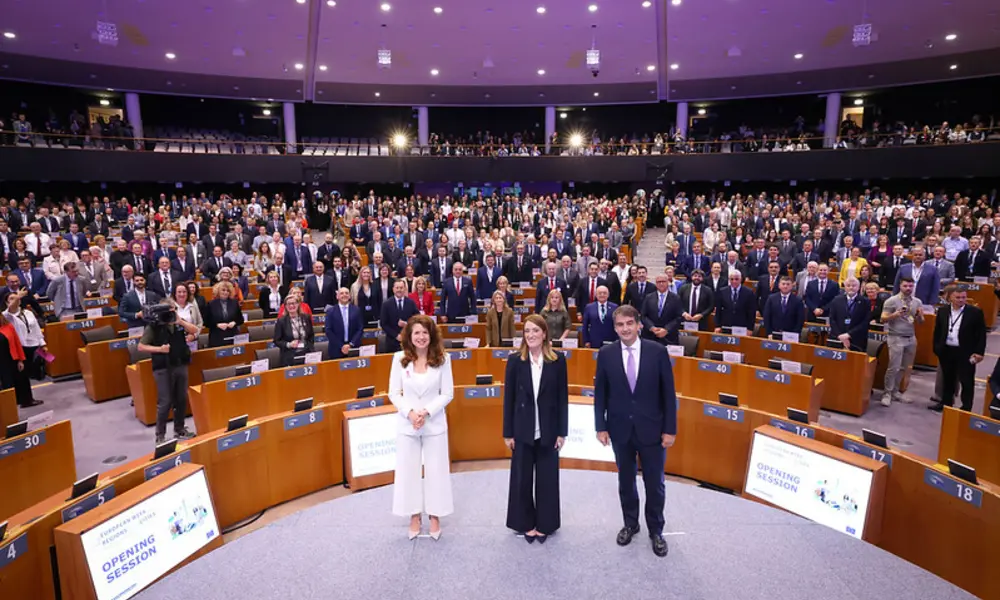
© European Union / Octavian Carare
Among the emerging challenges, this year, housing stands out as a growing concern among citizens and for both their cities and regions. As the annual report shows, the housing challenge is a structural one that affects territorial cohesion, economic competitiveness, and the well-being of millions of European citizens.
Further, this year, the publication of the annual report coincides with the debate on the Multiannual Financial Framework (MFF) for 2028–2034. In this context, the CoR stands ready to advocate for a budget that empowers regions and cities, reinforces territorial solidarity, and ensures that no place or person is left behind. At the same time, the Committee also highlights the risk of renationalisation and centralisation of EU policies, particularly regarding cohesion funding and calls for a Union built from the ground up – where local and regional authorities are not only implementers but co-creators of Europe’s future.
Highlights of the 2025 EU Annual Report
Access the 9 highlights from the 2025 EU Annual Report on the State of Regions and Cities. Please note that the digital story is only available in English.

© European Union / Octavian Carare
Publications
Regional and Local Barometer
The Flash Eurobarometer survey, commissioned by the European Committee of the Regions and conducted by Ipsos, gathers insights from over 3,300 EU regional and local politicians representing a highly diverse set of constituencies at various levels of government.
The survey offers a platform for local leaders—many of whom are not engaged with the CoR—to express their views and awareness on EU funding, priorities for addressing economic and social instability, and actions taken by local authorities in response to crises and climate change.
Readers will find a visual summary of EU-wide results in English, along with country-specific factsheets comparing national data to the EU average, available in all official languages.
Latest news
-
The European Committee of the Regions (CoR) has published the sixth edition of the EU Annual Report on the State of Regions and Cities, which was presented by President Kata Tüttő on 13 October at…