Theresa Sostmann
Theresa.Sostmann@cor.europa.eu

The Single Market remains a cornerstone of European prosperity, supporting millions of jobs and ensuring fair prices, and opportunities for businesses and consumers across all regions. In this context, members of the Commission for Economic Policy (ECON) adopted a draft opinion on the Single Market Strategy during their meeting on 27 November, calling for a long-term vision with concrete objectives and a rapid implementation of overdue reforms to cut red tape and modernise rules.
Single Market Strategy
Local and regional authorities are indispensable for implementing single market rules. In this regard, ECON members adopted the draft opinion on a Single Market Strategy, demanding the systematic involvement of regions and cities in all stages of policy design and enforcement while calling for the rapid removal of the “terrible ten” barriers by 2027, backed by clear performance indicators, milestones and stronger enforcement. They also stressed that persistent obstacles still undermine the single market’s potential and demanded more effective tools to prevent new barriers from emerging. ECON members further supported the commitment to reduce administrative burdens by at least 25% and stressed that SMEs and microenterprises must be able to fully benefit from the single market, with easier cross-border service provision, better recognition of professional qualifications and genuinely user-friendly digital tools that reduce administrative complexity.
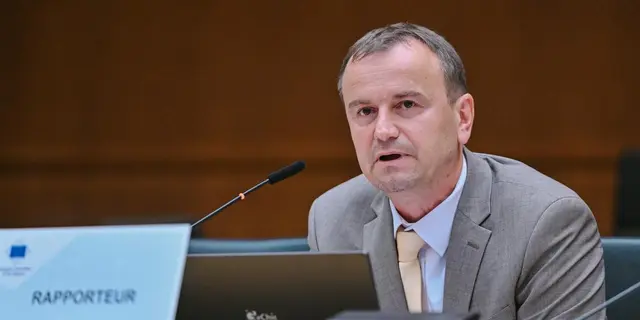
Rapporteur Lorenzo Galligani (IT/ECR), Councilor of Pistoia: “Every day, companies face new obstacles, slow procedures and uncoordinated regulations when attempting to expand outside national borders. Workers are barred from moving to work in another Member State as their qualifications are not recognised. The single market is one of our greatest achievements, a source of competitiveness, cohesion and resilience, but much work remains to be done: we must cut red tape, improve enforcement, simplify and harmonise regulations with a strong territorial dimension, where all regions and companies, even SMEs with fewer than 10 employees, can reap the benefits of the single market.”
Also during the meeting
ECON members held a first exchange of views on the draft opinion on the European Chemicals Industry Action Plan, led by Frederiek Vermeulen (BE/EPP), Member of the Council of the Municipality of Ichtegem, stressing the crucial role of regions and cities in implementing the Plan and the need for stronger EU support, clearer and streamlined permitting rules, adequate funding for energy-grid upgrades, targeted investment in skills and innovation ecosystems, and a formalised role for LRAs in the Critical Chemicals Alliance to ensure that territorial needs are fully reflected in the sector’s transformation.
They further held a first exchange of views on the draft opinion on the Single Market and Customs Programme, led by Emma Blain (IE/EPP), Councillor of the Dublin City Council, during which they highlighted that the Programme is crucial for strengthening and modernising the Single Market, enhancing cross-border cooperation and digital systems, supporting crisis resilience, and ensuring that regions and cities can fully benefit from a more integrated, efficient and fair EU economic framework.
Sari Rautio (FI/EPP), rapporteur for the opinion on ‘Multiannual Financial Framework (MFF) post 2027, including the own resources package, actively participated in the meeting presenting her work to ensure a coherent and coordinated position across the CoR commissions on the ongoing work on the MFF opinions.
During the meeting, ECON members appointed rapporteurs on the following dossiers:
Pablo Gustaves Broseta Dupré, (ES/EPP), Vice-Minister for Representation to the European Union and the Spanish Autonomous Regions of the Government of the Region of Valencia, as the new rapporteur on the European Competitiveness Fund
Pehr Granfalk (SE/EPP), Member of Municipal Council of Solna, as rapporteur on the Digital simplification and the Data Union Strategy
Branislav Zacharides (SK/ECR), Mayor of Vrútky, as rapporteur on European Business Wallets
Tadeusz Truskolaski (PL/EA), Mayor of the City of Białystok, as rapporteur on the EU Defence Industry Transformation Roadmap
Background
On 20 May, the European Commission presented a Single Market Strategy to create a simpler, more seamless and strong European home market. The Strategy sets out actions to reduce existing barriers holding back intra-EU trade and investments, aims to help SMEs operate and scale up their activities, and to alleviate burdens for businesses by boosting digitalisation. The Strategy calls on Member States to do their part in making the EU single market the best choice for companies, workers, and consumers.
The European Commission presented on 8 July the European Chemicals Industry Action Plan to strengthen the competitiveness and modernisation of the EU chemical sector. The Action Plan addresses key challenges, namely high energy costs, unfair global competition, and weak demand, while promoting investment in innovation and sustainability.
The Single Market and Customs Programme, presented by the European Commission on 3 September, as part of the second package of the Multiannual Financial Framework 2028-2034, aims to build a Single Market working better for citizens, consumers, and businesses, supported by strong Customs Union enhancing Europe’s economic security.
Theresa.Sostmann@cor.europa.eu

Italy

Member
Councillor of Pistoia



Belgium

Alternate
Member of the Council of the Municipality of Ichtegem

The European Committee of the Regions adopted an opinion on the EU Inc. Framework during its plenary session on 2 July, calling for a European company framework that enables all regions and cities to…
Digital transformation is a key driver of European competitiveness and a cornerstone for economic productivity. However, excessive regulatory burdens remain a major challenge for European businesses,…
Strengthening Europe’s competitiveness and resilience through advances in digital transformation, cybersecurity, and industrial policy while ensuring that local and regional authorities are…