SEDEC members use strategic foresight to explore intergenerational fairness
On this page
- Constitutional and Institutional Affairs
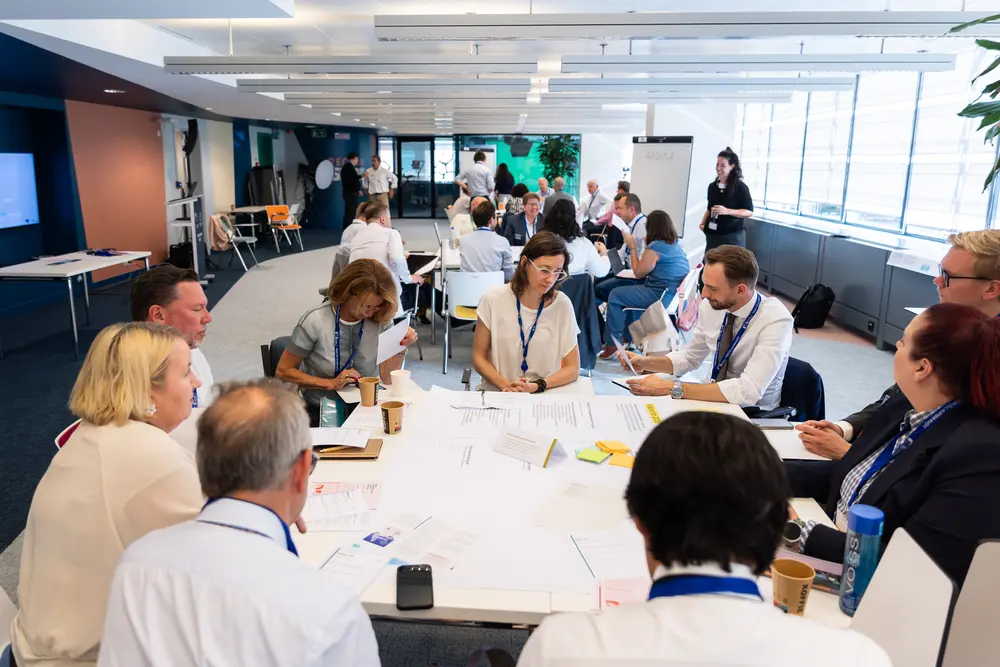
What could a fair place look like in 2050, and what choices could help us get there? This was the question CoR members explored during a foresight workshop on 29 September, organised by the SEDEC Commission, the CoR's foresight team, and the European Commission's Joint Research Centre (JRC). Building on the CoR opinion and the Commission's Strategy on Intergenerational Fairness, the exercise explored how regions and cities can create fair opportunities for current and future generations, regardless of where they live.
The workshop brought together fifteen politicians, five youth representatives, and five political advisors. Working in three subgroups, participants stepped into the shoes of personas representing different generations and living in different territorial settings, from metropolitan areas and medium-sized cities to rural and peripheral regions. Through a visioning exercise, they imagined places where people would want to stay, return, or build their future. They then used backcasting to identify the changes needed over the next 25 years to turn these visions into reality. Finally, they explored practical actions that citizens, different generations, and decision-makers could take to help make these futures possible.
The ideas generated during the workshop will help follow up on the CoR opinion on intergenerational fairness and advance the debate on fair places. They will also contribute a local and regional perspective to the Commission's "Voices of the Future" initiative and the ongoing debate on the "Right to Stay" strategy.
Beyond its policy-reflection outcomes, the workshop gave members the opportunity to experience the foresight methods and consider how they could be applied by their own administrations to organise intergenerational dialogues.
To support further reflection, the participants will receive the JRC's forthcoming handbook on future-oriented policymaking. The handbook is designed to help public authorities incorporate long-term thinking into decision-making and includes practical foresight tools and case studies from across Europe.
The debate on intergenerational fairness will continue at the CoR's October plenary session with Commissioner Micallef and during the European Week of Regions and Cities, where the CoR will host a foresight workshop on youth participation and future-oriented policymaking.
Members who participated in the exercise:
Mikko Aaltonen, Matteo Luigi Bianchi, Ante Bilić, Emil Boc, Nuška Gajšek, Tom Jungen, János Ádám Karácsony, Anne Karjalainen, Pär Löfstrand, Markku Markkula, Hugo Martins, Heike Raab, Tine Radinja, Fauzaya Talhaoui and Tadeusz Truskolaski
Members
-
-

-
Romania

Emil BOC
Member
Mayor of Cluj-Napoca Municipality, Cluj County
 EPP (European People's Party)
-
-

-
Hungary

János Ádám KARÁCSONY
Member
Vice-President of the County Council of Pest Vármegye
 ECR (European Conservatives and Reformists Group)
-
Finland

Anne KARJALAINEN
Member
Member of the Kerava City Council
 PES (Party of European Socialists)
-

-

-

-
Germany
Heike RAAB
Member
Member of Cochem Collective-Municipality Council
PES (Party of European Socialists)
-
Slovenia
Tine RADINJA
Member
Mayor of the Municipality of Škofja Loka

-
Belgium
Fauzaya TALHAOUI
Member
President of the Council of the Province of Antwerp
PES (Party of European Socialists)
-