Luxembourg

Roby BIWER
Member
Councillor of the Municipality of Bettembourg

PES (Party of European Socialists)


Representatives of national governments are currently gathering in Yerevan, Armenia for the UN biodiversity conference - CBD COP17, from 19 to 30 October 2026 - to try to speed up the lagging delivery of the 2030 biodiversity targets. In Yerevan, the delegation of the European Committee of the Regions (CoR) has underlined the EU cities’ and regions' contribution to protecting nature, restoring ecosystems and implementing the global biodiversity, water and climate agendas.
The Kunming-Montreal Global Biodiversity Framework adopted in 2022 sets out ambitious targets at global level, notably to restore 30% of all degraded ecosystems and to conserve 30% of land, inland waters and marine and coastal areas. However, the message of the first global review is clear: the world is not on track to reverse biodiversity loss, and the progress towards all the 23 targets set for 2030 remains insufficient.
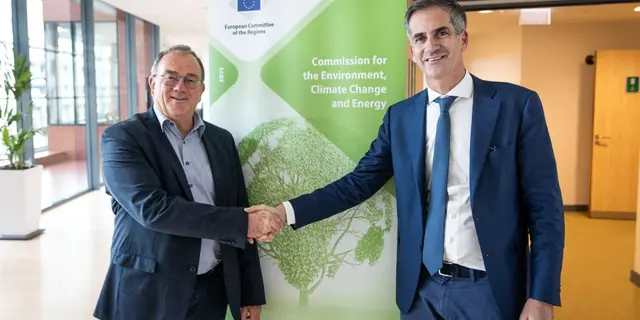
The importance of local and regional governments is explicitly recognised in the Global Biodiversity Framework, and the CoR expects the CBD COP17 to strengthen their formal engagement in the process and in the national biodiversity strategies and action plans. EU regions and cities are represented in Yerevan by two CoR members: Kostas Bakoyannis (EL/EPP), member of Athens City Council and chair of the CoR’s Commission for the Environment, Climate Change and Energy (ENVE), and Roby Biwer (LU/PES), Councillor of the Municipality of Bettembourg.
Speaking at the 9th Summit for Subnational Governments and Cities in Yerevan on 24 October, ENVE chair Bakoyannis underlined the need to ensure adequate financial and technical support for subnational biodiversity action. With the UNFCCC COP31 beginning in Türkiye in just two weeks time, he also called for a strengthening of links between policies on biodiversity, climate action, water resilience, land restoration and sustainable development.
"Cities and regions are not simply stakeholders in biodiversity policy. They are indispensable actors in its delivery.The success of the Global Biodiversity Framework will ultimately be measured by cleaner rivers, healthier ecosystems, thriving pollinator populations, greener and more liveable cities, and more resilient communities.That is why the voice of cities and regions matters.Achieving the targets requires the contribution of all levels of government, as well as greater coherence between biodiversity, climate, water and sustainable development agendas", Mr Bakoyannis said.
This evening (26 October), the CoR is organising, together with the European Economic and Social Committee (EESC), a side-event in Yerevan on Subnational governments and civil society organisations living in peace with nature: a global pathway for prosperity with Roby Biwer providing the opening remarks. He will also participate in a briefing with the European Commission’s lead negotiator, the EESC and the European Parliament delegation. In recent days, the CoR delegation has met local and regional representatives from California, Yerevan, Quebec, Île-de-France, Scotland, Paraná and Berlin and key organisations such as the International Union for Conservation of Nature (IUCN).
Reflecting the growing recognition of the role of subnational governments in biodiversity, the CoR has been invited for the first time to take part in the High-Level Segment of the COP17 which will bringing together ministers, heads of international organisations, financial institutions and representatives of indigenous people, local communities, civil society and the private sector.
More information
Contact:
Lauri Ouvinen
Tel. +32 473536887
Luxembourg
Member
Councillor of the Municipality of Bettembourg
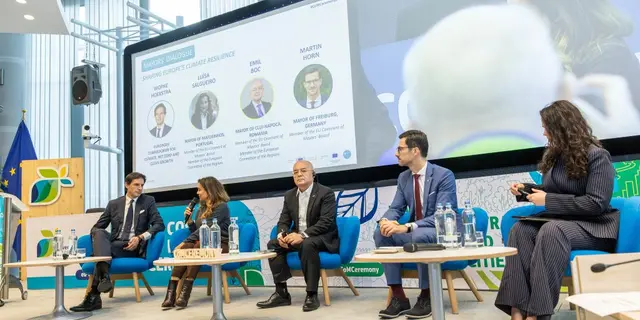
Several members of the European Committee of the Regions participated in this year’s EU Covenant of Mayors Ceremony in Brussels on 15 October. The event organised right after the European Week of…
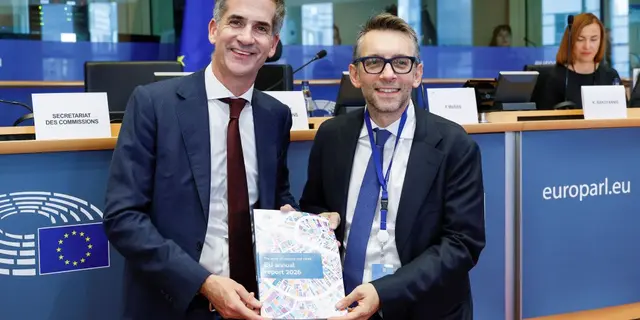
Members of the European Parliament's ENVI Committee and the Committee of the Regions' ENVE Commission met today, 12 October, to discuss the EU’s next multiannual budget.
Last summer's record heatwaves, wildfires and other extreme weather events across Europe again proved the urgency to tackle climate change and strengthen resilience at all levels of government…