Spain
Margarita PROHENS RIGO
Liige
President of the Balearic Islands Government

EPP (European People's Party)

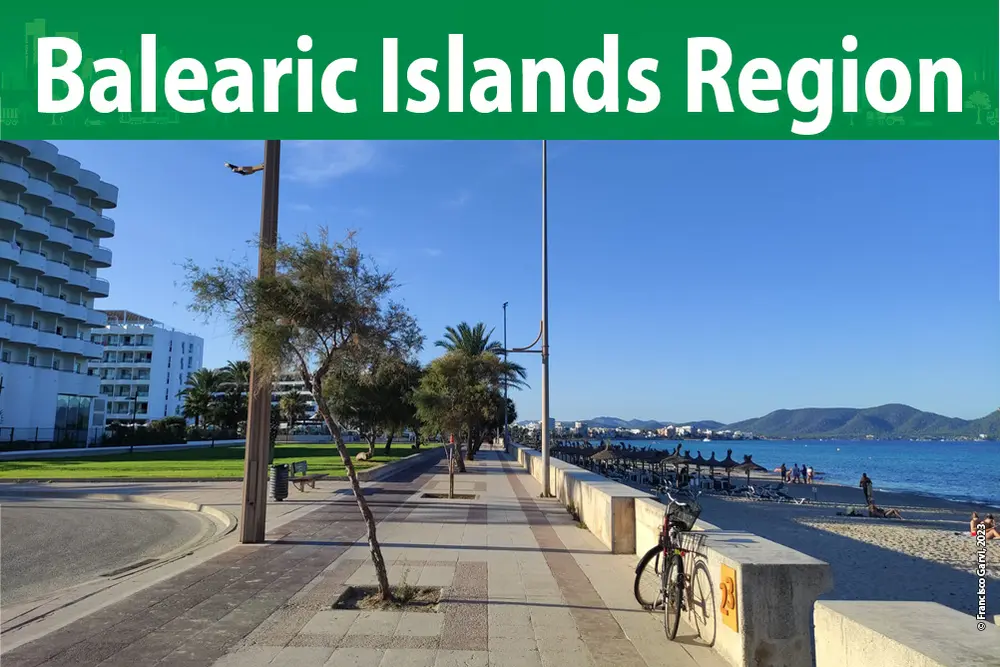
The LIFE AdaptCalaMillor project advances solutions for adapting urban beaches to climate change, integrating science, governance, and community action to build a resilient future.
The LIFE AdaptCalaMillor project is a governance initiative aimed at promoting climate change adaptation in the beach system and urban area of Cala Millor Bay. Its primary objective is to enhance the long-term resilience of infrastructure, ecosystem services, and socio-economic activities against climate change impacts.
Running from 2023 to 2027, this ambitious project will focus on science-based methodologies, participatory approaches, and innovative governance models to:
Cala Millor Bay will serve as a pilot case for other Mediterranean tourist destinations, advancing solutions for urban beach adaptation—from scientific risk assessment to the implementation of tangible, transformative actions with real societal and developmental impact.
Climate change is reshaping coastal dynamics, altering wave patterns and accelerating sea-level rise (SLR). These shifts may push wave-breaking zones closer to shore, disrupting the submerged beach’s dynamic equilibrium and, in turn, urban morphology and coastal economies.
Beaches—already highly vulnerable to mean sea-level rise (MSLR) and erosion—face heightened risks in urbanised areas, where limited space for adaptation and intensive development further reduce resilience. The Mediterranean, with its above-average coastal population growth, is particularly exposed.
In regions like the Balearic Islands, where tourism-driven urbanisation dominates, climate impacts threaten not only ecosystems but also economic stability. Recent studies warn of significant losses in recreational value, directly affecting the region’s Gross Domestic Product (GDP).Given the complexity of coastal management—involving multiple stakeholders—an integrated, sustainable approach is essential. Urgent action is needed to deploy transformative, consensus-based adaptations that safeguard both the environment and coastal economies.
Between 2018 and 2021, the Coastal Observation and Prediction System of the Balearic Islands (SOCIB), the Mediterranean Institute for Advanced Studies (CSIC-IMEDEA), and the University of the Balearic Islands (UIB) collaborated on the "Coasts by Change" project. This study assessed SLR impacts and risks, revealing that:
In parallel (2019–2021), IHCantabria (University of Cantabria), SOCIB, and MedCities developed a Strategic Plan for Coastal Protection in the Balearic Islands, identifying:
The strategy underscores the need for short-, medium-, and long-term research to ensure the feasibility of nature-based adaptation solutions.
Spain
Liige
President of the Balearic Islands Government
ENVE works in fields related to the European Green Deal, which include the environment biodiversity, circular economy, zero pollution, climate change, energy, and space policies.

Francina ARMENGOL I SOCIAS

Francina ARMENGOL I SOCIAS
