Europeiska regionkommittén antog ett yttrande om EU Inc.-ramen vid sin plenarsession den 2 juli, där man efterlyste en ram för europeiska företag som gör det möjligt för alla regioner och städer att…
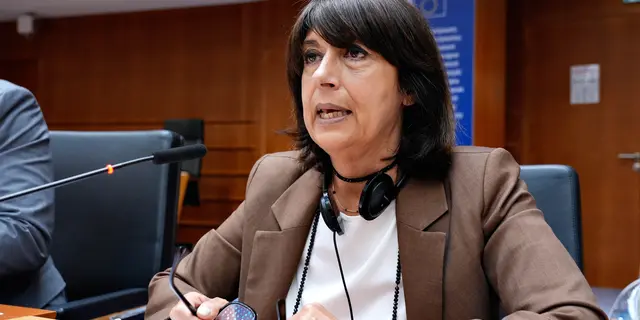

Promoting the development of a sound and business-friendly entrepreneurial ecosystem for small and medium-sized enterprises (SMEs), the competitiveness of the EU and the achievement of the Sustainable Development Goals (SDGs) at local level were on the agenda of the meeting of the commission for Economic Policy (ECON) of the European Committee of the Regions (CoR) on 6 December.
Small and medium-sized enterprises
SMEs face major uncertainties in the current volatile economic context, with implications on supply constraints, labour shortages and competition that is not always fair. In a draft opinion on the SME Relief Package and BEFIT, members of the ECON commission called for local and regional authorities to be recognised as crucial actors that ensure a business-friendly entrepreneurial ecosystem for SMEs, providing stable regulations and regional networks and clusters.
They further stressed that most European SMEs are investing in their sustainable transition, though they generally struggle with accessing finance for this and with related reporting requirements. The capacity of banks to fulfil sustainable financing should be substantially increased through incentives and simplified regulation, the draft opinion states.
Strong regional ecosystems further need to be connected on a European level by international knowledge exchange between SMEs and regional governments. ECON members highlighted the importance of new tools to be developed such as the creation of Regional Innovation Valleys, so that SMEs can take the advantage of funding and collaboration opportunities linked to it.
The opinion is scheduled to be adopted during the January 2024 CoR plenary session.
European competitiveness and the Single Market
In a debate on the Single Market and the European competitiveness, ECON members highlighted that a new balance is needed between the objectives of increased global competitiveness of the EU, the need to preserve the integrity of the single market and the need to enhance economic, social and territorial cohesion. They stressed that a majority of less-developed regions continue to catch up, but many transition regions are still falling behind. Employment rates are higher than ever before, but regional disparities remain high, and pockets of deprivation persist, even in prosperous regions. In light of two upcoming reports by the European Commission on the future European competitiveness and the future of the Single Market, members made clear their demand that the instrumental role played by regions and cities fields needs to be acknowledged.
Sustainable Development Goals
During the meeting, ECON members stressed in a debate that while the implementation of SDGs at local and regional level is a real success story, it nonetheless highlights the slower progress at EU and national level, with not one country being on track to reach its SDGs by 203, hampered by the lack of any overarching EU strategy even at this mid-way point in the implementation. Members regretted that no additional efforts to accelerate implementation are foreseen by the European Commission.
The debate took place one day after the final event of the Regions2030 Pilot Project which marks an end to a collaborative effort between the European Commission, European Parliament, and 10 pilot regions to co-design an indicator set for monitoring the SDGs at the regional level in Europe. Among these 10 pilot regions was Puglia, whose President and CoR member, Michele Emiliano shared the added value to pool expertise with the EU level and other regions to define a comprehensive monitoring framework for SDGs and speed up action on the ground. President of Helsinki region and CoR Vice-President, Markku Markkula, called on the European Commission to better integrate regional results in the EU monitoring report which is the basis for EU recommendations for reform to Member States. MEP Petros Kokkalis announced that there will be a follow-up to this project with a focus on implementation, targeting all EU regions.
Also during the meeting
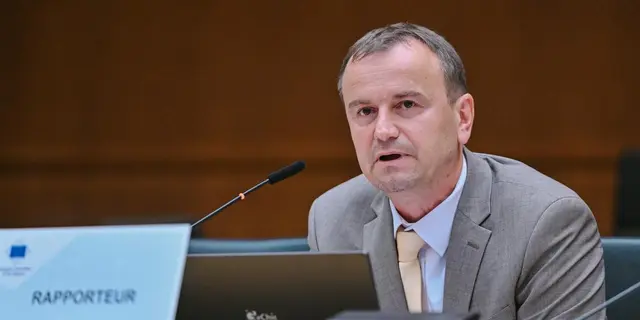
ECON members appointed Tom Jungen (LU/PES), Mayor of the Municipality of Roeser, as rapporteur on the opinion on Enhancing the European Administrative Space (ComPAct).
Quote:
Rapporteur Kate Feeney (IE/Renew), member of Dún Laoghaire-Rathdown County Council, said: “I welcome the SME Relief Package, SMEs are the backbone of many rural and regional towns and cities. They represent 99% of all businesses and provide two thirds of the jobs in the private sector in the EU and they require our ongoing and persistent support."
More information:
On 12 September 2023, the European Commission delivered the SME Relief Package, made up of a series of measures designed to provide companies with short-term relief, boost their long-term competitiveness and ensure fairness in the EU Single Market. Two key legislative initiatives presented as part of the Package aim to ensure that businesses are paid on time and to simplify income tax procedures for SMEs that operate across the borders.
In her State of the Union speech on 13 September, Commission President Ursula von der Leyen announced that she appointed Mario Draghi, former Prime Minister of Italy, to prepare a report on the future of the European competitiveness. The report is looking at the challenges facing industry and companies in the European Single Market.
The European Council of 30 June 2023 called for an independent High-Level Report on the future of the Single Market to be presented at its meeting of March 2024 which will be drafted by Enrico Letta, former Prime Minister of Italy. The Single Market, created 30 years ago, is the cornerstone of European integration and a source of common wealth. Given the particularly conflictual, volatile and complex nature of today's world, strategic reflection and concrete and ambitious recommendations will be the focus of the report.
Regions2030 Pilot Project – Rewatch the event here
Rewatch the ECON meeting here
Europeiska regionkommittén antog ett yttrande om EU Inc.-ramen vid sin plenarsession den 2 juli, där man efterlyste en ram för europeiska företag som gör det möjligt för alla regioner och städer att…
Den digitala omvandlingen är en viktig drivkraft för europeisk konkurrenskraft och en hörnsten för ekonomisk produktivitet. Överdrivna regelbördor är dock fortfarande en stor utmaning för europeiska…
Att stärka Europas konkurrenskraft och resiliens genom framsteg inom digital omvandling, cybersäkerhet och industripolitik, samtidigt som man säkerställer att lokala och regionala myndigheter får…
