Romania

Emil BOC
Member
Mayor of Cluj-Napoca Municipality, Cluj County

EPP (European People's Party)

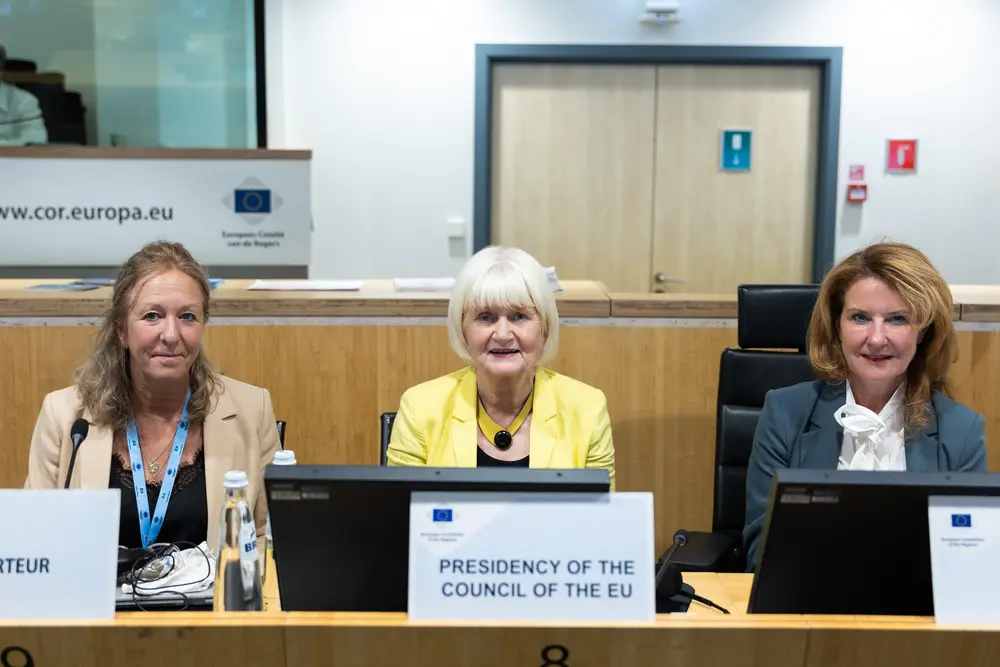
Debates highlight need for adequate funding in the EU’s next long-term budget.
Local and regional leaders on 30 September called for a stronger social Europe during a meeting of the Commission for Social Policy, Education, Employment, Research and Culture (SEDEC) that debated job skills, lifelong learning, disability rights, social inclusion and innovation.
Skills for the Future
SEDEC members held an exploratory debate on the opinion ‘Skills for the Future’ with Marian Harkin, Ireland’s Minister of State at the Department of Further and Higher Education, Research, Innovation and Science representing the Irish Presidency of the Council of the EU. The opinion, which was referred to the European Committee of the Regions (CoR) by the Irish Presidency of the Council of the EU, is due for adoption at the CoR’s plenary session on 14 October. The opinion highlights lifelong learning and the ability to adapt to changing skills needs as keys to strengthening the EU’s competitiveness.
Local and regional leaders emphasised the need for stronger basic and digital skills, AI literacy, accessible training opportunities and support for local and regional authorities (LRAs) in their efforts to foster skills ecosystems. They stressed that adequate investment in skills and lifelong learning under the EU’s next long-term budget (2028-34) will be essential if all regions are to benefit from the digital transition.
Ireland’s Minister of State Marian Harkin said: “The Irish Presidency thanks the Committee of the Regions and the SEDEC Commission for this opinion on 'Skills for the Future. Skills policy needs to be grounded in the realities of people, businesses and communities, and the Committee of the Regions brings invaluable regional expertise to this debate. I greatly welcome the contribution as we work to ensure that Europe’s skills systems remain responsive, inclusive and ready for the future.”
Rapporteur Karolien Grosemans (BE/EA), member of the Flemish Parliament, said: “Europe’s future depends on whether people have the skills to adapt to a rapidly changing world. That starts with strong basic skills and continues throughout life. Regions and cities are essential in bringing education, training and employers together, so that opportunities reach people wherever they live.”
Enhancing the strategy for the rights of persons with disabilities up to 2030
In a draft opinion adopted at the meeting, SEDEC members welcomed the European Commission’s enhanced Strategy for the Rights of Persons with Disabilities up to 2030. They called for stronger action to remove persistent barriers and stressed the need to fully involve regions and cities in delivering the strategy on the ground. They underlined that a robust European Social Fund in the EU’s 2028-2034 budget is vital for LRAs as they endeavour to turn the Strategy into practice.
Rapporteur Jack Murray (IE/Greens & Progressives), member of Donegal County Council, said: “People with disabilities must be able to participate fully and equally in every aspect of society. Local and regional authorities have a vital role in making that a reality and must be properly equipped and supported to do so. It is time to turn rights and commitments into implementation in the form of meaningful improvements in people’s everyday lives, through independent living, accessible services, equal opportunities, and effective local delivery. Guided throughout by the principle of ‘nothing about us without us’, persons with disabilities must be able to participate meaningfully in all decisions that affect their lives.”
Presentation of the new European Social Inclusion Award
During the meeting, the European Commission presented the new European Social Inclusion Award, a flagship initiative on the fight against poverty. Prizes will be awarded to local social inclusion initiatives in three categories from cities and regions of different sizes across Europe. The first edition, planned for 2027, will focus on the European Child Guarantee; the CoR will support the selection process and the organisation.
Debate on the state of the social economy
Regions and cities discussed the state of play of the social economy and the tools available to help local and regional authorities tap into its growth potential. Social economy organisations (cooperatives, associations, foundations, mutuals) employ roughly 11.5 million people across the EU, and provide housing, care and other essential services. With one in three Europeans having benefited from the social economy, SEDEC members called for stronger support for LRAs, so that they can help the sector grow and deliver tangible benefits for citizens and communities.
Debate on the research and Innovation in the 2026 European Semester Spring Package
SEDEC members also held a debate on research and innovation in the 2026 European Semester Spring Package. They called for adequate funding, more support for regional innovation ecosystems and for regions to be systematically involved in the shaping of reform programmes. Members also stressed that the EU’s 2028-2034 budget must address local and regional needs and help close Europe’s innovation gap.
Also during the meeting, SEDEC members appointed two new rapporteurs:
Background
Contact:
Ângela Machado
Tel: +32475413158
Romania
Member
Mayor of Cluj-Napoca Municipality, Cluj County

Italy

Alternate
Mayor of L’Aquila

Ireland

Alternate
Councillor, Donegal County Council