Wioletta Wojewodzka
wioletta.wojewodzka@cor.europa.eu

Importance of involvement of regions and cities and support for local democracy highlighted as major contributors to success.
Critical lessons for the future of the European Union can be drawn from the challenges and successes of the Union's 'Big Bang' enlargement in 2004, regional and municipal leaders underlined in a debate at the European Committee of the Regions on 8 October. They argued that European integration is a source of European peace and prosperity. Cohesion policy remains an important tool for the EU to reduce territorial disparities and a precondition for a successful future enlargement.
The reflections come at a point when enlargement has moved significantly up the political agenda, with the opening of accession talks with Ukraine and Moldova this summer and the recognition of Georgia and Bosnia-Herzegovina as candidate countries. There are now nine candidate countries and one potential candidate, the highest number since 2004, and enlargement, together with the war in Ukraine, are expected to have a formative influence on the work of the incoming European Commission, European Council and European Parliament.
Among the lessons highlighted were the importance of empowerment of and capacity-building for local and regional governments in the enlargement process, as municipalities and regions are involved in the implementation of around 70% of EU legislation, half of public investment and a third of public spending. Local democracy was also identified as an area that needs to be prioritised, to ensure that rule-of-law reforms demanded by the EU take deeper roots.
The debate was led by several members of the CoR, as well as by leaders of local and regional governments from Ukraine and Northern Macedonia.
Speakers recalled that the enlargement of 2004 entailed reforms within the EU and foresaw the need for further reforms in order to accommodate future members. They emphasised, though, that the EU's deeper political and economic engagement was an investment in geopolitical stability and economic growth, with profound benefits to both future and existing members. The war against Ukraine has amplified the need for a larger area of geopolitical stability and economic integration, members suggested.
There was praise for the transformative effects of EU membership on infrastructure, health and environmental protection, and waste management, as well as appreciation of the EU's efforts to support agriculture, protect social rights, extend consumer rights, and increase freedom of choice.
Members also underscored the value of a culture of cooperation fostered by the EU, from cross-border regional projects to policing. This summer's devastating floods in central and eastern Europe, in Italy and wildfires in southern Europe were cited as examples where EU-wide solidarity has been critical.
Quotes:
Vasco Alves Cordeiro, President of the European Committee of the Regions: "Enlargement is not only a moral duty, it is a geopolitical necessity and a strategic move essential for our future. To prepare for it, we need regions and cities both in Member States and candidate countries to work hand in hand. The 2004 enlargement represented a real turning point in the history of Europe, from which we must learn. In these past 20 years, many of our regions and local communities have experienced impressive economic development and upwards social convergence, also thanks to EU cohesion policy. This demonstrates how important it is to strengthen this policy and to prepare cities and regions in candidate countries ahead of the future enlargement."
Marek Woźniak (PL/EPP), Head of the Polish delegation in the CoR: "The biggest enlargement of the European Union in 2004 benefited not only the 10 new countries that joined then, but also the other members. I am glad that today we can celebrate this historic event and share our experiences of the last 20 years. During this time, the economy of the whole Union has grown by almost 30% and Europe's voice has gained strength on the international stage."
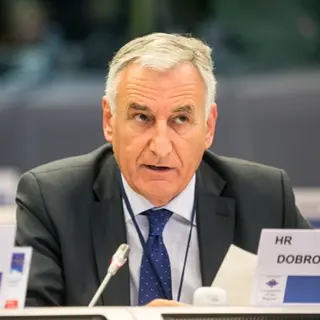
Nikola Dobroslavić (HR/EPP), CoR rapporteur on the Enlargement package 2023 (for Western Balkans and Türkiye): "Both the enlargement of 2004 and those of 2007 and 2013 were a success both for the EU and for the new members. In the current geopolitical situation, it became even clearer the importance of completing the reuniting of Europe. The enlargement countries should become EU members, but they must meet the criteria for membership, in a merit-based process. It is not possible to join the EU without the compliance with EU foreign and security policy, which is the case with Serbia, or without ensuring the equality of the constituent peoples in Bosnia and Herzegovina. EU should continue encouraging and helping the enlarging countries, demanding a proper position and role for the LRAs in those countries, and enabling their better cooperation with the CoR.”
Antje Grotheer (DE/PES), CoR rapporteur on the Enlargement Package 2023 (for Ukraine, Moldova and Georgia): "European integration is successful as a peace-project to which many people and countries still aspire, not least because of the continuous challenge of enlargement. It means that both existing and prospective member states, as well as the EU's institutions, need to continuously develop and improve. This brought us to the enlargement 2004, but will be at least as true for the coming years."
Tetiana Yehorova-Lutsenko, Leader of Kharkiv Regional Council and President of the All-Ukrainian ssociation of the District and Regional Councils: "The enlargement of the European Union in 2004 was an important milestone in the unification of Europe, opening up new opportunities and prospects for the countries of Central and Eastern Europe. It has also served as a model for countries seeking EU membership, including Ukraine, which is currently a candidate for accession. The EU's enlargement in 2004 was a milestone in the history of European integration. For Ukraine, this experience is not only an example of successful unification, but also an opportunity to take into account all the lessons to ensure effective preparation for EU membership and become a strong, stable and reliable partner for the European Union. Ukraine is now on the path of transformation, even in the face of external armed aggression by the Russian Federation. No other country has ever experienced a full-fledged armed conflict on its territory during the period of accession to the European Union. However, Ukraine is making every effort to implement the reforms necessary to join the EU, and we adhere to all the criteria and values of the European Union. The previous enlargement of the European Union makes us aware of the importance of strengthening the legal system, especially in the context of anti-corruption reforms and the rule of law. The subsequent strengthening of democratic institutions and the rule of law is key to Ukraine's successful European integration into the EU. A functioning market economy and increased competitiveness are prerequisites for integration into the EU's single market."
Danela Arsovska, Mayor of Skopje and co-chair of the CoR-North Macedonia Joint Consultative Committee: "With over 70% of EU legislation affecting local and regional governments, successful implementation can be guaranteed by effective multilateralism and different levels of government complementing each other. Cities should be involved in tackling significant challenges by working together and building bridges of cooperation and friendship. In these past two decades, we have proven that by standing together in unity and recognizing each other’s uniqueness and diversity, we can overcome any challenge and create a brighter future for all."
More information:
wioletta.wojewodzka@cor.europa.eu
Portugal
Member
Member of the Regional Assembly of the Azores


Croatia
Member
Member of the Regional Assembly of Dubrovnik-Neretva county

Germany
Member
President of the Bremen State Parliament

Poland

Member
Councillor of the Wielkopolskie Voivodeship

The President of the European Committee of the Regions (CoR), Kata Tüttő, will on 12 October present the CoR's 2026 report on the 'State of Regions and Cities'.

As air-raid sirens sound across countries bordering Ukraine, and coinciding with the latest Russian attacks near the Polish border, regions and cities representatives gathered in Cáceres, Spain to…
The European Committee of the Regions (CoR) and the Conference of Cantonal Governments of Switzerland (CCG) signed a Memorandum of Understanding (MoU) on 2 July 2026, during the CoR plenary session.