Hélène Dressen
helene.dressen@cor.europa.eu

The European Committee of the Regions’ Commission for Natural Resources (NAT) has adopted two draft opinions aimed at enhancing agriculture trade fairness and sustainability, as well as at improving working conditions in the agri-food sector. Local and regional representatives also discussed preparedness and resilience to floods and other natural disasters in the wake of recent extreme weather events.
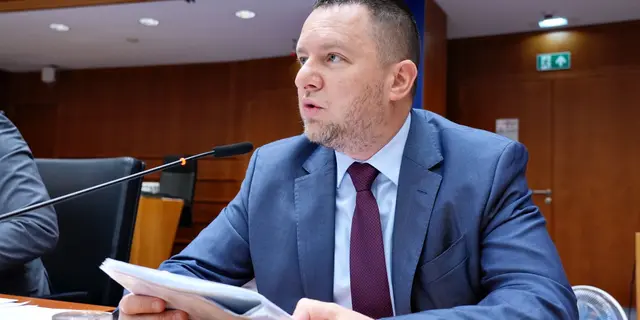
Given the ongoing geopolitical tensions, global trade disruptions, and the declining agricultural workforces, members of the NAT commission agreed that there is a pressing need for a comprehensive and region-specific approach to bolster the EU agricultural sector's resilience and growth. The draft opinion on ‘Enhancing EU regional agricultural competitiveness: a comprehensive strategy integrating equitable trade conditions and phytosanitary security’, led by the President of the regional government of Valencia, Carlos Mazón Guixot (ES/EPP), calls for ‘mirror clauses’ in European trade agreements and argues that a comprehensive strategy to boost the EU’s regional agricultural competitiveness is needed. NAT members emphasised the EU’s role in driving a global shift towards sustainable, equitable, and resilient food systems, urging it to use its market influence to reform international trade rules.
With regards to the agricultural labour force in Europe, NAT members adopted a draft opinion on ‘Fair working conditions in agriculture: the local and regional perspective’, led by Karine Gloanec-Maurin (FR/PES), First Deputy Mayor of Couëtron au Perche. Local and regional representatives called for the strengthening of the current application of the social conditionality in the allocation of CAP subsidies and of the European Agricultural Fund for Rural Development (EAFRD). Effective prevention, appropriate worker representation, thorough inspections and continued research are essential to safeguard the health and safety of workers – in particular migrant and seasonal workers –, and thus to attract and retain a workforce in the agri-food sector.
Finally, NAT members, together with a member of the Permanent Representation of Poland to the EU and the director of the Emergency Response Coordination Centre in the European Commission’s DG ECHO, took stock of the impact of the widespread floods in central Europe. Local and regional leaders stressed the need for cohesion policy to play a bigger role in strengthening territorial resilience. They reiterated their demand for a long-term water resilience strategy and for a stronger role of local and regional authorities in preparing and managing crises at EU level.
Quotes:
Carlos Mazón Guixot (ES/EPP), President of the regional government of Valencia: “Our farmers are the cornerstone of Europe's rural identity and economic vitality. To safeguard the future of Valencian and European agriculture, we must prioritise fair competition, by reinforcing mirror clauses and the principle of reciprocity. It is essential to combat unfair practices, strengthen phytosanitary controls, and reduce bureaucracy, while preserving our agricultural traditions and promoting sustainability."
Carmen Crespo Diaz (ES/EPP), Member of the European Parliament, has attended the debate on the EU agricultural competitiveness: “Agriculture is a strategic sector to fight against climate change and to fix the population to the territory. Mirror clauses are crucial to guarantee security for European consumers and avoid unfair competition for farmers by imposing the same rules of the game on other producers outside the EU. Implementing these clauses in trade agreements with third countries will provide Europe with greater competitiveness, as indicated in the Draghi report.”
Karine Gloanec-Maurin (FR/PES), First Deputy Mayor of Couëtron au Perche: “The introduction of social conditionality in the Common Agricultural Policy is an important first step which needs to become fully effective in the coming years. If we want European agriculture to be a safe, attractive and competitive sector to work in, we need to ensure that working conditions are improved for all.”
Radim Sršeň (CZ/EPP), Vice-Chair of NAT and Mayor of the municipality of Dolní Studénky: “Climate change is having a huge impact on the severity of the floods. Prediction models are very sophisticated and precise nowadays and therefore precious to prepare and prevent the damage. This is why local and regional authorities are well placed to coordinate rescue efforts and actions to prevent disasters. The estimated damage in Czech Republic amounts to 4 billion euros. Cohesion funds do not match the figures that we need to rebuild but fortunately we are granted 100% financing and flexible rules to use many EU funds that would help to improve the situation.”
Background:
The two opinions mentioned above will be adopted during the November Plenary session of the CoR.
CoR opinion on ‘The Future of the Common Agricultural Policy’ adopted in June 2024.
CoR opinion on ‘Preparing for and dealing with crises: strengthening the resilience of the Union, its regions and cities’ adopted in May 2023.
CoR opinion on ‘Creating an EU Blue Deal from an agriculture and rural development perspective across EU regions’ adopted in June 2024.
Eurobarometer survey on EU citizens’ perceived exposure to disaster risks, level of knowledge and the sources uses to learn about disaster risks.
helene.dressen@cor.europa.eu
Local and regional leaders urge a comprehensive approach to bringing new generations into farming.
The growing frequency of natural and human-induced disasters, from floods and wildfires to health emergencies and geopolitical threats, demonstrates the need to give a voice to the cities and regions…
The European Committee of the Regions (CoR) has welcomed the European Commission's 2030 Consumer Agenda as a timely roadmap to strengthen consumer rights and supports businesses in an…