Hungary

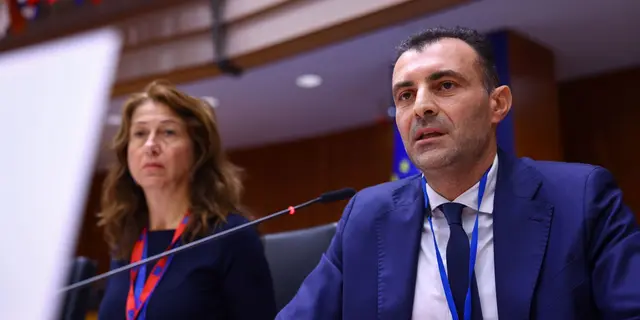
János Ádám KARÁCSONY
Member
Vice-President of the County Council of Pest Vármegye

ECR (European Conservatives and Reformists Group)


Local and regional leaders have emphasised that the European Union’s ability to respond effectively to emergencies will depend on closer coordination across all levels of governance. In two opinions adopted unanimously during its plenary session on 7 May, the European Committee of the Regions (CoR) on 7 May highlighted the need to reinforce Europe’s strategic resilience by ensuring that cities and regions are fully involved in the design and implementation of EU preparedness frameworks.
The COVID-19 pandemic and Russia’s war against Ukraine have highlighted the need to strengthen the European Union’s crisis preparedness and strategic security. In this context, regional and local leaders welcomed the EU Stockpiling Strategy as a timely response to rising geopolitical risks but demanded greater involvement in the design and implementation of any preparedness strategies and measures. They called for participation in cross-border strategies and the EU stockpiling network, as well as the public-private Preparedness Task Force.
In the opinion led by János Ádám Karácsony (HU/ECR), vice-president of the County Council of Pest Vármegye, CoR members reiterated the need to enhance preparedness and strengthen the capacity of cities and regions to provide essential goods and services in times of crisis. Proposed measures include identifying critical dependencies, boosting European production of key products, and reinforcing single market mechanisms, including the stockpiling of raw materials, goods, and food.
The opinion further calls on the European Commission to support industrial capacity in Europe—from manufacturing to distribution—to strengthen competitiveness, innovation, and overall material resilience against future crises.
In this context, members underlined that strengthening Europe’s crisis preparedness must go hand in hand with reinforcing health system resilience. The opinion led by Antonio Aurigemma (IT/ECR), President of the Regional Council of Lazio, regrets that the regional and local levels are absent from the European Commission’s Medical Countermeasures Strategy, as healthcare systems are largely decentralised in two thirds of EU Member States.
Regions and cities urged the Commission and Member States to fully involve regions and cities in designing, implementing, and governing health preparedness strategies, including cross-border planning, infrastructure for medical countermeasures, and waste-water surveillance systems. Finally, the opinion calls on EU institutions to ensure sufficient long-term investment in health system resilience through the next Multiannual Financial Framework (MFF), emphasising that effective preparedness depends on coordinated action across EU, national, regional, and local levels.
Quotes
Rapporteur János Ádám Karácsony (HU/ECR), vice-president of the County Council of Pest Vármegye: “Preparedness can no longer be treated as a technical or precautionary exercise, it must be understood as part of our overall security and crisis response capacity. A stockpiling strategy closely linked to territorial realities is more likely to deliver timely and effective support.”
Rapporteur Antonio Aurigemma (IT/ECR), President of the Regional Council of Lazio: “A strong medical countermeasures strategy is essential for Europe’s security and resilience. It must ensure preparedness across the full chain — from research and production to logistics and deployment — while remaining adaptable, decentralised and aligned with national systems.”
Background
Contact:
Hélène Dressen
Tel: +32 471502795
Helene.dressen@cor.europa.eu
Hungary
Member
Vice-President of the County Council of Pest Vármegye
Italy

Alternate
Regional Councillor, Regional Council of Lazio

The European Committee of the regions (CoR) has adopted unanimously an opinion on the Common Market Organisation and the EU School Scheme during its Plenary session on 14 October. Led by Alessio…
The European Committee of the Regions (CoR) adopted an opinion led by Karl Vanlouwe (BE/EA) during its Plenary Session on 14 October, calling for local and regional authorities to have a stronger…
Regions and cities have adopted a set of recommendations to tackle the rise of cardiovascular diseases, calling for stronger social, environmental and commercial prevention measures and a greater…