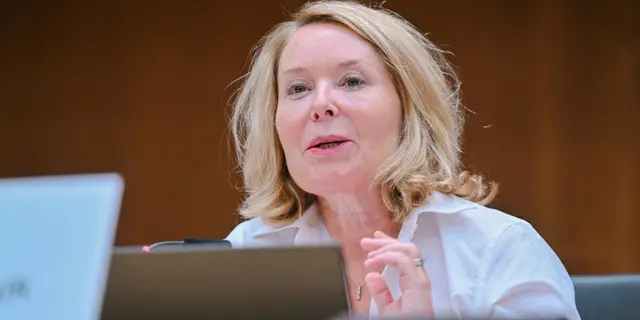
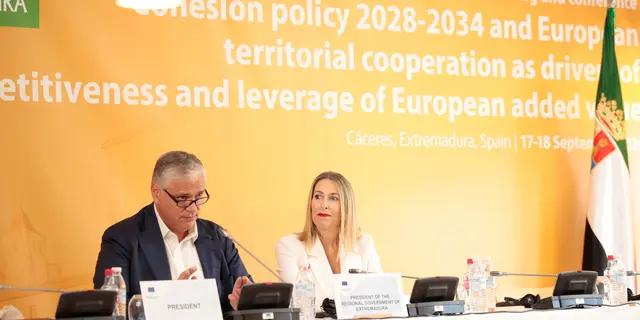
As air-raid sirens sound across countries bordering Ukraine, and coinciding with the latest Russian attacks near the Polish border, regions and cities representatives gathered in Cáceres, Spain to…
What do you see as the most pressing challenges that Cohesion Policy will face in the coming years and how can the Assembly of European Regions (AER) address these challenges?
One of the main challenges I see is ensuring that Cohesion Policy continues to promote economic and social convergence among European regions, especially in the context of new challenges like climate change and digitalization.
AER can address this by facilitating knowledge exchange and best practice sharing among its member regions, to ensure that they are well-prepared to take the opportunities presented by these changes.
The European Union is evolving and debates about the future of EU funding and policies are ongoing. What is your vision for the future of Cohesion Policy in a changing EU?
My vision for the future of Cohesion Policy is one that remains flexible, responsive and geared towards addressing the evolving needs of European regions. AER can influence this vision by actively engaging with policymakers at the EU level, advocating for the importance of Cohesion Policy in promoting regional development and cohesion and ensuring that the voice of regions is heard in shaping future policies and funding mechanisms.
The European Green Deal is a significant policy initiative for the European Union. How can Cohesion Policy contribute to achieving the Green Deal's objectives and what role can the AER play in supporting this transition?
Cohesion Policy can support the Green Deal by financing projects and initiatives that promote sustainability, renewable energy and the reduction of carbon emissions. AER can support this transition by advocating for green investments within the regions it represents, helping regions access funding for green projects and facilitating cooperation among regions to learn from each other's experiences in implementing green policies.
Digitalization is transforming economies and societies across Europe. How can Cohesion Policy promote digital inclusion and ensure that no regions are left behind in the digital transition?
Cohesion Policy can promote digital inclusion by funding digital infrastructure projects and digital skills development in less-developed regions. AER can facilitate knowledge-sharing and collaboration among regions to help them harness the potential of digital technologies and ensure that all regions benefit from the digital transition.
As President of the AER, what specific initiatives or projects do you plan to undertake to enhance the role of the AER in shaping the future of Cohesion Policy?
In my role as President, I plan to strengthen the AER's role as a platform for dialogue and cooperation among regions. We will actively engage with our member regions to identify their needs and priorities and we will work closely with European institutions to ensure that these are reflected in Cohesion Policy discussions.
We will launch initiatives to promote knowledge-sharing and capacity-building among our member regions to help them better utilise Cohesion Policy funds and resources, such as the task force on Cohesion Policy.
Background:
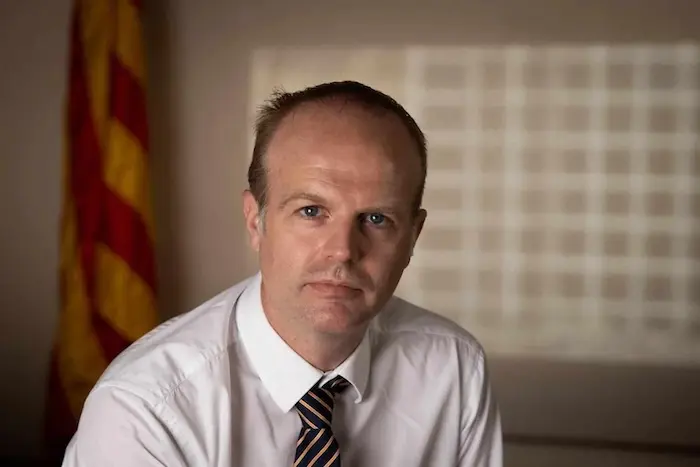
Albert Castellanos i Maduell, Secretary for Enterprise and Competitiveness of the Ministry of Business and Labour of the Government of Catalonia and CEO of ACCIÓ, is President of the AER since July 2023.
Born in Barcelona in 1978. He holds a degree in Economics from the Pompeu Fabra University (UPF) and master's degrees in Public Economics (University of York, UK) and in Management (School of Public Administration of Catalonia).
In recent years he has developed several responsibilities in the field of economic management in the Government of Catalonia: he has been Director General of Economic Promotion, Competition and Regulation (2016-2017), Secretary of Finance (2017-2018) and Secretary General of the Ministry of the Vice-Presidency, Economy and Finance (2018-2021).
In 2021, he was appointed Secretary for Business and Competitiveness of the Ministry of Business and Labour, a position he combines, since November 2022, with that of CEO of ACCIÓ. Since July 2023, he is also the president of the Assembly of European Regions (AER), after having been its vice-president for six years.
As air-raid sirens sound across countries bordering Ukraine, and coinciding with the latest Russian attacks near the Polish border, regions and cities representatives gathered in Cáceres, Spain to…
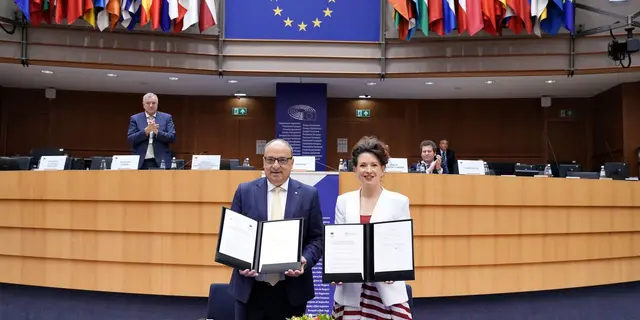
The European Committee of the Regions (CoR) and the Conference of Cantonal Governments of Switzerland (CCG) signed a Memorandum of Understanding (MoU) on 2 July 2026, during the CoR plenary session.
Local and regional authorities must be formally involved in the EU's future internal security instrument for 2028–2034. This is the core message of the opinion Union support for internal…