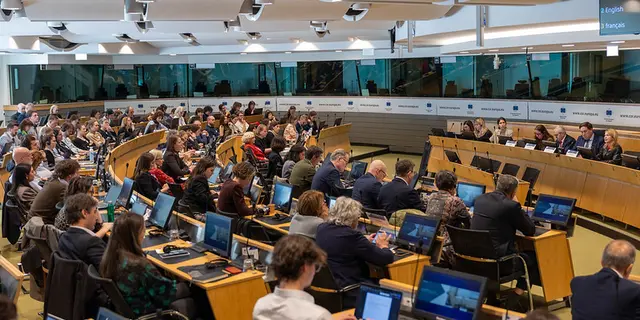
At a conference in Slovakia, SEDEC members discussed how to bridge the innovation gap between metropolitan, rural and cross-border regions.

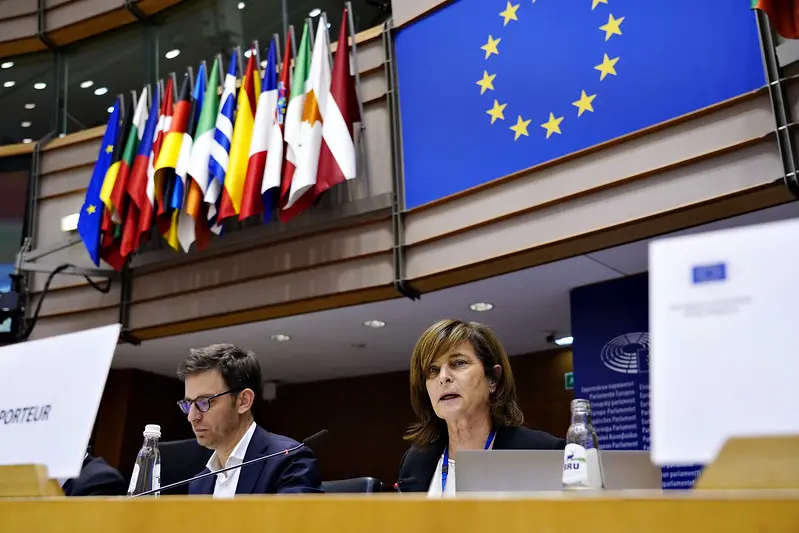
A few days after the International Day for the Elimination of Violence against Women, Europe's local leaders and MEPs re-entered the debate on the urgency to combat gender-based violence, which has far-reaching consequences not only at the individual but also at the societal level. At the 29 November plenary session of the European Committee of the Regions (CoR), local leaders adopted an opinion calling to focus on tackling the root causes of such violence, such as gender inequality and harmful cultural or societal constructs, and urging to invest more in prevention, education and awareness raising.
Violence against women and girls (VAWG) remains largely unreported due to the impunity, silence, stigma and shame surrounding it. In addition to immesurable individual suffering, violence against women (including intimate partner violence) is estimated to cost annually up to €289 billion in the EU in health and social costs from physical and emotional impact (56 %), followed by criminal justice services (21 %) and lost economic output (14 %). Other costs can include housing aid and child protection (EIGE, 2021).
In the opinion on Stopping gender-based violence – cities and regions leading the way by Donatella Porzi, regional councillor in the Umbria Region, CoR members highlight the role of local and regional authorities in the prevention of gender-based violence and in protecting, assisting and supporting victims in their role as providers of the necessary social and health services and legal advice. They also stresse the urgency to tackle violence at its root causes, such as inequality, limiting cultural constructs and gender stereotypes and to step up education and awareness raising on the issue.
The Committee also calls for adopting a victim-centered approach and sensibilising first respondents. It also reminds that as only about one third of victims of gender-based violence report such assaults, accessible reporting systems such as helplines should be set up to ease and encourage reporting, and multilingual information on rights, steps to take and protection and support available should be made easily accessible. Finally, EU local and regional leaers also advocate for the protection of migrant and refugee women and children, as they are highly vulnerable to abuse, violation of their rights and various forms of violence
As good practice, the rapporteur recommends a special 'victims' pathway' as put in place for example in Tuscany (and Brussels), directing victims to a dedicated pathway to emergency medical care, shelter and social services, ensuring gender-sensitive follow-up and interconnecting health and social services with law enforcement and prosecution.
Stopping gender-based violence requires a holistic approach encompassing different preventive actions, with immediate measures such as re-thinking urban design and transport, but also by including men and counteracting destructive masculine standards and gender and sexual stereotypes by education and awareness raising.
The opinion recognises the progress made since the adoption of the EU Gender Strategy in 2020 and the importance of the EU's accession to the Council of Europe Convention on preventing and combating violence against women, known as the Istanbul Convention, and calls on the European Commission and Member States to implement gender budgeting as an instrument to improve gender equality.
Quote
The rapporteur, Donatella Porzi (IT/Renew Europe), regional councillor in the Umbria Region, said: "As a local politician, my intention was to shake up European and national decision-makers to the fact that gender-based violence is not only a problem of some, but is deeply enshrined in our society as a whole and that it is not enough to focus on the sanctions of the perpetrators. I wanted to shake up the leaders of European cities and regions to the fact that with simple urban planning measures, education of our men and women and targeted training of the personnel on the frontline of receiving victims of gender-based violence – we can be the change."
Frances Fitzgerald (IE/EPP), Rapporteur of the European Parliament report on the proposal for a directive of the European Parliament and of the Council on combating violence against women and domestic violence, stressed: “If we are to tackle gender-based violence comprehensively, we must do so at every level of government. The role of cities and regions is particularly important as they have the power to speak to citizens directly, and to implement impactful projects in the places where they are needed the most. From informed urban planning to adequate geographical distribution of shelters to opening conversations with male champions, local municipalities can make a significant difference in tackling this heinous phenomenon.”
More information
The United Nations General Assembly has designated November 25 as The International Day for the Elimination of Violence Against Women (Resolution 54/134). The premise of the day is to raise awareness around the world that women are subjected to rape, domestic violence and other forms of violence.
President von der Leyen’s political guidelines highlighted the need to prevent and combat violence against women, as a priority for the Commission. The A Union of Equality: Gender Equality Strategy 2020-2025 announced EU measures to combat gender-based violence and implement related comprehensive and coordinated policies. The European Pillar of Social Rights Action Plan (COM/2021/102 final) reiterates this commitment.
More background can be found in the following publications:
Pictures from the Plenary of the CoR
Contact:
Wioletta Wojewodzka
Tel. +32 (0)2 282 2289
Mobile: +32 (0)473 843 986
At a conference in Slovakia, SEDEC members discussed how to bridge the innovation gap between metropolitan, rural and cross-border regions.
The European Committee of the Regions (CoR) and the European Commission signed a renewed Joint Action Plan during the meeting of the CoR’s Social Policy, Education, Employment, Research and Culture …

To mark the 100 years of Bauhaus movement in Dessau, the European Committee of the Regions (CoR), together with the European Commission’s Joint Research Centre and the Region of Saxony-Anhalt, in…