Poland

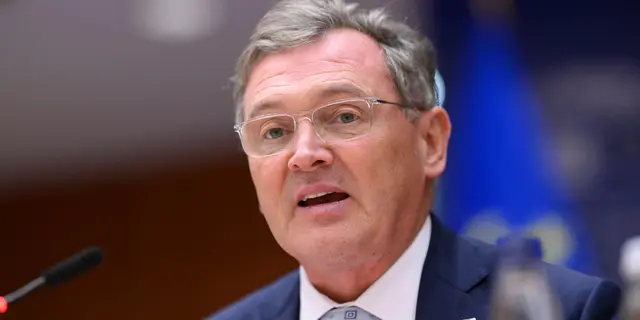
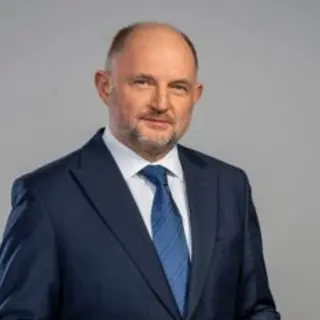
Piotr CAŁBECKI
Miembro
Councillor of the Kujawsko-Pomorskie Voivodeship

EPP (European People's Party)

Representatives of European institutions and regions came together at the European Committee of the Regions (CoR) on 17 November for a high-level dialogue on the future of the Common Agricultural Policy (CAP), organised jointly with the Coalition of European AgriRegions. The discussions focused on the role of regions in the next CAP and on how EU agricultural policies can support a sustainable agricultural sector.
The discussions took place as negotiations on the post-2027 CAP and the next EU long-term budget (MFF) enter a decisive phase. The CoR stressed that the CAP must remain a genuinely common European policy, while recognising the diversity of Europe's territories and agricultural systems. Greater flexibility for Member States must not lead to the renationalisation or fragmentation of the CAP. Instead, regions should be formally involved in designing, implementing, monitoring and evaluating the policy.
The CoR welcomed progress made in the Council negotiations on active farmers, redistributive income support and the recognition of different territorial circumstances while regretting the substantial weakening of degressivity and capping mechanisms, which undermines the reform’s redistributive potential. It called for CAP funding to be distributed more fairly and targeted towards those who need it most, particularly active farmers, young farmers, small and medium-sized family farms and farmers operating in areas facing natural constraints. Regions also support a mandatory redistributive payment on the first hectares, and a meaningful definition of an active farmer - as proposed in a report by Norbert Lins (DE/EPP), member of the European Parliament - to ensure that European support primarily benefits those genuinely engaged in agricultural activity.
Adequate and predictable European funding was another central issue in the discussions. Against a backdrop of increasing climate risks, market volatility and geopolitical uncertainty, the CoR warned against reducing the proposed agricultural crisis reserve and agricultural funding under the European Competitiveness Fund. It also raised concerns about national co-financing requirements for agri-environmental and climate measures, stressing that environmental ambition should not depend on the financial capacity of individual Member States or regions.
Quotes:
Opening the conference, Piotr Całbecki (PL/EPP), President of the Kujawsko-Pomorskie Region and Chair of the CoR Commission for Natural Resources (NAT), said: "Our objective is clear: a CAP that remains genuinely European, that distributes support more fairly and strengthens active farmers, that promotes agricultural resilience, competitiveness and sustainability and above all, that recognises Europe's territorial diversity as a strength, rather than a constraint."
Arnaud Lécuyer, coordinator of the Coalition of European AgriRegions: "At this critical juncture, European regions remain committed to defending the budget and the collective nature of the Common Agricultural Policy for the period 2028-2034. The regions are best placed to support farmers through these transitions, ensuring their resilience and the development of rural areas. The regions are already actively involved in preparations for the next CAP and are counting on the Council and Parliament to swiftly reach an agreement."
Background:
Contact:
Hélène Dressen
Tel: +32471502795
Helene.dressen@cor.europa.eu
Poland
Miembro
Councillor of the Kujawsko-Pomorskie Voivodeship

Italy

Suplente
Regional Councillor, Regional Council of Lombardy

Representantes de las instituciones y regiones europeas se reunieron en el Comité Europeo de las Regiones (CDR) el 17 de noviembre para un diálogo de alto nivel sobre el futuro de la política…

El Comité Europeo de las Regiones (CDR) aprobó un dictamen sobre la organización común de mercados y el programa escolar de la UE en su pleno del 14 de octubre. Dirigido por Alessio Mammi (IT/PSE),…
El Comité Europeo de las Regiones (CDR) aprobó un dictamen dirigido por Karl Vanlouwe (BE/AE) en su pleno del 14 de octubre, en el que pedía que los entes locales y regionales desempeñaran un papel…