Belgium

Willy BORSUS
Member
Member of the Municipal Council of the City of Marche-En-Famenne

Renew Europe

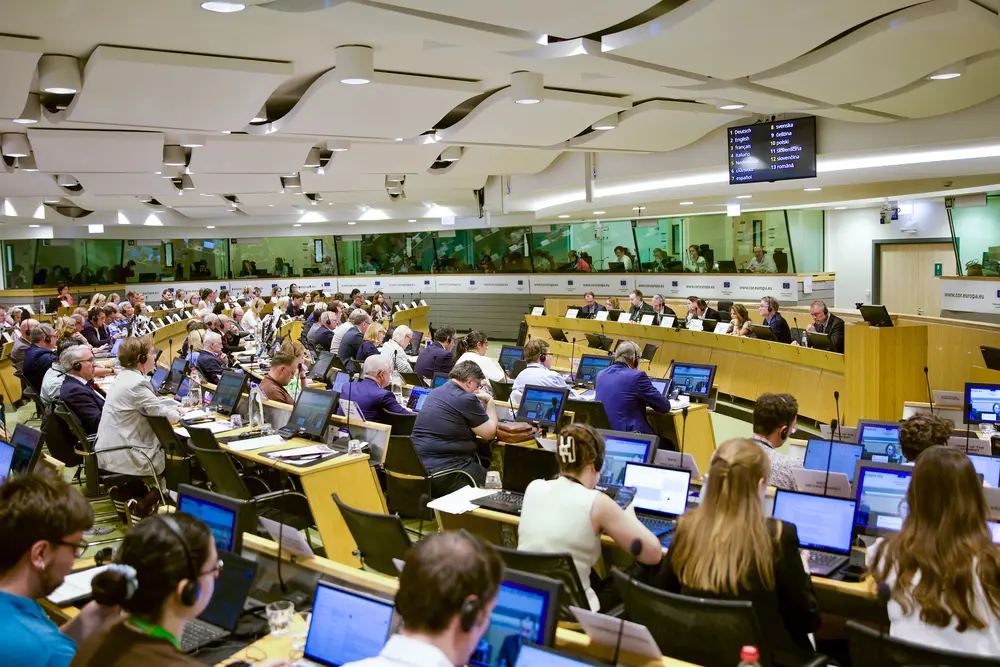
Regions are key to making the industrial transformation a success and boosting Europe's defence capabilities. This was the main message highlighted by regional and local leaders as they gave the first green light to two draft opinions on the Industrial Accelerator Act and the Defence Industry Roadmap. During the meeting of the commission for Economic Policy (ECON) on 6 July, members of the European Committee of the Regions (CoR) also agreed on their position on the Cybersecurity Review and Digital Networks Act.
A competitive and resilient European industrial base is essential for achieving the EU’s strategic objectives in both economic competitiveness and security. In this context, ECON members adopted a draft opinion on the Industrial Accelerator Act, in which they called for a place-based and adequately financed implementation of the Act, to ensure that all regions benefit from support for low-carbon industries, strategic supply chains and European manufacturing. As well as calling for accelerated investment in sustainable industrial production, local and regional leaders stressed the need for predictable rules, reduced administrative burdens for SMEs and targeted EU financial support to prevent a widening of territorial disparities.
Rapporteur Willy Borsus (BE/Renew Europe), member of the City Council of Marche-en-Famenne, said: "Industrial acceleration is a major European objective – it is equally a regional priority. Europe’s competitiveness also depends on the strength of its local industrial ecosystems, its SMEs and its skilled workforce. The Industrial Accelerator Act must empower regions to act as full partners in implementation, so that industrial growth, innovation and quality jobs reach every territory.”
ECON members further supported the transformation of the EU defence industry as a strategic industrial priority that strengthens Europe’s resilience, security and technological leadership. In a draft opinion adopted during the meeting, they highlighted the importance of building regional defence and dual-use industrial ecosystems by connecting SMEs, research centres, universities and larger companies across Europe. They called for greater involvement of regional and local authorities in the development of defence supply chains, increased support for innovation and skills, and stronger links between defence industrial policy and regional development.
Rapporteur Tadeusz Truskolaski (PL/EA), Mayor of Białystok, stated: "Europe needs a decentralised defence production model, based on cooperation among Member States, joint projects, and resilient European supply chains. The CoR opinion reflects the determination of Europe's regions and cities to play an active role in building a safer, more resilient, and more competitive Europe."
Cybersecurity Review and Digital Networks Act
During the meeting, ECON members also adopted a draft opinion on the Cybersecurity Review and the Digital Networks Act package. They called for greater support for local and regional authorities in managing cybersecurity risks and deploying secure digital infrastructure, including dedicated funding, training and technical assistance. Members highlighted the need for a proportionate, risk-based approach that avoids excessive administrative burdens, while ensuring that regions are fully involved in cybersecurity governance and digital network planning.
Rapporteur Zdeněk Hřib (CZ/Greens+Progressives), member of Prague City Council, said: "Cybersecurity in Europe must be strengthened through effective governance, secure ICT supply chains, and resilient digital networks, but it must remain fully implementable for local and regional authorities operating critical infrastructure and essential services. Real resilience depends on proportionate, risk-based implementation backed by clear guidance, training, and capacity-building.”
Also during the meeting
ECON members adopted a common declaration welcoming the strengthened territorial dimension of the European Semester ‘Spring Package’, presented by the European Commission's one month ago. Ensuring a proportionate degree of regional and local authority participation in the European Semester has long been a key demand of the CoR, since the establishment of the European Semester in 2010. Therefore, local and regional leaders called for the strenghtened territorial dimension in the analytical elements of the European Semester to be reflected in greater involvement of cities and regions in the governance and implementation of the Semester process. Moreover, they invited the European Commission to clarify how the analysis of territorial development trends produced for the ‘Spring Package’ will be used as part of the set of strategic reference documents underpinning the preparation of the National and Regional Partnership Plans as of 2028.
Members held a first exchange of views on the draft opinion on the Industrial Maritime Strategy and appointed Thomas Gottfried Schmidt (DE/EPP), member of the Saxon State Parliament, as rapporteur on the opinion on the Chips Act 2.0 and René Jansen (NL/EA), alderman of the Municipality of Dongen, as rapporteur on the Cloud and AI Development Act.
More information:
Contact:
Theresa Sostmann
Tel: +32475999415
Theresa.Sostmann@cor.europa.eu
Belgium
Member
Member of the Municipal Council of the City of Marche-En-Famenne
Czechia

Member
Member of the Local Assembly of the City of Prague



Germany

Member
Member of the Saxon State Parliament



Regions and cities across Europe expect to increase public investment over the next few years in transport infrastructure, environmental protection, housing and education, according to a joint OECD…

On 9 October, during their event: Catalysing Sustainable Development, the CoR and the EU Joint Research Centre launched the call for application of 2030CATALYSTS, a project on localising SDGs

A new CoR-CEMR consultation shows that the territorial allocation of funds from the Recovery and Resilience Facility is widely perceived as unbalanced on the ground.