


Future EU budget: regions, cities and MEPs unite to urge EU leaders to secure a robust and standalone Cohesion Policy budget
On this page
- Cohesion Policy
- European Regional Development Fund
- Multiannual financial framework
- Territorial cohesion
- Economy and Finance
- Cohesion policy reform

Ahead of European Council President Antonio Costa’s presentation of a new draft compromise on the next EU long-term budget, local and regional leaders joined leading members of the European Parliament to urge EU heads of state and governments to agree on an ambitious budget, well-funded by new source of revenues, which keeps territories at the heart of the Union’s investment policies.
The European Parliament’s co-rapporteurs on the EU long-term budget for 2028-34, the Multiannual Financial Framework (MFF), Siegfried Mureșan (RO/EPP) and Carla Tavares (PT/PES), joined members of the European Committee of the Regions’ Commission for Territorial Cohesion Policy and EU Budget (COTER) for a debate that highlighted the two institutions’ full agreement on the need for an ambitious MFF that does not concentrate decisions on investments and reforms in the hands of national governments only.
Local and regional leaders reiterated their strong support for the European Parliament's willingness to defend a standalone and robust Cohesion policy budget that contributes to improving Europe's competitiveness and resilience. CoR members and MEPs also echoed the call on Member States to agree on new sources of revenue to secure an ambitious EU budget, thereby avoiding an increase in national contributions and giving the Union the means to meet citizens' needs.
Some COTER members, notably from Finland and the Netherlands, also shared their experiences regarding the early preparation of future National and Regional Partnership Plans (NRPPs) in their countries. They criticised the fact that local and regional authorities had so far only been consulted, like other stakeholders, rather than fully involved, because national authorities had favoured a very centralised approach.
A new vision for outermost regions
COTER members adopted a draft opinion that assesses the new EU strategy on outermost regions, presented by the European Commission in September. Regions and cities are calling for the strategy to be fully reflected in the next MFF 2028-34, notably including a chapter dedicated to each outermost region in future NRPPs, and for these regions to act as management authorities.
Rapporteur Thibault Lechat-Vega (FR/PES), Vice-President of the Region of Guyana, said: “Across the outermost regions, we see the cost of European policies designed without us. With this report, I want Europe to move from declarations of love for its outermost regions to action. The first step will be to give us the means to act in the next European long-term budget. The second will be to give us a say whenever the Union drafts its laws.”
The EU strategy for islands
A second draft opinion was adopted by COTER members during the meeting: on the first-ever EU strategy for islands, which introduced a targeted approach dedicated to the specific needs of more than 4,000 islands across 16 EU Member States, where 17 million people live. The European Commission's communication is the outcome of years of joint advocacy by the European Committee of the Regions, the European Parliament, islands authorities and territorial networks, which have consistently called for a dedicated EU framework capable of addressing the structural realities of insularity. COTER members stressed that adequate EU policies and funding are needed, to address he higher costs islanders face in areas such as transport, health care or energy and called for better access to essential services, jobs and education.
Rapporteur Noel Formosa (MT/EPP), Mayor of San Lawrenz, said: “Europe must move from recognising the challenges of island territories to delivering tangible solutions. This means measuring the real cost of insularity, ensuring that EU legislation is island-proofed, and providing adequate funding, including through Cohesion Policy, that reflects the different realities of our islands. Our objective must be to ensure that young people can build their future on an island, businesses can compete on a level playing field, and families can access essential services. The EU Strategy for Islands must not only address the challenges of insularity but also unlock the full potential of our islands as centres of innovation, opportunity and strategic importance for Europe.”
Both draft opinions are scheduled for final adoption at the CoR Plenary on 3-4 February 2027.
Also during the meeting
COTER members also held first discussions on two opinions under preparation: on the Affordable housing act (rapporteur Andres Jaadla, EE/Renew Europe, member of Rakvere City Council), and on autonomous driving (rapporteur Arianna Censi, IT/PES, councillor for mobility of the city of Milan).
More information
·Photos and videos of the meeting.
·The future MFF will also be discussed during a high-level debate at the next plenary of the European Committee of the Regions, on 2-3 December.
·European heads of state and governments will gather in Brussels for a special European Council meeting on 26-27 November for a first discussion on the new draft compromise on the MFF 2028-34, known as 'negotiating box', that President Costa will present in the coming days. A second European Council meeting, during which EU leaders are expected to strike a final deal, is scheduled for 17 and 18 December.
·The EU has nine outermost regions, located in the Atlantic and Indian Oceans, in the Caribbean basin and in South America: French Guiana, Guadeloupe, Martinique, Mayotte, Réunion, Saint-Martin (France), the Azores, Madeira (Portugal), and the Canary Islands (Spain).
Members
-
-

-
France

Thibault LECHAT-VEGA
Member
Vice-President of the Region of Guyana
 PES (Party of European Socialists)



Related news
-
The multilevel governance dimension of Cohesion Policy as a decentralised investment policy, and its contribution to supporting competitiveness and innovation in EU territories, were the focus of the…
-
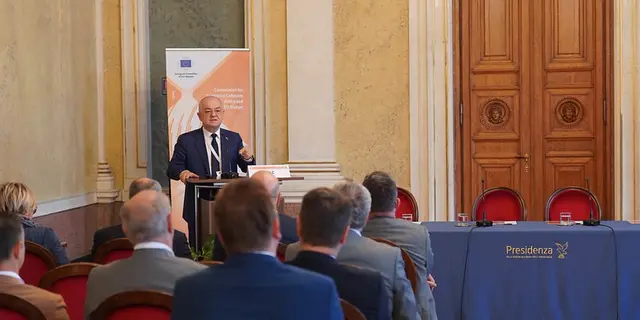
At the 2026 REGI–COTER meeting, MEPs and regional representatives stressed that cities and regions must be central to shaping and delivering EU’s priorities for the next budget.
-
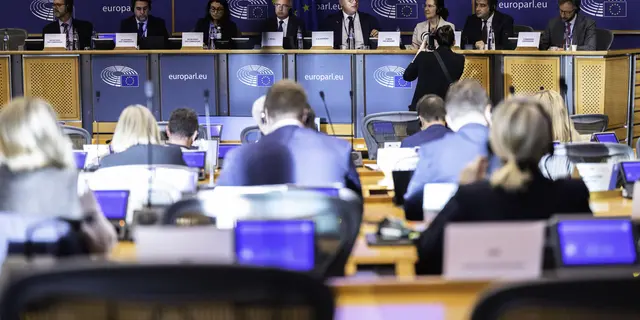
The Commission for Territorial Cohesion Policy and EU Budget (COTER) on 27 April focused on the need to align the EU's 'Automotive Package' with local needs, and to build connected,…
