France

Thibault LECHAT-VEGA
Member
Vice-President of the Region of Guyana

PES (Party of European Socialists)


The Commission for Territorial Cohesion Policy and EU Budget (COTER) on 27 April focused on the need to align the EU's 'Automotive Package' with local needs, and to build connected, green transport systems that address territorial challenges. Discussions highlighted the need for a fair and competitive transition, especially in light of the closure of the Strait of Hormuz.
Local and regional leaders also began debates on the Agenda for Cities and the Atlantic macro-regional strategy.
Automotive Package and sustainable transport
The automotive sector is deeply embedded in industrial territories where production networks, suppliers and employment are concentrated. In this context, COTER members stressed during a debate with representatives of the European Commission, environmental NGOs and of the Automotive Skills Alliance, that the newly presented EU ‘Automotive Package’must consider regional realities. Bringing their experience as leaders of territories that are heavily dependent on automotive manufacturing and face job transition pressures, such as the regions of Bratislava (Slovakia), Navarra (Spain) and Silesia (Poland), and the city of Saarbrücken (Germany), they highlighted that the need for predictable regulatory conditions related to decarbonisation and electrification, targeted support for regional innovation and dedicated measures for industrial restructuring.
During a debate on the EU’s sustainable and connected transport system, local and regional leaders emphasised that overcoming persistent territorial disparities in transport infrastructure development and accessibility will be crucial. They highlighted the need for better coordination between EU, national and regional levels in the planning and delivery of large-scale transport infrastructure, as well as a clearer and more accessible funding framework. They also stressed the importance of accelerating the deployment of key transport investments, including cross-border connections, high-speed rail and clean-fuel infrastructure, while ensuring that these initiatives foster territorial cohesion. Local and regional leaders further stressed that Europe is still dependent on external energy sources, as the consequences of the closure of the strait of Hormuz are showing, making investment in alternative fuels more important than ever.
Rapporteur Maria Chivite(ES/PES), President of Navarra Region, is leading the CoR’s work on the European automotive package, while rapporteur Marco Marsilio (IT/ECR), President of Abruzzo Region, is drafting the CoR’s opinion on the EU’s sustainable and connected transport system.
Agenda for Cities and Atlantic macro-region
COTER members had debates on two other opinions under preparation. The first aimed at gathering inputs from local and regional leaders on theEU Agenda for Cities. The European Commission presented the Agenda in December 2025 to improve coordination across EU urban initiatives and simplify cities’ access to EU support. The work of CoR members on the topic is being coordinated by the rapporteur Kieran McCarthy (IE/EA), City Councillor of Cork.
The development of an Atlantic macro-regional strategy was also discussed during the COTER meeting. According to local and regional leaders, such a strategy should offer an integrated vision of territorial development in such a peripheral area, combining maritime and land-based challenges. The outcomes of the discussion will contribute to the opinion currently being drafted by rapporteur Ander Caballero Barturen (ES/Renew Europe), Secretary-General for External Action for the Government of the Basque Country.
EU heads of state and governments invited the European Commission to develop the Atlantic macro-regional strategy by June 2027.
Also during the meeting
Members also held a debate on how Cohesion Policy can further mainstream gender equality. As of March 2026, over 30% (€110 billion) of all Cohesion Policy investment is expected to support gender equality in the 2021-2027 period.
COTER members appointed new rapporteurs on the following topics:
More information
France
Member
Vice-President of the Region of Guyana
Italy

Member
President of the Abruzzo Region



Spain
Alternate
General Secretary for External Action and a Global Basque Country, Government of the Basque Country

Malta
Alternate
Mayor, Għajnsielem Local Council

At the 2026 REGI–COTER meeting, MEPs and regional representatives stressed that cities and regions must be central to shaping and delivering EU’s priorities for the next budget.
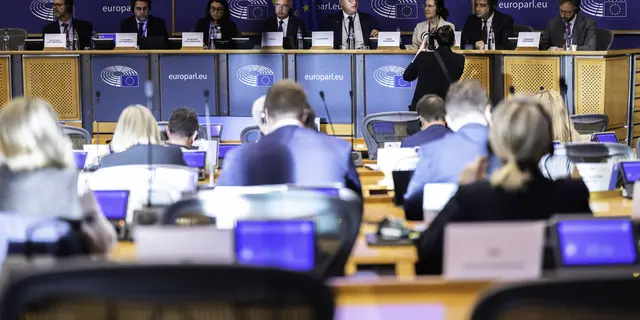
Local and regional leaders gave the first greenlight to a draft opinion that aims at improving the European Commission's proposal for the EU long-term budget 2028-34, while starting in-depth…

A debate on the next EU long-term budget after 2027, the Multiannual Financial Framework (MFF), highlighted major concerns among regions and cities regarding the proposal put forward by the European…