Romania

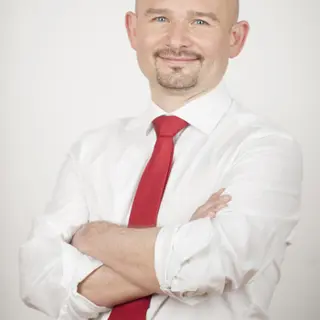
Emil BOC
Member
Mayor of Cluj-Napoca Municipality, Cluj County

EPP (European People's Party)


CoR study highlights uneven progress and rising poverty in some developed EU Member States, including France and Germany.
The European Committee of the Regions (CoR) adopted an opinion on the forthcoming EU Anti-Poverty Strategy during its Plenary Session on 14 October, during a debate with Roxana Minzatu, Executive Vice-President for Social rights and Skills. Led by Yonnec Polet (BE/PES), member of Berchem-Sainte-Agathe municipal council, the opinion stresses the urgent need for ambitious and coordinated action to tackle the persistent challenge of poverty and social exclusion across Europe, a core objective of the European Pillar of Social Rights.
Despite recent economic growth, more than 93.3 million people in the EU, over one-fifth of the population, remain at risk of poverty or social exclusion. Vulnerable groups such as children, young adults, single parents, the elderly, people with disabilities, Roma communities, migrants, and those living in rural or disadvantaged regions are disproportionately affected.
Local and regional representatives call for stronger support that includes minimum income schemes that keep pace with inflation and reducing the number of non-take-up of social benefits, decisive measures to eradicate child poverty, urgent action to address in-work poverty, and investment in affordable housing and homelessness prevention. The Anti-Poverty Strategy must also go hand in hand with the Union of Skills strategy to equip citizens with future-oriented skills. CoR members further emphasise the need for EU funding to be more accessible and targeted, enabling regions and cities to deliver anti-poverty measures tailored to their communities.
Acknowledging sharp disparities in poverty levels across Europe, sometimes within the same Member State, the CoR urges EU policies and resources to reflect these regional differences. With the European Commission set to present the first EU Anti-Poverty Strategy in early 2026, the CoR calls for an ambitious, realistic plan aligned with the UN 2030 Sustainable Development Goals, aiming not just to alleviate but to eradicate poverty – in line with the recent statement of the European Commission President in her SOTEU speech that called for the eradication of poverty in the EU by the year 2050.
Supporting this, the CoR study "Towards a new EU anti-poverty strategy" examined poverty trends, social protection governance, and local case studies in the EU. It shows that while overall poverty has declined since 2015, progress is uneven, and in several developed countries, such as France and Germany, the risk of poverty is rising. Nearly 40% of EU regions have poverty above the EU average, with inequalities across age, gender, education, and employment. The findings highlight the crucial role of local and regional authorities in delivering social protection, as they increasingly manage anti-poverty measures despite shrinking national expenditure.
Quote
Rapporteur Yonnec Polet (BE/PES), Member of Berchem-Sainte-Agathe Municipal Council: “Poverty is not only an economic issue, it’s a question of dignity, justice and democracy. Every day, our local authorities witness its dire effects, also with its invisible faces: children skipping meals, workers juggling precarious jobs, families unable to pay rent or access their rights. We cannot turn a blind eye. Europe must act boldly. The upcoming EU Anti-Poverty Strategy must be ambitious, realistic and grounded in local realities, ensuring that no one is left behind. Investing in people, guaranteeing decent income and housing, and strengthening our social model, as enshrined in the European Pillar of Social Rights are essential to restore citizens’ trust and cohesion across our territories.”
Background
The 2025 EU Annual Report on the State of Regions and Cities shows that half of EU regions have suffered an increase in poverty and social exclusion in recent years.
During the Plenary Session, CoR members adopted an opinion on the Union of Skills Strategy, led by Emil Boc (RO/EPP), Mayor of Cluj-Napoca Municipality.
Contact
Hélène Dressen
Tel: +32 471502795
helene.dressen@cor.europa.eu
Romania
Member
Mayor of Cluj-Napoca Municipality, Cluj County
Belgium

Alternate
Member of Berchem-Sainte-Agathe Municipal Council
Local and regional leaders urge for protection against discrimination, harmful conversion practices and hate speech
Ekrem İmamoğlu, Mayor of Istanbul, has been awarded the fifth edition of the Mayor Paweł Adamowicz Award for his defence of democracy, solidarity and the independence of local government in the…
Local and regional leaders urge the EU to recognise them as strategic partners in the new Gender Equality Strategy and to integrate gender equality in the next EU long-term budget 2028-2034 to…
