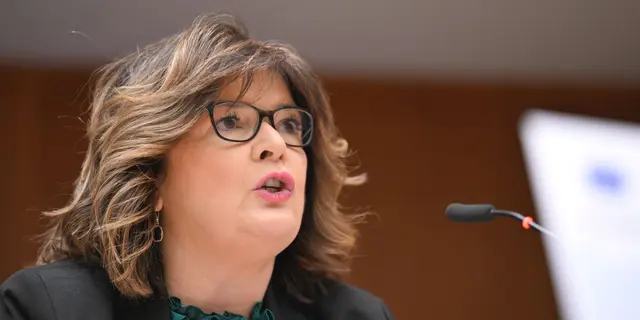


MEPs and regional leaders agree that climate resilience is built from bottom-up
On this page
- Climate Change and Energy
- Climate change policy
- Covenant of Mayors
- EU environmental policy
- European Green Deal
- Renewable energy
- Environment

To underline the importance of strengthening climate resilience at local level and adapt to the consequences of climate change, regions and cities have stepped up their collaboration with the European Parliament with the first joint meeting of the European Committee of the Regions' ENVE Commission and the European Parliament's ENVI Committee on 13 October.
The meeting between MEPs and mayors and regional leaders was opened by ENVI 1st vice-chair, MEP András Kulja (HU/EPP) and ENVE chair Kostas Bakoyannis (EL/EPP), Member of Athens City Council, who stressed the need to better support regions to prepare to and deal with the consequences of climate disasters.
"Today’s joint meeting is a powerful signal of unity and valued/closer cooperation between the European Committee of the Regions and the European Parliament. In a time of overlapping crises — from climate to energy to social cohesion — our institutions and our political leaders must act in concert. The ENVE Commission is committed to working hand-in-hand with the ENVI Committee to ensure that the Green Deal remains both ambitious and grounded in the realities of our regions and cities", ENVE chair Bakoyannis said.
The CoR rapporteur on the Climate Action Plan, Mayor of Bologna Matteo Lepore (IT/PES), stated that his draft opinion, adopted by the ENVE Commission on 2 October, highlights some of the barriers that cities and regions face in developing adaptation measures. It calls for the future European resilience framework to fully involve local and regional efforts and to provide them the necessary resources, knowledge, and data to develop effective adaptation policies.
"Adaptation to climate change is no longer just an environmental issue, it is a question of security, prosperity, and stability for the European Union. Local and regional authorities are on the frontlines, working to protect lives, economies, and ecosystems. But without coordinated EU action and adequate resources, our efforts will not be enough. Building resilience must become a shared European mission, grounded in cooperation, fairness, and solidarity across all levels of governance", Mr Lepore said.
The director of European Environmental Agency Leena Ylä-Mononen pointed out the growing economic and human cost of climate change in Europe, as highlighted in the recently published EEA report Europe’s environment and climate: knowledge for resilience, prosperity and sustainability. Thomas Bajada (MT/S&D), ENVI Rapporteur on the European Water Resilience Strategy, stressed that resilience is bult in regions and cities and that regions are not merely implementers, but innovators. DG REGIO Deputy Director-General Hugo Sobral also took part in the discussion.
The joint ENVI-ENVE meeting opened the series of climate and environment related events during the European Week of Regions and Cities. On 15 October, representatives of international networks of local and regional governments will gather to present their joint position for the upcoming COP30 in Brazil, where their common goal is to bring the voice of cities and regions to the international climate negotiations. The CoR's Green Deal Going Local Working Group will discuss on the challenges and opportunities to build together a water resilient future in the presence of CoR President Kata Tüttö, co-rapporteur of the upcoming CoR opinion on water management.
On 16 October, the week culminates with the Covenant of Mayors 2025 ceremony that President Tüttö will open together with European Commission President Ursula von der Leyen and the President of the European Parliament, Roberta Metsola. The event will be attended by several of the CoR's Covenant of Mayors Ambassadors and other local and regional leaders.
Members
Related news
-
The European Committee of the Regions' ENVE commission warns that the proposed structure for the next long-term EU budget entails the risk of greenwashing, weakening the delivery on EU climate…

-
Members of the CoR's Green Deal Going Local working group are calling the EU institutions to ensure that climate, energy and environmental priorities are adequately integrated across the next…

-
Cities and regions push for a formal say in energy planning, protection for low-income households, and rules to ensure large consumers pay a fair share for grid costs.