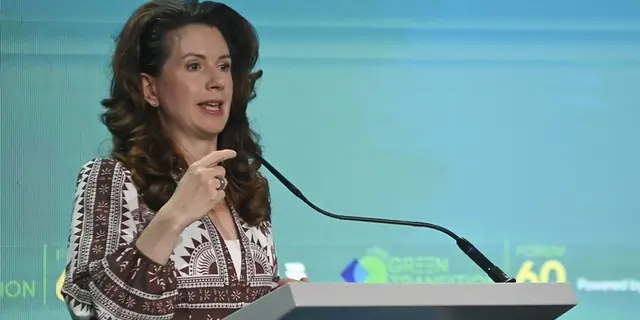
France

Nadia PELLEFIGUE
Member
Vice-President of the Region of Occitanie

PES (Party of European Socialists)

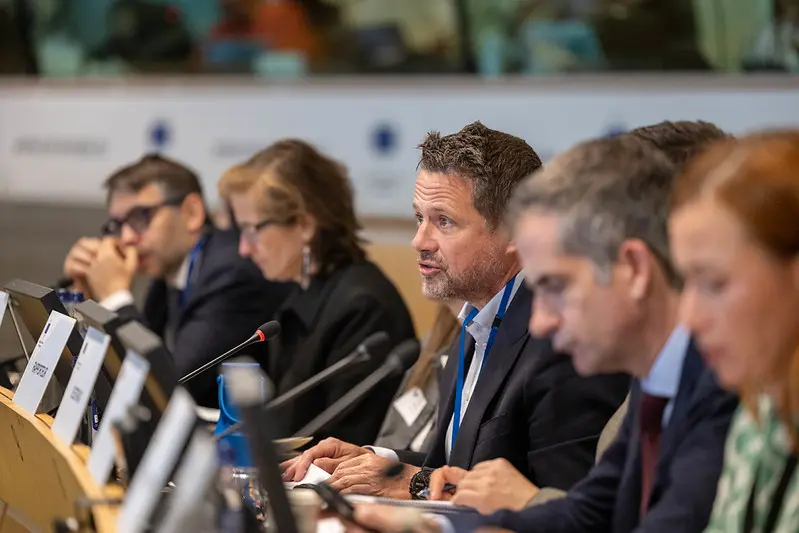
The European Committee of the Regions' ENVE commission has warned that the proposed structure for the next long-term EU budget entails the risk of greenwashing, weakening the delivery on EU climate and environment targets, and increasing territorial disparities. Speaking at a meeting on 22 April, the European Parliament's ENVI Committee chair Pierfrancesco Maran agreed with the importance of securing sufficient funding for climate and environment, and underlined that actions supported under the current LIFE programme should continue to benefit from dedicated, continued and predictable funding.
The CoR's Commission for Environment, Climate Change and Energy (ENVE) adopted its position on the next long-term EU budget (Multiannual Financial Framework, MFF) on 22 April with an opinion led by Mayor of Warsaw Rafał Trzaskowski (PL/EPP). In a debate with the European Parliament's ENVI committee chair, members emphasised that advancing towards climate neutrality and delivering sustainable energy transition is both an environmental necessity and an economic imperative, as shown by the current energy crisis. However, the current MFF proposal lacks a clear instrument dedicated to unlocking the full territorial potential and falls short on territorial impact assessments.
While the ENVE commission welcomes the 43% climate and environment spending targets in the National and Regional Partnership Plans (NRPP) and in the European Competitiveness Fund (ECF), members warned that these targets will be difficult to achieve without strong territorial ownership and a clear allocation of responsibilities between different levels of government. The ambiguity of the objectives and definitions might also lead to greenwashing, as pointed out by the CoR's Green Deal Going Local working group in March. To guarantee multilevel governance and effective delivery of climate and environmental goals, the opinion adopted by ENVE members calls for mandatory regional and territorial chapters in the NRPP, including a clear urban dimension and predictable funding linked to climate, energy and environmental strategies.
The CoR's ENVE commission is also concerned about the lack of a dedicated programme for environmental action. It believes that maintaining the LIFE programme's objectives, delivery mechanisms and dedicated calls for local and regional authorities is essential to complement industrial decarbonisation efforts and anchor competitiveness gains territorially. The opinion warns that integrating the LIFE programme's Nature and Biodiversity component into the broader multi-priority EU Facility without clear earmarking, safeguarded allocations and predictable and recognisable funding streams risks deprioritising actions on biodiversity, nature-based solutions, water resilience, climate change, and disaster preparedness.
Quotes
Rafal Trzaskowski (PL/EPP), Mayor of Warsaw and CoR rapporteur on Mainstreaming climate, energy and environmental priorities across the Multiannual Financial Framework: “Direct funding drives innovation. It encourages strong pilot projects. It also strengthens democracy, because money goes directly to local and regional authorities that are closest to citizens and often more resilient to populism.”
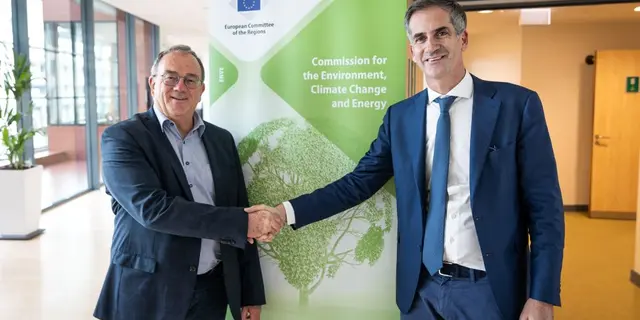
Kostas Bakoyannis (EL/EPP), Member of Athens City Council and chair of the CoR's ENVE commission: "Europe’s security, competitiveness, and climate and nature ambition can no longer be treated separately. They are part of the same strategic equation. Reducing our dependence on imported fossil fuels is, quite simply, a matter of economic security. It protects citizens and key sectors such as transport and agriculture from price shocks, supports healthier cities and regions, and strengthens Europe’s freedom of action. And that delivery happens locally. This is why, not only at EU level but also in the EU’s global efforts, cities and regions can no longer remain observers. We are implementers, investors and first responders. We are where citizens feel the impact, and where solutions must be developed."
MEP Pierfrancesco Maran(IT/S&D), Chair of the ENVI committee: "The EU budget must be both sufficiently resourced and capable of delivering on our environmental, climate and biodiversity commitments. We must safeguard and fully implement the 35% spending target for climate and environmental action. At the same time, the EU needs stronger, dedicated financing for nature and biodiversity to restore Europe’s damaged ecosystems. For this reason, actions supported under the current LIFE programme should benefit from dedicated, continued and predictable funding."
More information
Contact:
Lauri Ouvinen
Tel. +32 473536887
lauri.ouvinen@cor.europa.eu
France
Member
Vice-President of the Region of Occitanie
Last summer's record heatwaves, wildfires and other extreme weather events across Europe again proved the urgency to tackle climate change and strengthen resilience at all levels of government…
After one of the most extreme heatwaves ever recorded in central and western Europe, cities and regions are urging the EU to ensure that the next long-term EU budget includes clear and dedicated…
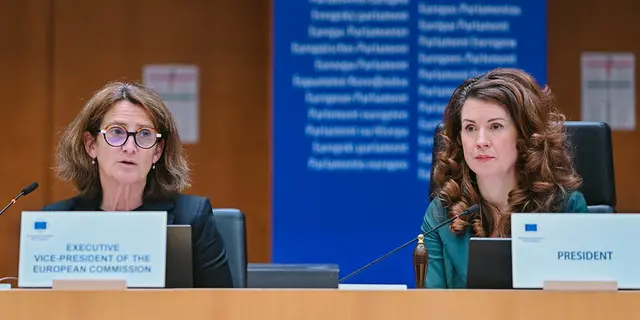
European Committee of the Regions President Kata Tüttő on 4 June called for a stronger, decentralised EU investment policy to support competitiveness, resilience and the green transition, arguing…