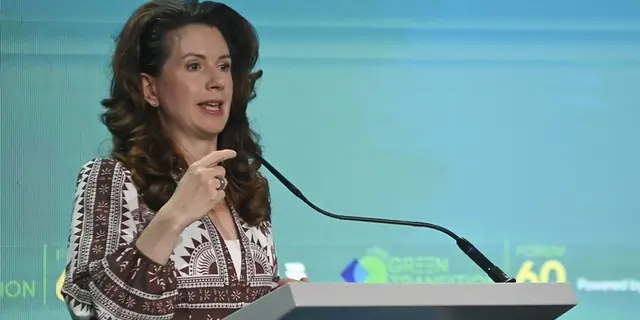
As vagas de calor recorde do verão passado, os incêndios florestais e outros fenómenos meteorológicos extremos em toda a Europa provaram novamente a urgência de combater as alterações climáticas e…
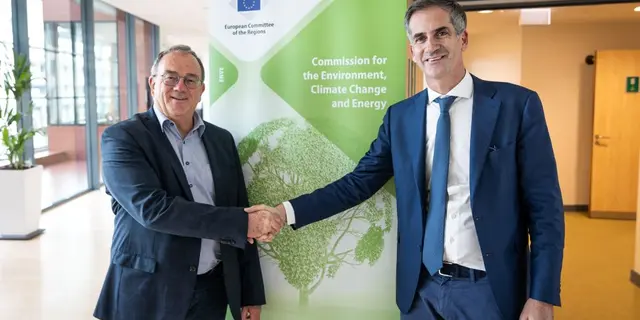

Regarding the European Commission proposal for directive on the repair of goods, the CoR opinion underlines the importance of informing consumers on the durability, on its repairability, on the delivery of software updates and the availability and affordability of spare parts, before purchasing a product. It points out that electronic waste, in particular, leads to loss of rare earth materials and unacceptable economic and environmental cost.
Rapporteur Dan Boyle (IE/Greens), Member of Cork City Council, said: "Citizens need to have confidence that the goods they purchase are durable, and are subject to long life after repair; that such repairs can be easily accessed, quickly done and limited in cost. By better definition and practice we can create this confidence, but we can also improve economic opportunities especially within the not-for-profit sector, where innovation has been occurring with initiatives such as repair cafés."
Mr Boyle's opinion points out that an open form of repair economy will encourage greater entrepreneurship locally. Regions and cities can also have their role in addressing skills required to repair and maintain goods, as well as for developing educational initiatives that help improve awareness of consumer rights and entitlements.
The CoR suggests incentivising companies that through research and development improve the durability of their products, and companies that prolong the availability of spare parts. It also recommends maximising the interchangeability of parts in products of a similar type. In the field of public procurement, reparability requirements should be explicitly included in public supply and works contracts.
However, regions and cities believe legal guarantee periods should be extended for more durable goods by defining them through the ecodesign implementing measures (i.e. by creating product-specific guarantee periods). They are also calling to further expand the reversal of the burden of proof to align it with the legal guarantee period, and to introduce a joint seller-producer liability.
With the proposal for directive on substantiation and communication of explicit environmental claims, the European Commission wants to tackle so-called greenwashing (false claims on a product's environmental impact). The CoR considers that Product Environmental Footprint should be the preferred method of analysis to justify any green claims. It stresses the need to accelerate the process to harmonise specific rules for specific claims, particularly those falling outside the scope of life cycle assessments (such as durability, recycled content, and biodiversity), and argues that no claim of any product being carbon-neutral can be seen as valid if based on offsetting.
Mr Boyle's opinion calls for a strong governance framework involving local and regional authorities and civil society in order to establish a transparent and inclusive processes for developing rules for substantiating and communicating green claims, such as a consultation forum on green claims. It also points out the need for measures and guidance to make the process easier for SMEs to be able to substantiate their green claims.
“Regarding environmental claims, there is a need to standardise labelling that confirms the green credentials in a way that informs consumers. Such claims cannot be the subject of greenwashing, nor can policies on the achievement of net-zero emissions be made through the purchase of carbon credits. Environmental claims need to identify how the production process, the distribution process and the final use of the good or service has lessened the build-up of carbon emissions”, rapporteur Boyle underlines.
Contact:
Lauri Ouvinen
Tel. +32 473536887
As vagas de calor recorde do verão passado, os incêndios florestais e outros fenómenos meteorológicos extremos em toda a Europa provaram novamente a urgência de combater as alterações climáticas e…
Após uma das vagas de calor mais extremas alguma vez registadas na Europa Central e Ocidental, os municípios e as regiões instam a UE a assegurar que o próximo orçamento de longo prazo da UE inclua…
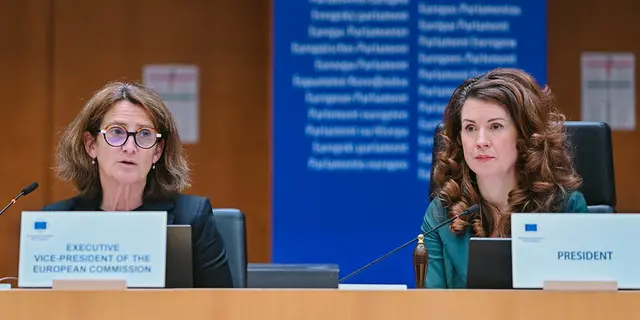
O Comité das Regiões Europeu participou ativamente no Fórum sobre a Transição Verde 6.0, em Sófia, esta semana. A presidente Kata Tüttő interveio numa sessão de alto nível em 4 de junho, juntamente…