Document de lucru - Construirea modelului sportiv european pe baza valorilor, de jos în sus
Opinion factsheet
Pe această pagină
- Educație și cultură
- Sport
- Politica de tineret
- Politica de coeziune
- Coeziunea teritorială
- eOcuparea forței de muncă și politica socială
- Protecția socială
Opinion number:
CDR-2588-2023
Status:
Adoptat
Objective
It is high time for sport to be officially recognised as an essential public policy instrument and a driving force for community, whereby the health and social return that it guarantees for territories and their communities is not separate from its economic importance.
Sport must not fail to take into account the study and monitoring of underprivileged communities' access to sport and social inequalities, which are not just geographical and economic inequalities, but also cultural, religious, physical and psychological ones.
Strengthen the culture of physical activity and providing training and more information to create sport literacy that will convey positive values and principles to young people such as inclusion, anti-discrimination or fair play.
Streamline the regulatory processes governing the European Sport Model: while recognising the need for oversight and consistency, it is of key importance that sports bodies and organisations at grassroots levels are not burdened by excessive bureaucracy.
A European sports model should establish a framework of minimum training requirements for physical, sports or recreational educators and coaches, which they must satisfy before working with young users of sports services in order to ensure that sports activity is a determining factor for health.
Call for a greater share of regional development funds, structural funds and EU cohesion policies to be coordinated, co-programmed and co-designed for small-scale activities and sports facilities, with the specific goal of promoting grassroots sport across the regions (grassroots approach).
Involvement of the level of government that is closest to citizens, i.e. local authorities, in identifying good practices for establishing sport as social infrastructure and the subsequent dissemination and communication activities, and actions needed for its formal recognition, in collaboration with the European Commission.
Call on the EU Member States to set up national programmes aimed at promoting active ageing and intergenerational exchange through sport, including by monitoring the impact of the silver economy on sport in their country.
Raise awareness about the establishment of programmes to guide and strengthen the skills, of under-35s through sport, and about the possibilities for national priorities in this field.
Adopt a European assessment methodology for evaluating the return on investments, in line with carbon neutrality, environmental sustainability and social objectives, together with subsequent reward mechanisms, specifically considering the attraction and retention of young talent in sports as one of the key social objectives in evaluating the return on investments, particularly in terms of providing opportunities for youth development and engagement.
Sport must not fail to take into account the study and monitoring of underprivileged communities' access to sport and social inequalities, which are not just geographical and economic inequalities, but also cultural, religious, physical and psychological ones.
Strengthen the culture of physical activity and providing training and more information to create sport literacy that will convey positive values and principles to young people such as inclusion, anti-discrimination or fair play.
Streamline the regulatory processes governing the European Sport Model: while recognising the need for oversight and consistency, it is of key importance that sports bodies and organisations at grassroots levels are not burdened by excessive bureaucracy.
A European sports model should establish a framework of minimum training requirements for physical, sports or recreational educators and coaches, which they must satisfy before working with young users of sports services in order to ensure that sports activity is a determining factor for health.
Call for a greater share of regional development funds, structural funds and EU cohesion policies to be coordinated, co-programmed and co-designed for small-scale activities and sports facilities, with the specific goal of promoting grassroots sport across the regions (grassroots approach).
Involvement of the level of government that is closest to citizens, i.e. local authorities, in identifying good practices for establishing sport as social infrastructure and the subsequent dissemination and communication activities, and actions needed for its formal recognition, in collaboration with the European Commission.
Call on the EU Member States to set up national programmes aimed at promoting active ageing and intergenerational exchange through sport, including by monitoring the impact of the silver economy on sport in their country.
Raise awareness about the establishment of programmes to guide and strengthen the skills, of under-35s through sport, and about the possibilities for national priorities in this field.
Adopt a European assessment methodology for evaluating the return on investments, in line with carbon neutrality, environmental sustainability and social objectives, together with subsequent reward mechanisms, specifically considering the attraction and retention of young talent in sports as one of the key social objectives in evaluating the return on investments, particularly in terms of providing opportunities for youth development and engagement.
Impact
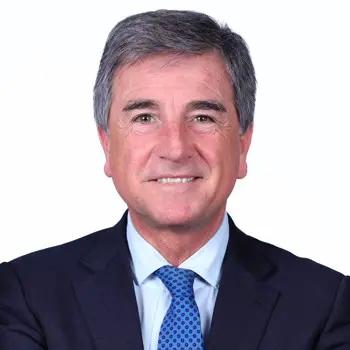
Participation of Mr Pella in the bilateral meeting with Mr Dimitrov, Sports policy member of Commissioner IVANOVA Cabinet (30/11/2023, Berlaymont, Brussels, BE).
Mr Pella attended the meeting in quality of rapporteur for the opinion SEDEC VII-040 "Building a values-based, bottom-up European sports model: a vehicle for encouraging inclusion and social wellbeing among young Europeans".
Participation of members R. Pella and M.L. Bianchi to the event "Costruire il modello sportivo europeo sui valori, dal basso verso l alto" (05/12/2023, Rome, IT).
Mr Pella engineered this event in quality of rapporteur for the opinion SEDEC VII-040 "Building a values-based, bottom-up European sports model: a vehicle for encouraging inclusion and social wellbeing among young Europeans". Mr Bianchi intervened as speaker.
Participation of Mr. R. Pella as sport spokesperson in the Annual ACES Awards Gala (07/12/2023, European Parliament, Brussels, BE).
Mr Pella attended the event as speaker in quality of rapporteur for the opinion SEDEC VII-040 "Building a values-based, bottom-up European sports model: a vehicle for encouraging inclusion and social wellbeing among young Europeans".
SportCity Journal_1/2024, a publication twice per year of the SportCity Foundation, has been totally devoted to the Opinion, containing also a number of contributions from the stakeholders (https://fondazionesportcity.it/). It was presented officially on 5/2/24, at the Italian EC Representation offices, and recently at the SportCity Meeting "La Reppublica del Movimento" in Pietrasanta on 23/3/24.
20/02/2024: Rapporteur Pella participated in the BE PCY conference on non-organised sport and free physical activity held in Genval (BE): intervention of the rapporteur in order to illustrate the content of his initiative on recognising sport as a social infrasructure.
Participation of Rapporteur Pella to the Sport City Meeting "La Repubblica del Movimento" (23/03/2024, Pietrasanta, IT): welcoming address of the rapporteur in order to showcase the content of the dedicated CoR opinion SEDEC VII-040 "Building a values-based, bottom-up European sports model: a vehicle for encouraging inclusion and social wellbeing among young Europeans".
Participation of Mr. R. Pella as CoR Rapporteur in the GRAN GALA ACES EUROPE AWARDS Ceremony (12/12/2024 - Brussels)
Participation of Mr. R. Pella as CoR Rapporteur to the consultation on the EP report "The role of EU policies in shaping the European Sport Model" (2025/2035(INI) (EP - Brussels, 18/3) led by MEP Bogdan Zdrojewski. Mr Pella presented the key points of the CoR opinion with a focus on recognising sport as a social infrasructure.
Mr Pella attended the meeting in quality of rapporteur for the opinion SEDEC VII-040 "Building a values-based, bottom-up European sports model: a vehicle for encouraging inclusion and social wellbeing among young Europeans".
Participation of members R. Pella and M.L. Bianchi to the event "Costruire il modello sportivo europeo sui valori, dal basso verso l alto" (05/12/2023, Rome, IT).
Mr Pella engineered this event in quality of rapporteur for the opinion SEDEC VII-040 "Building a values-based, bottom-up European sports model: a vehicle for encouraging inclusion and social wellbeing among young Europeans". Mr Bianchi intervened as speaker.
Participation of Mr. R. Pella as sport spokesperson in the Annual ACES Awards Gala (07/12/2023, European Parliament, Brussels, BE).
Mr Pella attended the event as speaker in quality of rapporteur for the opinion SEDEC VII-040 "Building a values-based, bottom-up European sports model: a vehicle for encouraging inclusion and social wellbeing among young Europeans".
SportCity Journal_1/2024, a publication twice per year of the SportCity Foundation, has been totally devoted to the Opinion, containing also a number of contributions from the stakeholders (https://fondazionesportcity.it/). It was presented officially on 5/2/24, at the Italian EC Representation offices, and recently at the SportCity Meeting "La Reppublica del Movimento" in Pietrasanta on 23/3/24.
20/02/2024: Rapporteur Pella participated in the BE PCY conference on non-organised sport and free physical activity held in Genval (BE): intervention of the rapporteur in order to illustrate the content of his initiative on recognising sport as a social infrasructure.
Participation of Rapporteur Pella to the Sport City Meeting "La Repubblica del Movimento" (23/03/2024, Pietrasanta, IT): welcoming address of the rapporteur in order to showcase the content of the dedicated CoR opinion SEDEC VII-040 "Building a values-based, bottom-up European sports model: a vehicle for encouraging inclusion and social wellbeing among young Europeans".
Participation of Mr. R. Pella as CoR Rapporteur in the GRAN GALA ACES EUROPE AWARDS Ceremony (12/12/2024 - Brussels)
Participation of Mr. R. Pella as CoR Rapporteur to the consultation on the EP report "The role of EU policies in shaping the European Sport Model" (2025/2035(INI) (EP - Brussels, 18/3) led by MEP Bogdan Zdrojewski. Mr Pella presented the key points of the CoR opinion with a focus on recognising sport as a social infrasructure.
Essential points
THE EUROPEAN COMMITTEE OF THE REGIONS
- points out that, because of its specificity, sport has been associated not only with free movement and competition law, but also with a large number of other EU policy areas, including social, health, education and training, youth, equal opportunities and accessibility, employment, the environment, media and culture, and tourism;
- notes that it is high time for sport to be officially recognised as an essential public policy instrument and a driving force for community whereby the health and social return that it guarantees for territories and their communities is not separate from its economic importance. On the contrary, it is exactly this recognition that should be the distinguishing feature that will shape the establishment of this instrument;
- calls for a greater share of regional development funds, structural funds and EU cohesion policies to be coordinated, co-programmed and co-designed for small-scale activities and sports facilities, with the specific goal of promoting grassroots sport across the regions (grassroots approach);
- calls for the involvement of the level of government that is closest to citizens, i.e. local authorities, in identifying good practices for establishing sport as social infrastructure and the subsequent dissemination and communication activities, and actions needed for its formal recognition, in collaboration with the European Commission and urging the European Commission to actively engage with LRAs in the development and recognition of sports as social infrastructure in their respective regions;
- recommends the adoption of minimal environmental criteria and standards for Member States, regions and cities applying to host medium-sized and large sports events in Europe, with a focus on initiatives that attract and retain young athletes, promote youth engagement, and foster a sense of belonging through sports events.