Den 2 juli intensifierade de sitt samarbete med Europeiska investeringsbanken, regioner och städer och diskuterade EU:s bostadspolitik med talman Calvino, ledamöter av Europaparlamentet och…
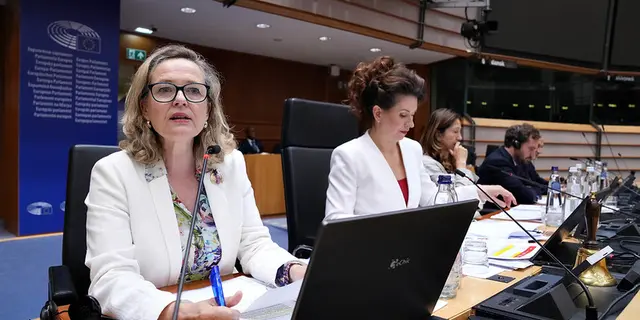

Local and regional leaders are crucial political actors to identify long-term trends and future challenges in order to improve EU policymaking and legislation. This is why the EU strategic foresight work can have a real impact only if regions and cities are involved. This is the key message of the opinion adopted by the European Committee of the Regions during the plenary session on 11 October.
Crises such as the COVID-19 pandemic and Russia's war against Ukraine have exposed institutions and society alike to serious dangers in terms of security and stability. The rapid, profound changes and transformations that the EU is experiencing on a number of fronts and the risks and high degree of uncertainty which are a defining feature of this moment in history have led the European Union to work on strategic foresight,a tool for steering and improving regulation (better regulation) and European policies, with a view to ensuring that the decisions taken today have a longer-term perspective and are fit for the future.
It is increasingly important for local and regional leaders to be able to anticipate risk factors and evaluate the possible policy responses by means of strategic foresight which helps regions and cities to develop proactive policies. For this reason, CoR members have adopted by unanimity an opinion on strategic foresight on 11 October, calling for the involvement of local and regional foresight in the preparation of the 2024-2029 strategic agenda and its delivery to ensure that EU policies and the reactions to changing events are future-proof at all levels. In this respect, understanding and explaining how global trends interact and affect policymaking at the local and regional level are of key importance and help promote strategic planning and at the same time promote participatory foresight activities from the bottom-up.
Rapporteur Giorgio Magliocca (IT/EPP),President of the Province of Caserta, said: “Local administrations and territorial associations have an important role to play in improving and strengthening the strategic foresight activity of the European Union. As representatives of regional and local institutions, with this Opinion, we emphasise the importance of our contribution to multi-level and anticipatory governance. The approval of this in CoR plenary with a broad and cross-party consensus paves the way for an even greater role of Local and Regional Authorities in the assessment of policies crucial for the future of our citizens. Thanks to the members of the Committee, the EPP group and all colleagues from the other groups.”
Members further stressed that regions and cities need to be supported in developing their own foresight capacity through appropriate dissemination and training activities for local and regional decision-makers and for public authority staff. By encouraging learning and involving citizens and local and regional authorities directly in horizon scanning, identifying weak signals and long-term trends will raise the profile and visibility of foresight activities in EU policy making and help developing options for the future.
Local and regional leaders further demanded a cross-cutting approach to vulnerability, crisis preparedness and crisis management and support the introduction of a vulnerability scoreboard and index and its declination at local and regional level as a key component of a proactive and realistic approach to territorial foresight. Policy makers of all political levels should be more involved in stress testing in order to anticipate and revise EU legislation so that it is consistent with appropriate policymaking.
Contact:
Theresa Sostmann
Tel. +32 475999415
Theresa.Sostmann@cor.europa.eu
Den 2 juli intensifierade de sitt samarbete med Europeiska investeringsbanken, regioner och städer och diskuterade EU:s bostadspolitik med talman Calvino, ledamöter av Europaparlamentet och…
Europeiska regionkommittén (ReK) har uttryckt sitt motstånd mot Europeiska kommissionens planer på att slå samman Europeiska socialfonden (ESF) med andra EU-instrument inom ramen för en enda…
Behålla sammanhållningspolitikens förutsägbara stöd till alla regioner, inte bara till de mindre utvecklade regionerna. förkasta nationella investeringsplaner när regionerna inte deltar i…
