Evropský výbor regionů (VR) vyzval Evropskou unii (EU), aby uznala města a regiony jako strategické partnery ve své zahraniční politice, a uvedl, že místní a regionální orgány by měly hrát formální…
Recommendations call for more money and technical support for Ukraine's cities and regions, with survey showing large pool of political will in EU cities and regions to help.
The European Union's main funding tool for Ukraine should be expanded and be more focused on building up the capacity of Ukraine's local and regional authorities, the European Committee of the Regions (CoR) says in a set of recommendations that also call for the support plan for Ukraine to use the EU's own regional-development policy as a building block.
The opinion on the planned Ukraine Facility, which the CoR adopted in a fast-track process on 11 October, particularly welcomes the recognition that Ukraine's cities and regions need to be meaningfully involved in the development, implementation and oversight of reconstruction and recovery projects. The CoR proposes a series of measures to strengthen the capacities of local authorities and also suggests that the European Alliance of Cities and Regions for the Reconstruction of Ukraine, an alliance that brings together Ukrainian and EU partners, could play a role in the Multi-agency Donor Coordination Platform for Ukraine.
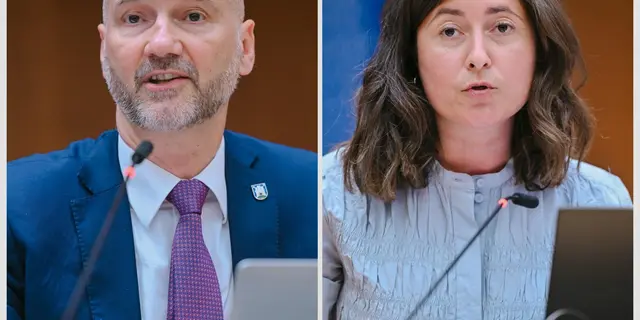
Dario Nardella (IT/PES), mayor of Florence and rapporteur on the Ukraine Facility, said: "Ukraine's reconstruction has to start now. The Facility should provide a stepping stone towards Ukraine's accession to the EU, and so it should incorporate as many of the fundamentals of the EU's regional policy as possible, including regional strategic planning. Since Ukraine's cities and regions should be involved at every stage of the reconstruction process, the EU should set aside more money for technical assistance and bring them into the governance structure of the Facility."
The CoR's opinion also argues that the Facility should be €60 billion, rather than €50 billion for the 2024-2027 period.
The recommendations on the Ukraine Facility were adopted after a broader discussion about Ukraine's reconstruction with partners in the Alliance. The debate was informed by a Eurobarometer poll – part of a broader survey commissioned by the CoR – that found that more than four in ten local and regional politicians (45%) believe that the EU cities and regions can contribute to Ukraine’s reconstruction in some way, via the wider European plan to help Ukraine’s recovery, through material and financial help, twinning programmes or through the exchange of best practice.
Vasco Alves Cordeiro, President of the European Committee of the Regions, said: "The sustainable reconstruction of Ukraine involves a wide range of fields, from stabilisation to the rehabilitation of infrastructure, domestic reforms and the prospect of the EU accession process. The Ukraine Facility will be key for channelling the EU's support to Ukraine in the coming years. In view of the next Ukraine Recovery Conference in Germany, it will be important to focus on involving all key stakeholders in the recovery process. Cities and regions are ready to support Ukraine's reconstruction by championing multilateral cooperation formats and providing practical support to Ukraine's local and regional authorities."
Leendert Verbeek, President of the Congress of Local and Regional Authorities of the Council of Europe , welcomed the Ukraine Facility's alignment with the European Charter of Local Self Government and suggested that the European Alliance of Cities and Regions for the Reconstruction of Ukraine could play a coordinating role within the EU's support plan. Calling for a return to decentralised governance "as the situation allows for transition from martial law", President Verbeek said: "Ukraine's cities and regions will play a crucial role in the construction of Ukraine. To do so, local and regional authorities need to be provided with means for action – namely with their own powers rather than only delegated powers."
In a video message, Oleksiy Kuleba, executive secretary of Ukraine's Congress of Local and Regional Authorities and a deputy head of the Office of the President of Ukraine, Ukraine is "facing a difficult winter", adding: "We absolutely need your practical help."
Tetiana Yehorova-Lutsenko, President of the Ukrainian Association of District and Regional Councils, thanked the EU's cities and regions for standing "shoulder to shoulder" with Ukrainians and Ukraine's cities and regions. "We need it to continue, we need to continue with you", she said, calling for more partnerships at what she described as "a turning point for our country".
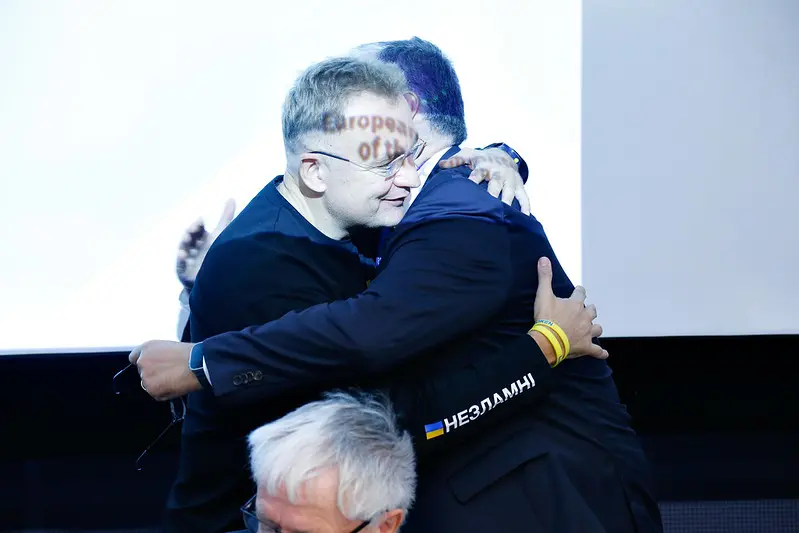
Andriy Sadovyi, mayor of Lviv, said that "every community" in Ukraine requires international support, and highlighted the support that cities and regions in Ukraine are providing each other. Lviv, which lies close to the border with Poland but which is frequently hit by Russian missiles, is currently hosting around 150,000 internally displaced people and has treated 15,000 casualties. He praised city-to-city partnerships, saying: "When one talks to a mayor, one sees a spark and movement." Calling for more cooperation, he emphasised that "we often need supervision and wise words".
The city of Lviv in May became the first Ukrainian administration to take up an offer from the CoR to use its offices in Brussels. On 12 October, the region of Dnipro will become the fourth administration to open an office in the CoR, joining the region of Vinnitsa and the Association of Ukrainian Communities as well as Lviv. Dnipro, Ukraine's fourth-largest city, is a major centre of engineering and heavy industry as well as an important transport hub.
Background:
Contact:
Andrew Gardner
Tel. +32 473 843 981
Evropský výbor regionů (VR) vyzval Evropskou unii (EU), aby uznala města a regiony jako strategické partnery ve své zahraniční politice, a uvedl, že místní a regionální orgány by měly hrát formální…
Doporučení Parlamentního shromáždění pro partnerství EU-Spojené království reaguje na výzvy VR.

Evropská unie zintenzivňuje své obranné úsilí, přičemž regiony a města hrají stále důležitější úlohu při realizaci v terénu. Na druhé schůzi pracovní skupiny pro obranu Evropského výboru regionů (VR)…
