Malta
Mario FAVA
Μέλος
President of the Local Councils' Association

PES (Party of European Socialists)

The exercise demonstrated effective collaboration between scientific institutions, emergency services, local councils, and national authorities. Such inter-agency coordination is critical to ensuring timely and effective disaster preparedness and response.
While Malta is not traditionally associated with tsunamis, its central Mediterranean location—within a seismically active region influenced by tectonic movements along the Hellenic Arc, the Ionian Sea, and the North African margin—poses a credible risk. Historical events, such as the devastating tsunamis of 1693 and 1908, demonstrate that the island is not immune to such hazards.
Compounding this risk are Malta’s high coastal population density and the concentration of critical infrastructure—including ports, fuel storage facilities, power stations, and tourism hubs—along its shoreline. Until recently, however, public awareness of tsunami risks remained low, and the country lacked both an early warning system and community-based evacuation plans.
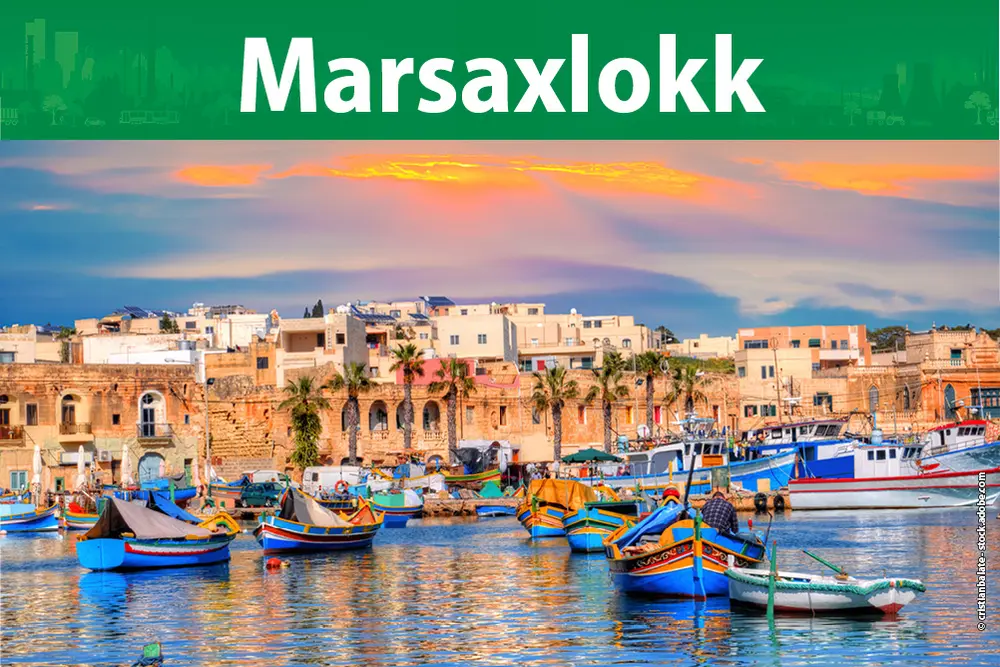
The coastal village of Marsaxlokk, situated on Malta’s south-eastern shore, is particularly exposed due to its low elevation and direct exposure to the open sea. Recognised for both its vulnerability and strategic importance, Marsaxlokk was chosen as the site of Malta’s first national tsunami simulation in November 2021. This exercise modelled the impact of 1.5-metre waves generated by a hypothetical offshore earthquake, with a primary focus on assessing operational readiness—particularly the coordination between key agencies, including the Civil Protection Department (CPD), the Armed Forces of Malta (AFM), and the Malta Police Force.
Building on this foundational exercise, Marsaxlokk participated in NEAMWave23—a regional tsunami simulation coordinated by IOC-UNESCO—in November 2023. The scenario involved a fictional high-magnitude earthquake in the Eastern Mediterranean, prompting a tsunami WATCH bulletin from a Regional Tsunami Service Provider. Upon receiving the alert, the CPD activated national emergency protocols, testing multiple components of Malta’s tsunami response framework, including:
In preparation for NEAMWave23, the Seismic Monitoring and Research Group (SMRG) at the University of Malta led a series of public awareness initiatives. A key event was an information session held on 1 November 2023 at Marsaxlokk Parish Hall, where residents received guidance on tsunami risks, warning signals, and emergency actions to take in the event of a tsunami.
Malta
Μέλος
President of the Local Councils' Association
ENVE works in fields related to the European Green Deal, which include the environment biodiversity, circular economy, zero pollution, climate change, energy, and space policies.