Sweden

Åsa AGREN WIKSTRÖM
Member
Member of County Council, Västerbotten Region

EPP (European People's Party)

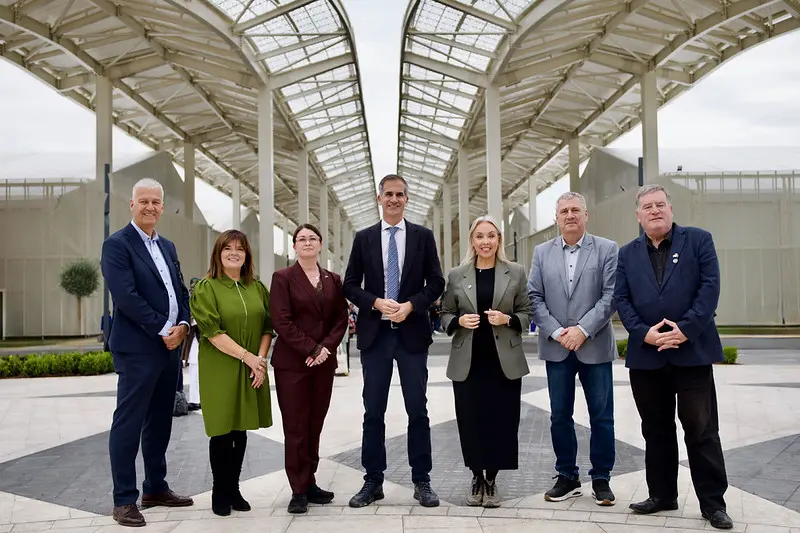
After an intensive yet exciting beginning of the week at COP31, the Conference arrived at the climax for cities and regions. Second day of the World Leaders' Summit was also the Resilient Cities Day at COP31. From tackling extreme heat in Athens to advancing adaptation in Flanders, the delegation brought practical resilience measures into the spotlight. Across discussions on urban resilience and investment, Members called for global commitments to translate into locally tailored projects, backed by funding that reaches cities and regions directly.
ENVE chair Konstantinos Bakoyannis (EL/EPP), Åsa Agren Wikström (SE/EPP) and Nadia Pellefigue (FR/PES) joined local and regional leaders from all over the world at what Anacláudia ROSSBACH (USG), United Nations Under-Secretary-General and Executive Director of UN-Habitat described as an historic moment in in UNFCCC COPs: the first ever WorldLeaders Summit's High-Level Dialogue on Adaptation, where several announcements were made by participating Heads of State. Local leaders were welcomed by Murat Kurum COP31 President and André Corrêa do Lago, COP30 President. Taking part in the debate (among others): Uğur İbrahim Altay, Mayor of Konya and COP31 Special Envoy for Local and Regional Governments, Rodrigo Paz, President of Bolivia, Paschal Donohoe, World Bank Managing Director, ministers from Kenya, Jordan, Bahrein,Rwanda… Sadiq Khan, Mayor of London closing his remarks calling for more implementation said: "We [Mayors] are the climate doers, not the climate delayers".
Joining the EU Pavilion, ENVE chair Kostas Bakoyannis (EL/EPP) stressed that effective resilience requires stronger multilevel governance and finance that reaches cities and regions directly. His message was a central point of a debate on Climate-Resilient Urban Futures led by the EU Covenant of Mayors and joined by Mayor of Malmö (SE), Mayor of Muğla (TR) and one of the authors of the (forthcoming) IPCCC special report on cities.
Several members also held a bilateral meeting with Québec's newly appointed Minister for the Environment, Jean Pellerin. The CoR and Québec signed a cooperation agreement on 11 December 2025 that identified climate action as a shared priority. This meeting reiterated their close cooperation to strengthen the role of subnational authorities in these UNFCCC negotiations.
Contributing to the COP31 Presidency Special Event Connecting Levels andDelivering Climate Action, Nadia Pellefigue (FR/PES) engaged with negotiators from Australia, Brazil and the European Union on ways to ensure that the outcomes of the conference reflect cities and regions' needs and priorities. The debate was co-organised by the Union of Municipalities of Türkiye (TBB), the CoR and ICLEI.
Taking the floor in the Spanish Pavilion Andries Gryffroy (BE/EA) illustrated how cooperation and practical local solutions can accelerate climate adaptation. He highlighted Flanders' adaptation work as an example of translating climate knowledge into locally tailored nature-based action, stressing that cities and regions need adequate funding and a meaningful role in designing and implementing resilience measures. Joining the debate on state-driven climate action at the Francophonie Pavillion Nadia Pellefigue (FR/PES) underlined the importance of interregional cooperation in accelerating climate adaptation. She also reiterated key messages for adaptation indicators to reflect territorial action and more direct access to adaptation finance. Watch the recording.
Similar messages were put forth by Dan Boyle (IE/Greens+PRO)in a debate with Z Zurich Foundation and ICLEI on Community-led Resilience. He stressed that resilience must be designedwith communities and not just deliveredto them, and that cities and regions need the finance, capacity and role in decision-making to turn global adaptation commitments into real effects on the ground.
Contributing to the discussion hosted by the World Economic Forum on resilient places as investments, ENVE chair Kostas Bakoyannis (EL/EPP), delivered the message of resilient European cities and regions as drivers of competitiveness. In his contribution the ENVE chair drew on Athens’ experience with extreme heat, highlighting the need to turn local resilience priorities into credible investment pipelinesthrough project-preparation support, appropriate financing models and direct access to funding for cities and regions.
Take a visual journey of COP31 through our photo gallery!
Background information:
· Union of Turkish Municipalities (TBB) COP31 event in Brussels
· Information on the CoR-Quebec Cooperation Agreement
· CoR publication: We deliver climate action - EU cities and regions at COP31
Contact: ENVE secretariat
enve@cor.europa.eu
Sweden
Member
Member of County Council, Västerbotten Region


France

Member
Vice-President of the Region of Occitanie


Ireland

Alternate
Councillor, Cork City Council