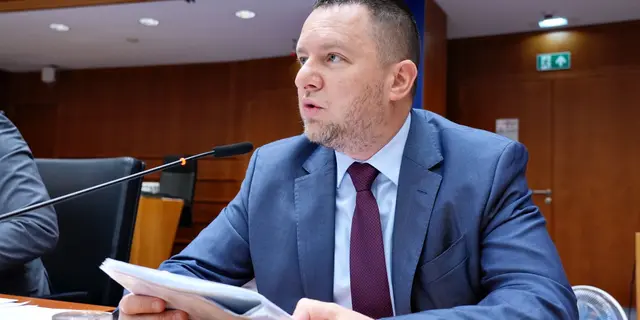
Local and regional leaders urge a comprehensive approach to bringing new generations into farming.

On 23 September, European Organic Day, the European Commission unveiled the winners of the fourth edition of the EU Organic Awards, recognising the commitment of actors across the organic value chain who contribute to innovative, sustainable, and high-quality projects that strengthen organic production and consumption in Europe. This year’s awards recognised Võru County (Estonia) as best organic region, and Valpaços (Portugal) as best organic city.
The winners were selected by a jury made up of representatives from the European Commission, the European Committee of the Regions, the European Economic and Social Committee, COPA-COGECA and IFOAM Organics Europe, with the support of the European Parliament and the Council of the European Union. Their choices highlight not only outstanding environmental achievements but also the social and economic value that organic farming brings to local communities.
While the EU Organic Awards recognise excellence across six categories, the Committee of the Regions (CoR) focuses on those which underline the contribution of regions and cities.
Võru County, Estonia, best organic region: Võru County is a pioneer in building a sustainable organic food system, integrating public institutions, producers, and the wider community. Through the Võru County Organic Agreement, all municipal schools and kindergartens now feature at least 20% organic ingredients in catering, supported by training, study trips, and community initiatives. This systematic approach not only protects soil, water, and biodiversity but also strengthens the local economy, supports rural entrepreneurship, and raises awareness of healthy, organic diets. With clear targets and strong cross-sector collaboration, Võru County offers a replicable model for regions across Europe.
Municipality of Valpaços, in the Alto Tâmega district of the Vila Real region, Portugal, best organic city: Valpaços leads Portugal in organic farming, with 516 certified producers and a strong focus on sustainability and innovation. The municipality promotes short supply chains for organic products, educational gardens, municipal composting, and a Climate Action Plan, while supporting local product development through its Centre for Agricultural Technology and Technology Transfer. Its organic sector, including protected geographical indications (PGI) and protected designations of origins (PDO) products such as wine, olive oil, and honey, is backed by political leadership, community engagement, and multi-sector collaboration. Valpaços demonstrates how rural cities can combine tradition, innovation, and environmental stewardship to build resilient and sustainable food systems.
Quotes
Kirstine Bille (DA/Greens), member and representative of the CoR in the Organic Awards jury: “Committing to organic means investing in the future of our territories. By applying for the European Organic Awards, your city or region affirms its leadership for sustainable agriculture, healthy food and a resilient local economy."
EU Commissioner for Agriculture, Christophe Hansen: "The winners of the EU Organic Awards are shining examples of what the organic movement in Europe can achieve: they combine the highest environmental standards with economic resilience and social engagement. Their work proves that organic farming not only produces sustainably, but also builds community and shapes the future. Today we honour their achievements – and celebrate the strength and potential of the entire organic sector in Europe."
Background
The EU Organic Awards celebrate concrete achievements on the ground, offering inspiration for the whole Union. They also underline the importance of local and regional action in supporting organic farming, from land-use policies and farmer support schemes to local markets and consumer awareness initiatives.
While organic farming has expanded steadily over the past decade, the EU is still working towards its Farm to Fork strategy objective of 25% of agricultural land under organic cultivation by 2030. Local initiatives like those of Võru County and Valpaços demonstrate how regions and cities can accelerate this transition.
Contact
Hélène Dressen
Tel: +32 471502795
Helene.dressen@cor.europa.eu
Local and regional leaders urge a comprehensive approach to bringing new generations into farming.
The growing frequency of natural and human-induced disasters, from floods and wildfires to health emergencies and geopolitical threats, demonstrates the need to give a voice to the cities and regions…
The European Committee of the Regions (CoR) has welcomed the European Commission's 2030 Consumer Agenda as a timely roadmap to strengthen consumer rights and supports businesses in an…