Theresa Sostmann
Theresa.Sostmann@cor.europa.eu

The European metals industry as a strategic and fundamental pillar of the European Union’s economic and social stability, as well as a crucial link to other key driving industries, such as the automotive and defence industries. In this context, members of the European Committee of the Regions adopted an opinion on the Steels and Metals Action Plan during the plenary session on 11 December, setting out urgent demands to safeguard the sector and secure the future of Europe’s industrial regions.
CoR members stressed that, from the earliest days of European integration, the steel and metals industry has been a cornerstone of European regions and cities, driving local economic development, creating high-quality jobs, and supporting critical industries that underpin both regional prosperity and the EU’s strategic autonomy.
In the opinion, they highlighted high energy costs as the most decisive factor undermining the competitiveness of the European steel and metals sector during the decarbonisation process, particularly as it continues to face strong pressure from global competitors. European electricity prices are up to three times higher than in the United States, causing plant closures and delaying vital investments. They called for urgent reform of the energy market and accelerated support for the roll-out of clean technologies such as green hydrogen, since access to clean, affordable and secure energy remains central to the green transition.
Furthermore, local and regional leaders pointed to a set of interconnected challenges that must be tackled to secure a green and competitive future for Europe’s industrial regions. The viability of European plants is being threatened by trade conflicts and unfair trading practices, global steel overcapacity, and carbon leakage, as companies relocate production to countries with weaker climate rules. In response, CoR members demanded stronger trade protection instruments, a reinforced carbon border adjustment mechanism (CBAM), and limits on exports of scrap metal, in order to protect resources and jobs. They also insisted that demand for European low-carbon steel and metals should be increased through public procurement and an EU-wide “green steel” label.
CoR members highlighted that, to effectively support the transition of industry, the workforce, and regions, the EU should complement existing Cohesion Policy resources with sustained and well-targeted funding. CoR members insisted that a place-based industrial policy approach, with a strong territorial focus and support for regional industrial ecosystems are crucial to ensure that these measures are successful on the ground.
Quote
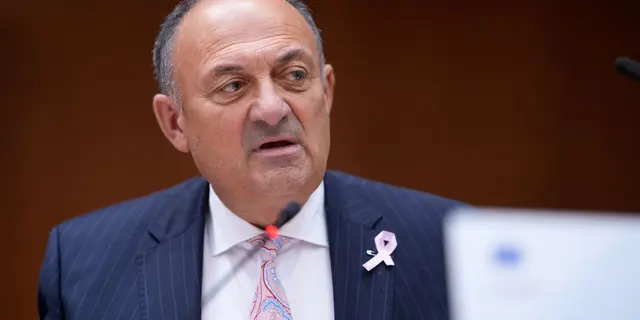
Rapporteur Guillermo Peláez Álvarez (ES/PES), Regional Minister for Finance, Justice and European Funds of Asturias: "Skyrocketing energy costs, unfair trade, and insufficient support for the green transition are putting Europe's steel and metals industry at existential risk. If we lose this sector, we sacrifice more than production – we sacrifice the backbone of our industrial regions, countless quality jobs, and Europe's strategic autonomy. This opinion is an urgent call to the European Union. Backed by our experience in Asturias, we have outlined a concrete blueprint for Europe’s steel and metals industry, showing that going green and staying competitive are two sides of the same coin. Now, we need decisive action from the EU to turn it into reality."
Giorgio Gori (IT/PES), Member of the European Parliament and Vice-Chair of the Committee on Industry, Research and Energy: “The steel sector is strategic for Europe’s autonomy, but it needs swift action on energy costs, lead markets for green products, and strong tools against unfair competition and foreign overcapacity. We must support investment and safeguard competitiveness to ensure steel production remains in Europe, while advancing decarbonisation and the growth of our economy.”
Background
The European Commission presented on 19 March 2025 the European Steel and Metal Action Plan, a comprehensive strategy to enhance the competitiveness and sustainability of the EU steel and metals sector by focusing on six key pillars: securing affordable clean energy, preventing carbon leakage, promoting circularity, protecting industrial capacities, strengthening industrial jobs, and de-risking investments.
Theresa.Sostmann@cor.europa.eu
Spain
Member
Regional Minister for Finance, Justice and European Affairs, Government of the Principality of Asturias


Europe’s industrial competitiveness is largely built in regions in where ecosystems, small and medium-sized enterprises (SMEs), skills, infrastructure and innovation networks are concentrated. In an…
Duisburg, North-East Romania and Umbria have been named winners of the 2027 European Entrepreneurial Regions awards for strategies that put small and medium-sized enterprises (SMEs) at the centre of…
The European Committee of the Regions’ (CoR) Commission for Economic Policy (ECON) met in Galway, Ireland, on 6-7 October to discuss the central role that Europe’s regions play in strengthening…