Slovakia
Rastislav TRNKA
Member
Chairman of the Košice self-governing Region

EPP (European People's Party)

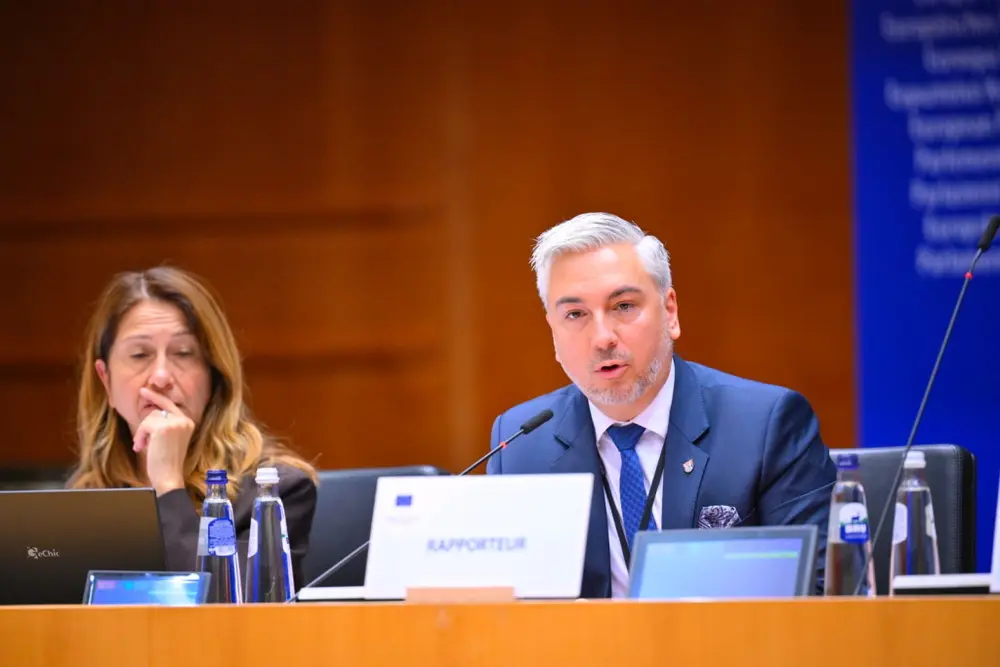
Regions and cities have highlighted the potential of nature credits in bridging the estimated EUR 37 billion financing gap to tackle biodiversity loss and nature degradation. However, the European Committee of the Regions (CoR) stresses that nature credits can't replace existing EU support for biodiversity protection and restoration, such as the LIFE programme that has been axed in the European Commission's proposal for the next long-term EU budget. The opinion adopted at the plenary session on 14 October also calls for robust safeguards, transparency and independent monitoring to avoid greenwashing and ensure that nature credits are not used as an offsetting instrument.
Following the roadmap presented by the European Commission in July, regions and cities consider that nature credits should be seen as a complementary tool to EU environment and climate policies and build on locally led pilot projects. They point out the need for sufficient public resources and technical assistance to ensure that local and regional authorities can lead on ecological restoration with support from the private sector. In this regard, the CoR is deeply concerned that the LIFE programme is not maintained in the current proposals by the European Commission for the 2028-34 multiannual EU budget.
The CoR opinion led by Rastislav Trnka (SK/EPP), President of Košice Self-governing Region, stresses the need for legal clarity to prevent nature credits from undermining the EU’s regulatory framework or weakening environmental ambition. Regions and cities believe that nature credits should not serve as an offsetting mechanism, but rather as a tool for delivering a positive ecological contribution aimed at generating a net gain for biodiversity. Therefore, credit schemes must be strictly results-based and substantiated through harmonised and transparent monitoring, reporting and verification procedures.
The CoR suggests using nature credits as a tool for territorially targeted ecological improvement, providing new opportunities for sustainable development, green jobs and regeneration of areas affected by industrial activity, mining or long-term pollution. It proposes to give local and regional authorities the possibility to establish their own nature credit funds and highlights their role as platforms for project coordination and intermediaries between investors and implementing actors.
Local and regional leaders also urge Member States to integrate nature credit mechanisms into their national environmental and climate strategies and to build the technical, administrative and professional capacities needed to support local and regional authorities in running these schemes. The framework should support and create synergies with regional and local strategies that establish concrete measures for biodiversity protection and restoration and the achievement of environmental objectives at subnational level.
Quote:
Rapporteur Rastislav Trnka (SK/EPP), President of Košice Self-governing Region: “Nature credits are a revolutionary first step and an opportunity to involve those who have so far stood aside in the protection of biodiversity – industry, regional governments and investors. If regions play the role of players and have confidence, they can become active in achieving the EU's environmental and environmental goals. This is the fastest way to restore biodiversity in the European Union and subsequently the world, if we act quickly as a leader."
More information:
On 7 July, the European Commission launched a 'Roadmap towards Nature Credits', to incentivise private investments into actions that protect and preserve nature, and reward those who undertake these actions and invest in them. The roadmap sets out how nature credits could complement public funding and help mobilise additional resources for biodiversity, while ensuring environmental and social safeguards. Nature credits are presented as one possible way to support and value nature-positive action – such as restoring wetlands, maintaining high-diversity landscapes or enhancing soil and pollinator health – and to channel funding towards actors on the ground, such as farmers, foresters, fishers, land managers, landowners and local communities.
Contact:
Lauri Ouvinen
Tel. +32 473536887
lauri.ouvinen@cor.europa.eu
Slovakia
Member
Chairman of the Košice self-governing Region
Local and regional leaders have recalled that the persisting gap between the necessary ambitions and real-world implementation of the EU's environmental legislation can only be closed if cities…
The first EU Zero Pollution Forum will take place at the European Committee of the Regions on 7 December. Jessika Roswall, Commissioner for Environment, Water Resilience and a Competitive Circular…

More than 50 high-level experts from across the EU water sector gathered in Brussels on 21 September for the first meeting of the Water Resilience Stakeholder Platform. The European Commission…
