France

Vincent CHAUVET
Alternate
Municipal Councillor of Autun

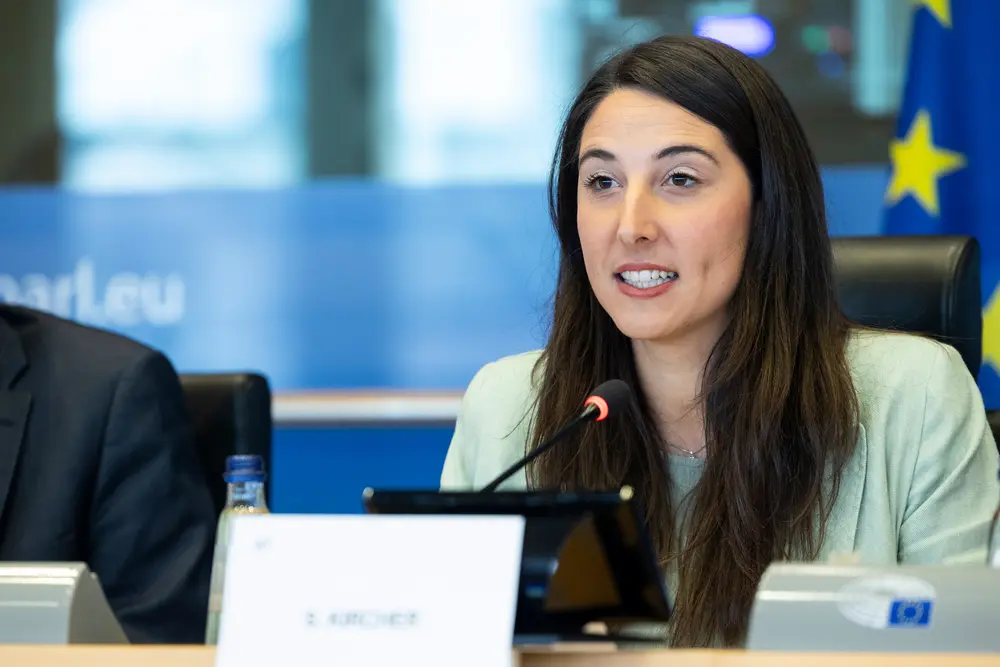
When she joined the Young Elected Politicians (YEP) programme, she was a young regional politician eager to exchange ideas with peers from across Europe. Today, Sophia Kircher (AT/EPP) sits in the European Parliament, where she works on key issues including transport and the railway sector, tourism, economic development and opportunities for young people. Her journey from becoming the youngest Vice President in the history of the Tyrolean Parliament to shaping policy at the European level shows how local leadership can grow into a European vocation.
The value of the YEP Programme in the road to the European Parliament
Looking back, she describes the opportunity to connect with other young, elected representatives from across Europe as one of the most valuable aspects of the programme. "It is always very motivating to see how many young people are already active at all political levels and to realise how much we can learn from one another", said the Austrian MEP.
The exchanges within the YEP community highlighted a shared reality across Europe: while regions may differ greatly, many face similar challenges, from encouraging youth participation in democracy to bringing European decision-making closer to citizens. For Ms Kircher, the YEP programme also strengthened an understanding that has continued to guide her political journey: "European policy is strongest when it is informed by the experiences of those who work closest to citizens."
That conviction became particularly important as she transitioned from regional politics in Tyrol. While policy areas such as transport, agriculture, competitiveness and reducing bureaucracy are discussed at both regional and European levels, she quickly discovered the vastly different scale of European policymaking. As she noted, the European Parliament brings together 720 Members representing around 450 million citizens and working across 24 official languages.
Yet despite this scale, her experience in regional politics continues to shape her approach:
"One aspect I valued deeply in regional politics was the direct connection to people. At the regional level, you can often see very immediately how political decisions affect municipalities, families, businesses and citizens on the ground. That experience continues to shape my work today, because it reminds me that European policymaking must remain practical, understandable and connected to local realities."
Her transition to the European Parliament also revealed one of the institution's defining features: the art of compromise. Unlike regional politics, where governing majorities are often clearly defined, the European Parliament operates without a fixed coalition. "Every file requires negotiation, dialogue and compromise, often across political groups, countries and perspectives," she says. While this means that "not everyone gets exactly what they want", she believes it also makes European policymaking "consensus-oriented".
The experience felt familiar. Through the YEP programme, she had already learned how to exchange ideas across countries, political cultures and regional realities. Those early experiences helped her develop many of the skills she relies on today as an MEP, from listening and building consensus to turning local concerns into European priorities.
On strengthening women’s representation in politics
As a young female politician and now President of Youth of the European People’s Party (YEPP), she is also committed to increasing female representation in political leadership. She believes that stronger representation is essential for a more inclusive and credible democracy. As she underlines, "if women are underrepresented in leadership, we miss out on perspectives, experiences and talents that benefit society as a whole."
Although "progress has been made", she would like to "see more women in decision-making roles, stronger support structures and a political culture" that better accommodates different life realities. Like many young women entering public life, she has sometimes encountered situations where she was underestimated, but as she has turned those experiences into motivation and strength to deliver results and lead by example.
From local and regional government to Europe's largest elected institution, Ms Kirscher's journey illustrates how young leaders can grow into influential voices at every level of governance.
Discover more Alumni YEP Stories
This profile is the first in the CoR new Alumni YEP Stories series, highlighting the diverse paths taken by former participants of the Young Elected Politicians programme.
To launch the series, Sophia Kircher joined a CoR-organised LinkedIn Live discussion alongside Vincent Chauvet (FR/Renew), Mayor of Autun and CoR member since 2020, and Despina Pastou, who continued her commitment to citizens through a career in the public sector after serving for seven years as a local councillor in Cyprus. Together, they reflected on how the YEP experience shaped their professional journeys, discussed the value of youth engagement in policymaking, and shared advice for the next generation of European leaders.
Stay tuned for future editions of "Alumni YEP Stories" as we highlight the diverse paths taken by members of our alumni community.
This news item was written in framework of the CoR Young Elected Politician Programme.
Contact
Eva Tomara
Email: yep-programme@cor.europa.eu
Tel: +3222822125
France
Alternate
Municipal Councillor of Autun