Europejski Komitet Regionów był współgospodarzem seminarium wysokiego szczebla w Brukseli w dniu 5 maja, aby omówić, w jaki sposób nowa strategia UE na rzecz infrastruktury badawczej i…
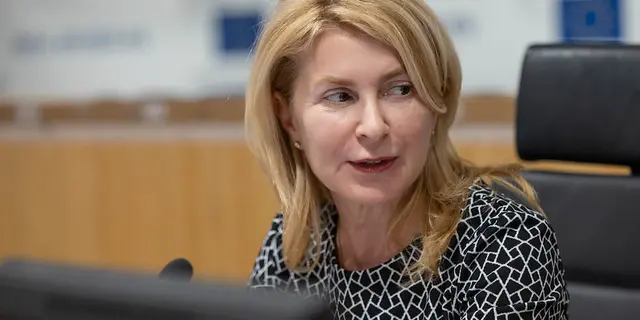

Promoting cultural policies in rural areas, stopping gender-based violence and developing a European sports model that promotes social inclusion and equality were the main topics discussed at the meeting of the Commission for Social Policy, Education, Employment, Research and Culture (SEDEC) on 2 October. How to further develop the cooperation in innovation and research between the CoR and the European Commission was also on the agenda.
Cultural and creative industries can strengthen local economies, make rural areas more attractive to young people and combat demographic decline. To make this happen, the active participation of cities and regions in managing these policies is essential as it ensures that actions adapted to the specific needs of each community.
These are the main messages of the draft opinion discussed and adopted by local and regional leaders during the SEDEC meeting.The rapporteur Csaba Borboly(RO/EPP),a County Council, stated: "Cultural policies in rural regions can help safeguard and celebrate the unique cultural identities of these communities. This not only benefits local residents, but also attracts tourists and fosters cultural exchanges. Moreover, cultural initiatives in rural areas can stimulate economic growth and competitiveness. These include cultural tourism, local craftsmanship, cultural events, and the promotion of regional products, all of which generate income and job opportunities."
Members also adopted by unanimity an opinion on Stopping gender-based violence – cities and regions leading the way. The opinion underlines the role of the local and regional authorities in preventing such violence and in protecting, helping and supporting the victims. It also highlights the need for a victim- and rights-centred approach, at all levels of government. The opinion recognises the importance of the EU accession to the Istanbul Convention against violence against women and domestic violence, and calls on the European Commission and the Member States to implement gender budgeting as an instrument for improving gender equality.
The rapporteur, Donatella Porzi (IT/Renew Europe), regional councillor in the Umbria Region, said: "Based on the evidence we have gathered, it became rapidly clear that there are various approaches to gender-based violence (GBV) in the EU, ranging from strong anti-GBV policies to insufficient recognition or even complete obliviousness to the problem. In this regard, the local and regional perspective can either be part of the solution, or, if ignored, part of the problem. To help local and regional authorities to tackle gender-based violence, we need more data, concrete measures to create safe offline and online public spaces, and long-term educational measures that create social change. I want this opinion to raise cities' and regions' voices, because when it comes to ending gender-based violence, we can really make a meaningful change."
Local leaders discussed and adopted a draft opinion entitled 'Building a values-based, bottom-up European sports model: a vehicle for encouraging inclusion and social wellbeing among young Europeans'. They called for the promotion of sports in Europe, taking into account its social and educational function, especially among the younger generations. They stressed the importance a culture of equality and inclusion at all levels, to combat social disparities and build a more cohesive Europe. The European sports model should include both professional and amateur levels, should be based on cooperation, and should integrate EU programmes. Members of the CoR argued that local and regional authorities could play a crucial role in developing a sports model that is inclusive and open to all.
"By emphasising values, community engagement, and youth empowerment, building a values-based, bottom-up European sports model not only promotes healthy lifestyles and physical well-being, but also contributes to the broader goal of fostering more inclusive and socially cohesive societies in Europe. The EU has a responsibility to develop public policies related to sports based on data and best practices: we are asking to invest more in these aspects through the European Social Fund and in sport infrastructures, excluding generativity investments from the new rules of the Stability Pact," stressed the rapporteur, Roberto Pella (IT/EPP), mayor of Valdengo.
The three opinions are scheduled for adoption at the CoR's plenary session in late November.
The meeting provided the opportunity to exchange of views on the future of Joint Action Plan signed by the CoR and the European Commission in November 2020 to increase, through 26 actions, the administrative and implementation capacity of the regions to leave no one behind, to reduce the innovation divide, and to build an interconnected innovation ecosystem in Europe. Local and regional leaders discussed with Marc Lemaitre, director-general of the European Commission's DG for Research and Innovation, the next steps of this cooperation, and shared their experience on the different on-going initiatives, notably the Horizon Europe Programme.
Tanya Hristova (BG/EPP), chair of the SEDEC Commission and mayor of Gabrovo, said: "The Joint Action Plan that was agreed in November 2020 has proven to be a game-changer in strengthening cooperation between the CoR and the European Commission in practically all policy areas within our remits. The JAP represents not only a tool for interinstitutional cooperation, but also an opportunity to promote participatory democracy and the values that instil in citizens a sense of belonging to the common European project. The yearly implementation reports our services have been producing show the extraordinary level of collaboration we have achieved in recent years."
Members exchanged views on the draft opinion on Towards an integrated EU policy approach to support place-based innovation for the green and digital transition, by rapporteur Andrea Putzu (IT/ECR), and appointed two rapporteurs:
To rewatch the meeting, click
here. The next SEDEC will take place on 8 December 2023.
Europejski Komitet Regionów był współgospodarzem seminarium wysokiego szczebla w Brukseli w dniu 5 maja, aby omówić, w jaki sposób nowa strategia UE na rzecz infrastruktury badawczej i…
7 maja przywódcy lokalni i regionalni zaapelowali o silny i stabilny budżet oraz o centralną rolę regionów i miast, aby zapewnić powodzenie kolejnego programu „Horyzont Europa” (2028–2034).

Aby zapewnić prostsze przepisy UE oraz silniejsze wsparcie finansowe i techniczne we wdrażaniu polityki w zakresie danych i sztucznej inteligencji, na sesji plenarnej w dniu 7 maja Europejski Komitet…
