Italy

Alessio MAMMI
Člen/Členka
Regional Minister of the Emilia-Romagna Region

PES (Party of European Socialists)

Investments in slope stabilisation, irrigation upgrades, and drainage improvements significantly reduced
the impact of the 2023 floods. These targeted measures demonstrate the tangible value of embedding
prevention into local infrastructure and rural development planning.
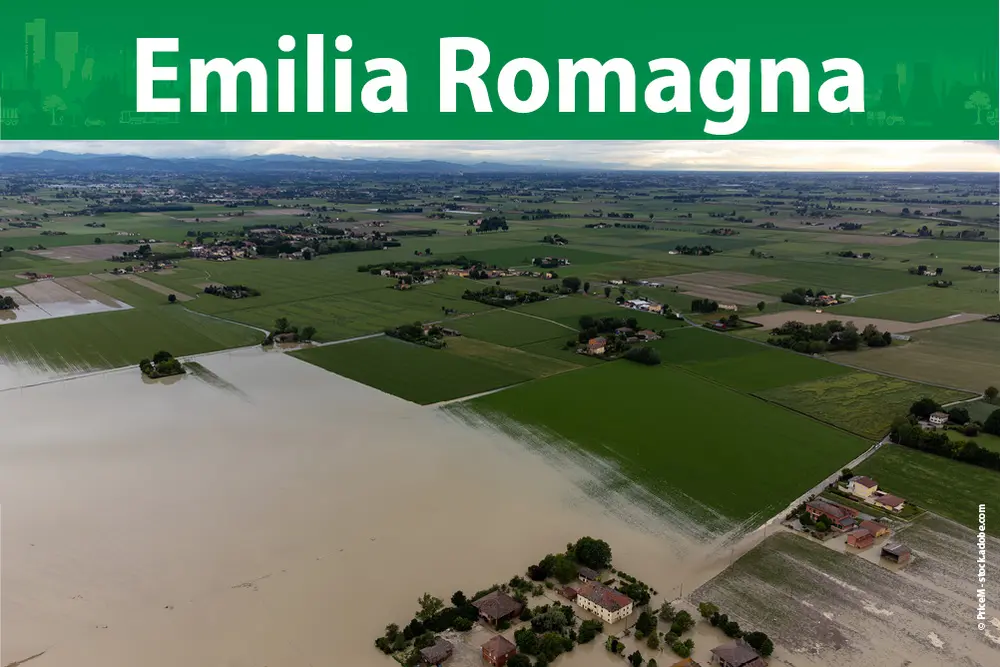
Emilia-Romagna, a northern Italian region renowned for its fertile plains, historic towns, and productive agriculture, has in recent years become a focal point of climate-related vulnerability. Its geographical diversity - from the low-lying Po Valley to the forested slopes of the Apennines - makes it particularly prone to hydrological extremes,including floods, droughts, landslides, and increasingly, coastal crosion.
These threats are compounded by land use pressures, urban sprawl, and outdated drainage systems. In May 2023, the region experienced what was described as one of the most catastrophic floods in recent Italian history. Over the course of two storm events, from 2-3 May and again on 16-17 May, Emilia-Romagna received an unprecedented 4 billion cubic metres of rainfall - more than triple the region's annual water consumption. Fourteen rivers overflowed simultancously, 23 separate breaches were recorded, and over 48 municipalities were severely affected. Nearly 20,000 people were evacuated, 17 lives were lost, and extensive damage was inflicted on more than 70,000 homes, 14,000 businesses, and 15,000 rural buildings. The floods also damaged 772 roads, completely paralysing certain local economies and logistics routes.
Emilia-Romagna adopted a dual-track strategy combining immediate recovery with long-term prevention. In response to recent disasters, it launched the Special Preliminary Plan for Reconstruction, allocating EUR 4.5 billion over 12 years to restore infrastructure, improve hydrological safety, and embed resilience following the BBB approach.
Key measures include reinforcing embankments, roads, and irrigation canals; restoring agricultural and forested areas; reconfiguring floodplains; updating geotechnical and hydrological maps; and strengthening early warning and evacuation systems.
In parallel, the region's Rural Development Programme (PSR 2014-2022), supported by EAFRD, financed prevention-focused actions such as irrigation modernisation, hydrogeological risk reduction, spring frost protection, disaster recovery for farms and forests, and wildfire prevention.
These investments proved effective: in Sogliano al Rubicone, slope works reduced landslide damage in 2023, while in Faenza, a farm remained operational due to upgraded irrigation and embankments. Building on this experience, similar interventions are now being expanded under the CAP Strategic Plan 2023-2027, with a continued focus on prevention, sustainability, and NbS integration.
Italy
Člen/Členka
Regional Minister of the Emilia-Romagna Region
ENVE works in fields related to the European Green Deal, which include the environment biodiversity, circular economy, zero pollution, climate change, energy, and space policies.

Virginio MEROLA


