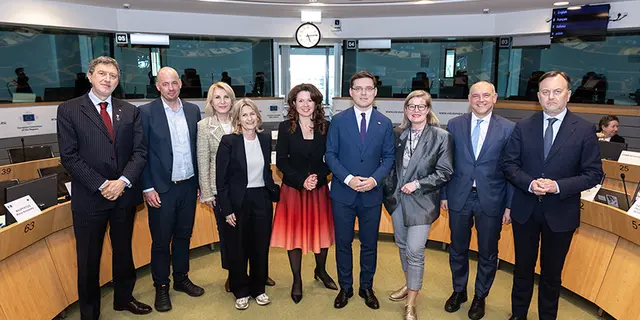
Presidency's priorities are competitiveness, values and security.
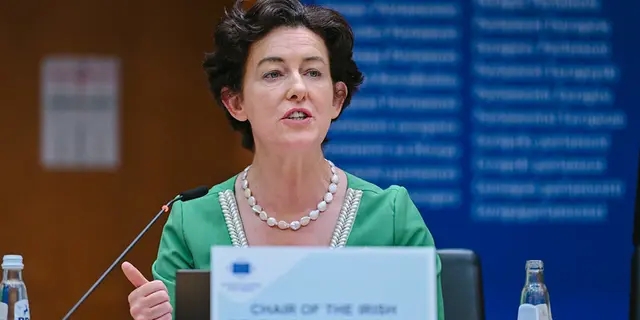
Presidency's priorities are competitiveness, values and security.
On 29 June 2026, members of the RegHub network gathered at the European Committee of the Regions (CoR) in Brussels.

The second CoR Foresight Network meeting focused on how scenario-building can help cities and regions strengthen long-term policymaking.

Democracy, terrorism and role of EU local and regional authorities in EU's external affairs discussed at CIVEX meeting.

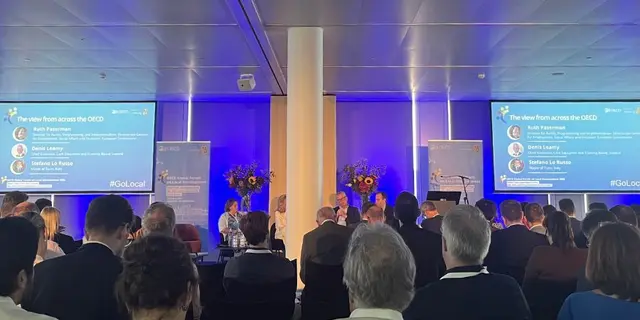
The European Committee of the Regions, the Organisation for Economic Co-operation and Development (OECD) and the European Association of Development Agencies (EURADA) brought together representatives…
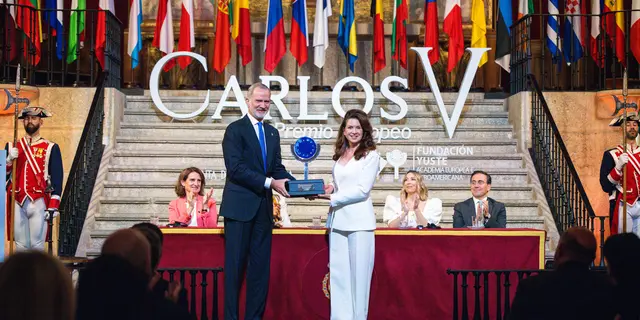
On behalf of the European Committee of the Regions, President Kata Tüttő received the Carlos V European Prize 2026 from His Majesty King Felipe VI of Spain in the award ceremony at the Monastery of…
The CoP set out its priorities for the European Commission Work Programme for 2027 following an exchange of views with Mr Pascal Leardini, Deputy Secretary-General of the European Commission.
On Europe Day, we celebrate an extraordinary human achievement: the ability of millions of people, cultures, languages and histories to live together in peace.

The European Committee of the Regions (CoR) will receive the Carlos V European Prize, granted by the European and Ibero-American Academy of Yuste Foundation, which recognises its essential role in…

A key moment of the Winter School 2026 was the consultation on the EUDS, where YEPs raised concerns about disinformation, foreign interference and the growing fragility of democracy at local level.

Recommendation by the EU-UK Parliamentary Partnership Assembly responds to calls by the CoR.

In the framework of the Conference of Presidents, the CoR discussed strategic foresight and the contribution of LRAs to EU preparedness with EP Vice President Victor Negrescu.