France

Magali ALTOUNIAN
Member
Regional Councillor of the Region of Sud-Provence-Alpes-Côte d’Azur

Renew Europe

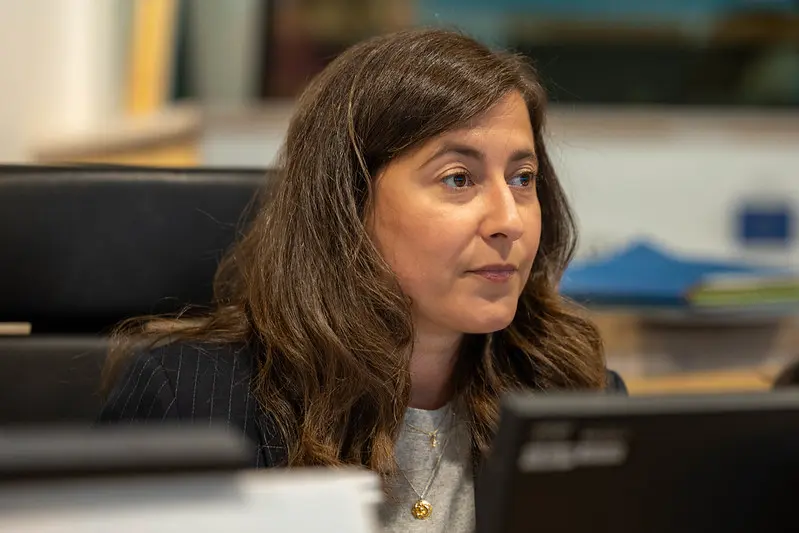
Democracy, terrorism and role of EU local and regional authorities in EU's external affairs discussed at CIVEX meeting.
Challenges to European democracy occupied centre-stage at the Commission for Citizenship, Governance, Institutional and External Affairs (CIVEX) on 9 June, with members approving an opinion on the European Democracy Shield, which consists of a set of proposals to foster trust, resilience, and preparedness in democratic systems. The opinion will be presented for adoption at the October plenary of the European Committee of the Regions (CoR).
Three other opinions were debated, all of them related to resilience, one of the three priorities of the CoR's 2025-30 mandate.
European Democracy Shield
CIVEX's debate on the European Democracy Shield touched on all three pillars of the initiative - civic engagement, strength of democratic systems, and integrity of information space - but particular attention was directed towards the challenges faced by women in politics, with commission members noting that threats are discouraging women from entering politics. In the last of six discussions with the CoR's legislative commissions, the CoR's rapporteur on the CoR's Gender Equality Action Plan - Carina Ohlsson (SE/PES), member of Lidköping Municipal Council - added that "there are strong forces that want to remove women from politics, and perhaps other marginalised groups as well. That is why we must take a stand at the local, regional, national, and EU levels. Otherwise, we won’t be able to defend democracy in the way we need to."
Rapporteur Stephen De Ron (LU/Greens and Progressives), councillor of the municipality of Hesperange, said: "The real threat to European democracy is no longer only external -- it lies in the gradual erosion of trust, shrinking civic space and growing disengagement from within. If the Democracy Shield is to make a difference, we must move from reacting to crises to anticipating them, by protecting participation, safeguarding independent voices and ensuring that women and men can engage on equal footing in democratic life. Local and regional authorities are on the front line of this effort and must be recognised as essential partners."
Mr De Ron later spoke about his recommendations at the European Public Communication Conference (EuroPCom), organised by the CoR in cooperation with other EU institutions. On 2-3 June, foreign information manipulation and interference (FIMI) was also a central theme at the CoR's Enlargement Days .
The importance of decentralised cooperation and city diplomacy in the EU approach to fragile settings
At the request of the Cyprus Presidency of the Council of the European Union, the CoR is currently drawing up an opinion on the contribution of local and regional authorities to the EU's external efforts to strengthen resilience in fragile settings. CIVEX members discussed the topic with the Cyprus Presidency and the European Commission's Directorate-General for International Partnerships, in view of the opinion’s adoption at the CoR's plenary on 1-2 July.
The debate was able to draw on the CoR's experience in pioneering city diplomacy and municipal and regional partnerships in Libya, a process that began in Nicosia, the capital of Cyprus, in 2015. The lessons learned from the CoR's 'Nicosia initiative' and the transformation of such cooperation into an EU programme of support for Libya were set out in a study commissioned by the CoR and published this year, entitled 'The Role of Local and Regional Authorities and Decentralised Cooperation in Fragile Settings: Building on the Nicosia Initiative in Libya'.
Rapporteur Magali Altounian (FR/Renew Europe), member of the Provence-Alpes-Côte-d'Azur Regional Council, said: "Decentralised cooperation is a key lever of the integrated approach. It maintains ties when traditional channels close, provides valuable technical support, and strengthens governance, public services, and citizen participation - in short, the very foundations that hold a society together. There can be no local approach without a role for local governments, nor sustainable cooperation without decentralised cooperation, which is often the only enduring institutional partnership in these contexts. Our request is clear: recognise the local dimension as a strategic lever for European action in fragile contexts."
The Pact for the Mediterranean: One Sea, One Pact, One Future
CIVEX members also discussed how local and regional authorities can be involved in developing the EU's cooperation across the Mediterranean, a region confronting significant challenges, such as migration, economic strain, and the impacts of climate change. This follows the launch of the Pact for the Mediterranean in November 2025, an initiative to deepen cooperation begun 30 years earlier through the Barcelona Process.
The CIVEX debate followed a discussion on the same topic a day earlier, at a commission meeting of the Euro-Mediterranean Regional and Local Assembly (ARLEM), which was created by the CoR as a platform for dialogue with local and regional politicians from around the Mediterranean. The CoR and ARLEM will both adopt opinions later this year on the implementation of the Pact. Speaking at the CIVEX meeting, the CoR's rapporteur - Magali Altounian (FR/Renew Europe) - and ARLEM co-rapporteur Marie-Antoinette Maupertuis (FR/EA), president of the Assembly of Corsica, emphasised the need for sub-national authorities to be fully involved.
Rapporteur Altounian said: "This consultation is a key opportunity to anchor the Pact in local realities and make it a truly operational tool. The success of the Mediterranean Pact will depend on its ability to produce concrete impact in the territories, on all shores of the Mediterranean. It is precisely at this stage that the credibility of the Pact is at stake. Because beyond the strategic ambition, several challenges are already apparent: the question of resources, the risk of scattering initiatives, and the link between stated priorities and their concrete implementation on the ground."
ProtectEU: Agenda to prevent and counter terrorism
The last opinion debated in the meeting addressed the counter-terrorism dimension of the EU's internal security strategy, ProtectEU. The exchange of views centred on the role of local and regional authorities in identifying and preventing terrorist attacks, framed by the concept of 'security by design' through urban planning, traffic organisation, crowd management, public-event security and the modernisation of public infrastructure. The opinion is scheduled for adoption by the CoR in mid-October.
Rapporteur Olgierd Geblewicz (PL/EPP), president of West Pomerania Region, said: "Security can only be effective if it is built through genuine cooperation across all levels of governance. Local and regional authorities are not merely stakeholders in this process. We are essential partners. Whether we speak about protecting public spaces, safeguarding critical infrastructure, preventing radicalisation, responding to crises or rebuilding trust after an incident, cities and regions are often the first to act and the closest to the citizens we serve."
Background information:
France
Member
Regional Councillor of the Region of Sud-Provence-Alpes-Côte d’Azur
Poland

Member
Councillor of the Zachodniopomorskie Voivodeship


France
Member
President of the Assembly of Corsica


Sweden

Member
Member of Municipal Council, Lidköping Municipality


Luxembourg

Alternate
Councillor of the Municipality of Hesperange
