Víctor Moreno Morales de Setién
victor.morenomoralesdesetien@cor.europa.eu
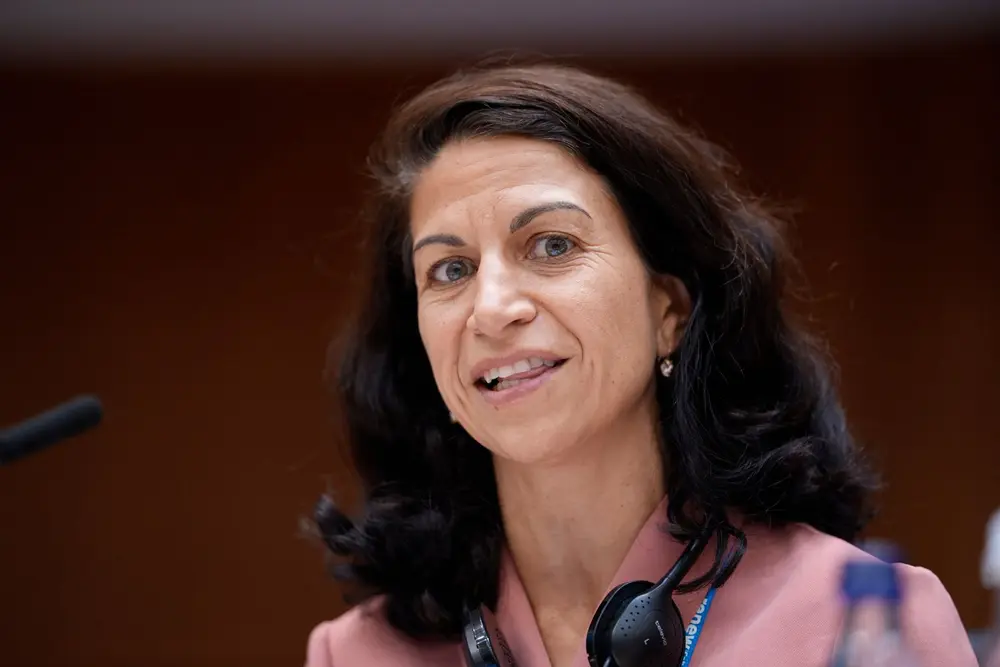
Local and regional authorities want affordable housing, architectural quality and citizen participation at the heart of the New European Bauhaus, backed by accessible funding and stronger support for local action.
The European Committee of the Regions (CoR) adopted an opinion on 'New European Bauhaus - from vision to implementation' during its plenary session on 14 October, calling for the initiative to be treated as a cultural and democratic movement, rooted in citizen participation, youth engagement and local leadership.
Across Europe, cities and regions are grappling with a deepening housing crisis, with a lack of affordable, good-quality homes increasingly threatening social cohesion and quality of life. Part of the answer, argues rapporteur Tsvetelina Simeonova-Zarkin (BG/Renew Europe), Councillor in Sofia Municipal Council, lies in how existing buildings are treated. The opinion states that what is demolished today is lost forever and calls for the New European Bauhaus (NEB) to establish a clear presumption in favour of renovation, adaptive reuse and transformation over demolition, recognising the existing building stock as a cultural, environmental and social asset.
In addition, the CoR presses for the systematic integration of NEB principles into the European Affordable Housing Plan, with a focus on energy-efficient renovation, affordable and social housing, and neighbourhood-scale regeneration combining housing, services and public spaces. It stresses that the EU’s plan should not focus solely on speed and quantity, but equally on architectural quality, accessibility and the preservation of local identity. Particular attention should be paid to low-income households, young people, single-parent families, older persons and vulnerable groups, to prevent displacement and segregation.
The impact of such an approach is illustrated by the CoR's 'State of Regions and Cities – EU Annual Report 2026': in Barcelona, a 170 million EUR renovation programme upgraded 11,600 homes, cutting energy demand by 50% and reducing residents' exposure to energy poverty. In Cork, a NEB-inspired regeneration of the city’s historic Shandon neighbourhood secured 7 million EUR of funding from the European Regional Development Fund (ERDF).
Making NEB Boost a permanent source of support for small municipalities
On financing, the opinion advocates dedicated NEB priorities within Cohesion policy, simplified access to EU funding, and stronger coordination between Cohesion policy, Horizon Europe, InvestEU and the European Investment Bank, alongside technical assistance for smaller and less-resourced authorities. It also calls for the continuation and institutionalisation of the NEB Boost for Small Municipalities, a European Parliament pilot project initiated by the CoR, as a permanent mechanism, and for citizen participation to be anchored at the centre of every NEB project.
New European Bauhaus label and NEB Academies
The opinion recalls that the CoR first proposed an NEB label in 2020 and welcomes the Commission's move to make it a reality, provided the criteria stay clear, simple and proportionate for smaller municipalities. It suggests re-naming the label, introducing a graduated recognition system and a public platform for labelled projects. It also calls for a more flexible governance model built on local NEB branches and regional hubs, with attention to under-represented regions such as central and eastern Europe.
Lastly, the opinion calls for the NEB Academy to strengthen training and practical support for professionals and local and regional authorities, with balanced geographical coverage, particularly in under-represented regions. Working with universities and vocational education and training institutions, the NEB Academies should develop a common European learning framework with tailored pathways and certificates recognised across Member States.
The CoR believes that, by placing communities at the heart of its implementation, the New European Bauhaus can help cities and regions turn sustainability, inclusion and beauty into lasting improvements in people's everyday lives.
Quote
Tsvetelina Simeonova-Zarkin (BG/Renew Europe), Councillor in Sofia Municipal Council: "Our squares, schools, kindergartens, parks, libraries and cultural centres are not simply buildings or amenities. They are the places where communities meet, citizens develop a sense of belonging and trust can be rebuilt. The New European Bauhaus gives us the opportunity to further transform these spaces—to make them more sustainable, more beautiful and, above all, genuinely inclusive."
Background
Contact
Víctor Moreno Morales de Setién
Tel: +32 475999662
victor.morenomoralesdesetien@cor.europa.eu
victor.morenomoralesdesetien@cor.europa.eu
Bulgaria

Member
Municipal Councillor in Sofia Municipal Council


Continuous dialogue between all levels of government, from local to EU, genuine simplification of procedures, and legal guarantees for the involvement of cities and regions in the design and…
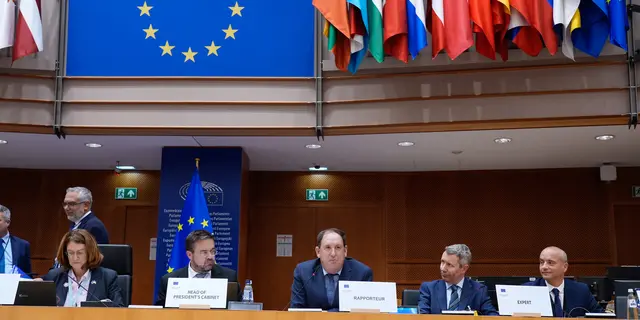
Intensifying their cooperation with the European Investment Bank, regions and cities on 2 July discussed the EU’s housing policy with President Calvino, Members of the European Parliament and…
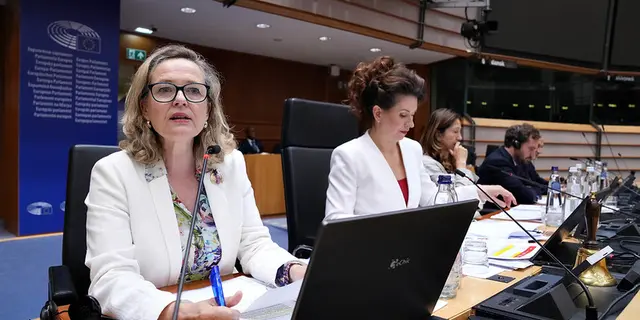
The European Committee of the Regions (CoR) has expressed its opposition to European Commission plans to merge the European Social Fund (ESF) with other EU instruments within single national plans,…