Local and regional authorities want affordable housing, architectural quality and citizen participation at the heart of the New European Bauhaus, backed by accessible funding and stronger support for…

The new EU Agenda for Cities must deliver real simplification and keep territorial cohesion between urban and rural areas at its core
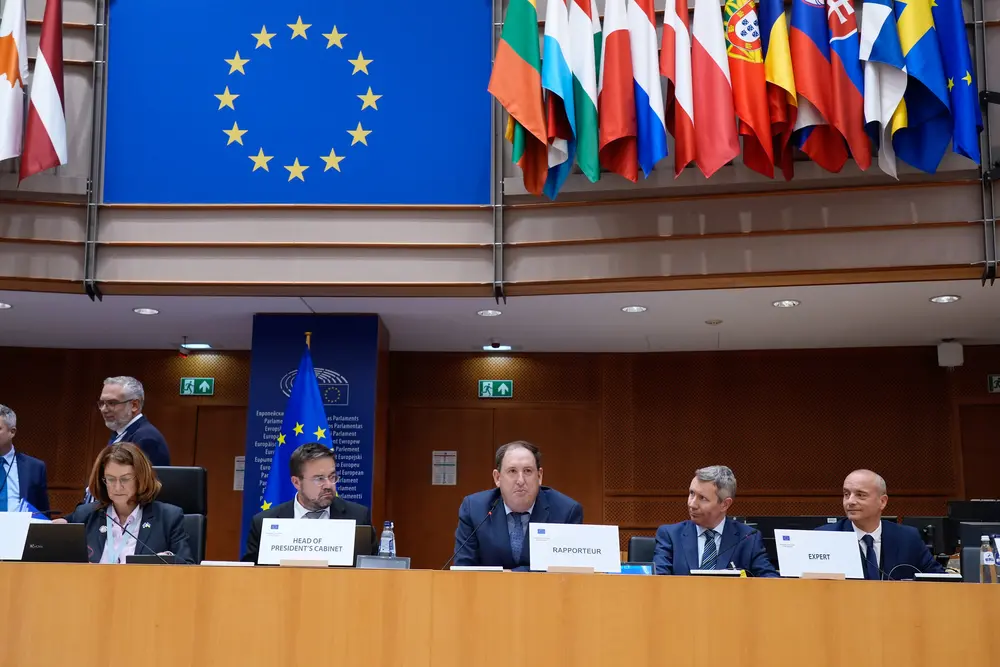
Continuous dialogue between all levels of government, from local to EU, genuinesimplificationof procedures, and legal guarantees for the involvement of cities and regions in the design and implementation of future EU spending programmes:these are the main requests set out in an opinion on the EU Agenda for Cities, unanimously adopted by the European Committee of the Regions at its plenary session on 14 October.
Access to affordable housing, gentrification and social cohesion, as well as adaptation to climate change and demographic ageing, are just some of the challenges that European cities are facing. The EU Agenda for Cities, presented last year by the European Commission, aims to support local authorities in tackling urban challenges by improving coordination across EU urban initiatives and simplifying cities’ access to EU support, including through a new single European web portal.
Unanimously adopting anopinion drafted by Kieran McCarthy (IE/EA), member of Cork City Council, local and regional leaders welcomed the Agenda’s overall architecture and objectives. They emphasised that improving the competitiveness and attractiveness of large and medium-sized cities will generate positive spillovers for surrounding peri-urban and rural areas and is therefore central to safeguarding people’s right to live and work in the place they call home (‘right to stay’).
CoR members called for the systematic application of territorial impact assessments (‘territorial proofing’) to EU policies with urban implications, in order toanticipate and mitigate the uneven territorial effects of future EU legislation. The ‘do no harm to cohesion’ principle should guide the implementation of the EU Agenda for Cities, ensuring that urban investments do not inadvertently draw resources, services or human capital away from surrounding rural, mountain and border areas.
Increased dialogue with cities
The annual high-level dialogues envisaged by the Agenda are crucial to the strategy’s success, and the CoR stands ready to host them in the future or participate as a key partner. However, dialogue must be accompanied by coordinated and accountable action that systematically turns consultation into co-creation. To ensure the effective implementation of EU policies addressing challenges such as housing, mobility, the climate transition and digital transformation, urban and metropolitan authorities must be explicitly recognised as strategic institutional partners rather than treated solely as beneficiaries.
The call for the meaningful involvement of regional and local authorities, including urban and metropolitan authorities, in the design and management of EU policies will be particularly relevant as of 2028, when the new EU long-term budget will take effect. Regions and cities reiterated their request for legal guarantees of their involvement in future cohesion-fund investment plans. This should be accompanied by a robust system of checks and balances to ensure adequate standards of consultation and participation.
Quote
Rapporteur Kieran McCarthy (IE/EA), member of Cork City Council: "Europe’s cities are on the front line of some of our biggest challenges, from affordable housing and climate change to keeping local economies strong. We welcome the Agenda, but we need more than another strategy or website. We need practical support to turn local priorities into real projects, and a genuine say in how European investment is planned and delivered. This is particularly important as we negotiate the next EU budget. And we must remember that cities do not exist in isolation. Investing in stronger, more competitive cities should also benefit the surrounding towns and rural communities. Ultimately, our goal must be to give people the opportunity to live, work and build their future in the places they call home."
More information
Contact
Matteo Miglietta
Tel. +32 470895382
matteo.miglietta@cor.europa.eu
Local and regional authorities want affordable housing, architectural quality and citizen participation at the heart of the New European Bauhaus, backed by accessible funding and stronger support for…
Intensifying their cooperation with the European Investment Bank, regions and cities on 2 July discussed the EU’s housing policy with President Calvino, Members of the European Parliament and…
The European Committee of the Regions (CoR) has expressed its opposition to European Commission plans to merge the European Social Fund (ESF) with other EU instruments within single national plans,…