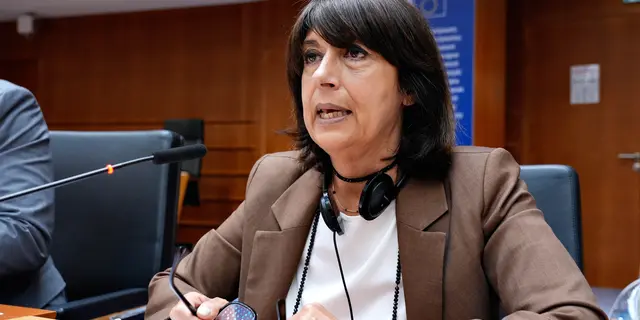
Belgium

Willy BORSUS
Member
Member of the Municipal Council of the City of Marche-En-Famenne

Renew Europe


Europe’s industrial competitiveness is largely built in regions in where ecosystems, small and medium-sized enterprises (SMEs), skills, infrastructure and innovation networks are concentrated. In an opinion on the Industrial Accelerator Act, adopted during the plenary session of the European Committee of the Regions (CoR) on 14 October, local and regional leaders called for the Act to strengthen Europe’s industrial competitiveness while ensuring that regions and cities have the capacity to deliver the transition without widening territorial disparities.
In the opinion, CoR members call for the Industrial Accelerator Act to take a strong territorial approach, with regions and cities fully involved in delivering Europe’s industrial transition. They highlighted that geographical concentration of industrial activity leaves specialised regions particularly exposed to downturns, especially those dependent on energy-intensive industries, automotive manufacturing and clean-tech supply chains. They therefore called for implementation of the Act to be simple and predictable, with streamlined procedures and reduced administrative burdens, particularly for SMEs. CoR members also support the proposal for single access points in each Member State for industrial projects as a means to improve coordination and speed up permitting, while fully respecting regional and local competences.
On public procurement, CoR members called for stable and predictable ‘Made in the EU’ requirements that support investment and European supply chains without creating excessive burdens on SMEs. They support using public procurement and support schemes to create ‘lead markets’ for low-carbon industrial products, backed by harmonised certification. The opinion also calls for major foreign investments in strategic sectors to generate added value across European territories through quality jobs, technology transfers, R&D and stronger regional value chains. Local and regional authorities should be involved in relevant investment governance and receive information on major foreign investors at an early stage.
For accelerated industrial projects, CoR members highlighted the need to strengthen local and administrative capacity, improve digital tools and target training. Members also advocated for industrial manufacturing acceleration areas that build on existing industrial sites and support balanced regional development.
Quotes:
Willy Borsus (BE/Renew), member of the Municipal Council of Marche-En-Famenne: "In Wallonia, I have seen firsthand how industrial renewal depends on skills, infrastructure, and decisions taken closest to the ground. The European Industrial Acceleration Act, which we support, must give regions a genuine role, make use of existing industrial sites, and support decarbonised European production, while ensuring that public procurement requirements do not overwhelm local budgets."
Pierre Jouvet (FR/S&D), member of the European Parliament and rapporteur on the Industrial Accelerator Act for the European Parliament’s Committee on the Internal Market and Consumer Protection: "The industrial accelerator act must bring factories back to Europe and enable the development of low-carbon facilities. This requires a strict "Made in Europe" rule, public support linked to concrete social commitments, and acceleration zones managed jointly with the regions, including those that have lost their industrial base in the past decades. Under these conditions, the IAA will be able to generate jobs and prosperity across all regions."
Background
The Industrial Accelerator Act, adopted by the European Commission on 4 March 2026, aims to accelerate the decarbonisation and expansion of Europe’s industrial capacity while strengthening supply chains in strategic sectors.
The 2026 Annual Report on the State of Cities and Regions in the European Union, presented on 12 October during the opening session of the European Week of Regions and Cities, highlights Wallonia’s use of smart specialisation through innovation clusters based on a multilevel governance model that brings together regional authorities, industry, SMEs and research organisations. These clusters aim to accelerate the development of innovative projects, strengthen the competitiveness of key sectors of excellence, and support the internationalisation of the Walloon economy. This collaborative approach has contributed to boosting employment, generating addedvalue and enhancing the innovation capacity of the regional economic fabric. Further information is available here.
Contact
Theresa Sostmann
Tel: +32475999415
Theresa.Sostmann@cor.europa.eu
Belgium
Member
Member of the Municipal Council of the City of Marche-En-Famenne
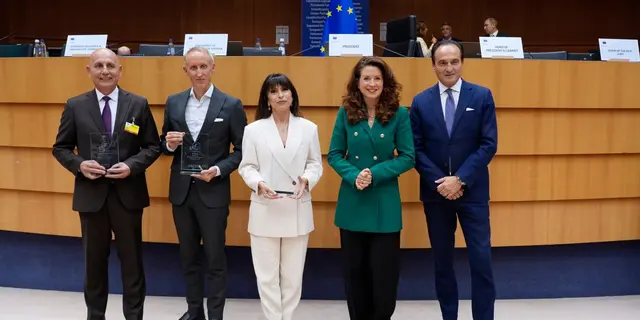
Duisburg, North-East Romania and Umbria have been named winners of the 2027 European Entrepreneurial Regions awards for strategies that put small and medium-sized enterprises (SMEs) at the centre of…
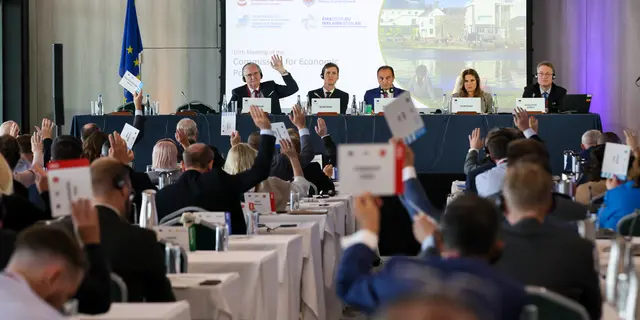
The European Committee of the Regions’ (CoR) Commission for Economic Policy (ECON) met in Galway, Ireland, on 6-7 October to discuss the central role that Europe’s regions play in strengthening…
The European Committee of the Regions adopted an opinion on the EU Inc. Framework during its plenary session on 2 July, calling for a European company framework that enables all regions and cities to…