Italy
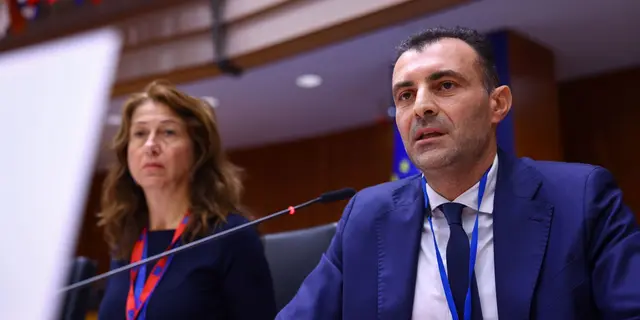
Alessio MAMMI
Member
Regional Minister of the Emilia-Romagna Region

PES (Party of European Socialists)

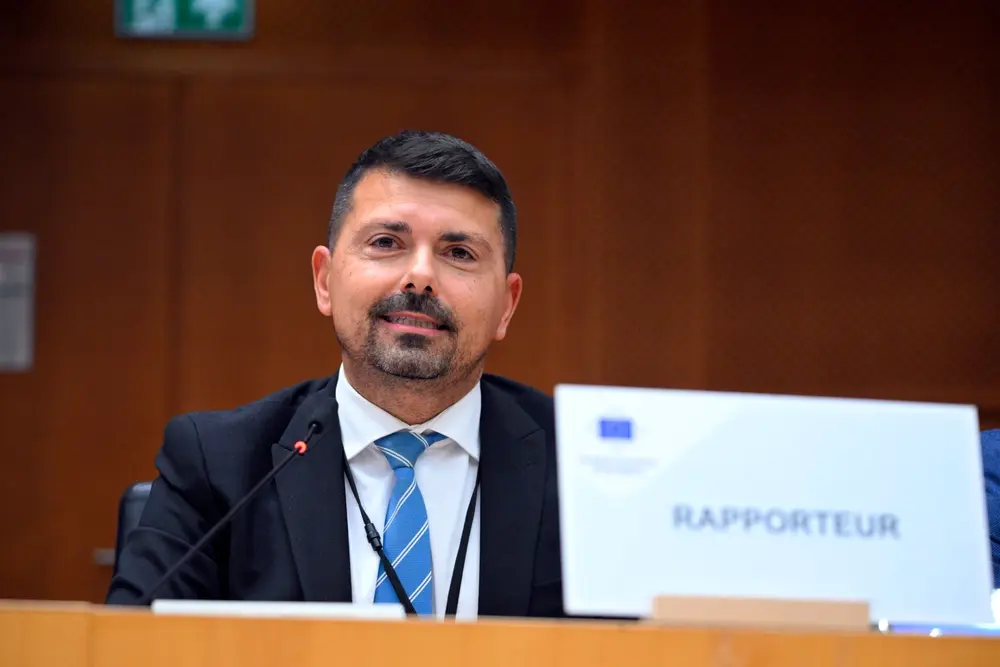
Greater local involvement is key to address local needs and strengthen food education.
The European Committee of the regions (CoR) has adopted unanimously an opinion on the Common Market Organisation and the EU School Scheme during its Plenary session on 14 October. Led by Alessio Mammi (IT/PES), Minister for Agriculture of the Emilia-Romagna region, it calls for stronger involvement of local and regional authorities in both tools.
The Common Market Organisation (CMO) has proven its effectiveness as a means of promoting producer aggregation, strengthening the position of farmers in the supply chain, stabilising markets, providing tools for crisis management, improving the sustainability of production and fostering innovation. Regions and cities therefore consider that this common policy must not only be safeguarded but also supported through adequate EU funding and through the full involvement of territories and regional and local authorities.
Local and regional leaders expressed concerns about the provisions included in the proposal for the next long-term EU budget (2028-2034), which introduces a minimum national co-financing rate of 30% for CMO support, traditionally financed entirely by the EU. They warn that this could lead to disparities in the level of support available to producers across Member States. To ensure certainty and a level playing field for European producers, the CoR calls for a 100% EU financing rate to be maintained for CMO sectoral interventions.
In addition, the CoR calls the obligation for buyers to pay prices that at least cover production costs to be extended to all agricultural products. It also advocates for intervention prices to be increased and for their scope to be broadened to cover most agricultural products, while ensuring that the scope and level of intervention prices to remain linked to production costs. Finally, the CMO should be strengthened to prevent products that do not meet EU standards from entering the EU market.
EU School Scheme
The EU School Scheme plays a key role in guiding children towards healthy and sustainable dietary choices but faces challenges related to the timely distribution of products, natural disasters, compliance with health, environmental and ethical considerations, respect for seasonality, product quality and storage facilities. In many Member States, food education initiatives are implemented by regional and local authorities in close cooperation with local producers and schools. The CoR therefore calls for greater involvement on the part of regional and local authorities in the implementation of the scheme, as well as in monitoring and evaluating its results and in designing and promoting awareness-raising and food education activities.
Quotes:
Rapporteur Alessio Mammi (IT/PES), Minister for Agriculture of the Emilia-Romagna region: “A European policy that has always worked effectively, like the CMO, cannot depend on national budgets. Introducing mandatory 30% co-financing for support to producer organisations risks turning a common instrument into 27 different policies: more inequality between Member States, more unfair competition between producers in the same sector, and multiannual programmes that have already been approved left in uncertainty. As the European Court of Auditors clearly highlighted in its recent report on the CMO, if we want to defend European food security, we must also defend the single market that supports it.”
Eric Sargiacomo (S&D/FR), rapporteur on the reform of the Common Market Organisation (CMO) and Member of the European Parliament: "The CMO Regulation is the regulation we need to strengthen in order to reinforce our food sovereignty and develop a stronger food dimension within the CAP. Strategic stocks are an essential attribute of sovereignty: without strategic reserves, there can be no food sovereignty. The Irish Presidency’s ‘NegoBox’ proposal does not reassure us about the future of the CAP or the role of regions. Reducing the crisis reserve is a surprising proposal; one has to be very optimistic to believe there will be fewer crises tomorrow. We must continue to advocate for a budget that matches the challenges ahead!"
Background
Contact:
Hélène Dressen
Tel: +32 471502795
Italy
Member
Regional Minister of the Emilia-Romagna Region
The European Committee of the Regions (CoR) adopted an opinion led by Karl Vanlouwe (BE/EA) during its Plenary Session on 14 October, calling for local and regional authorities to have a stronger…
Regions and cities have adopted a set of recommendations to tackle the rise of cardiovascular diseases, calling for stronger social, environmental and commercial prevention measures and a greater…
Members of the Commission for Natural Resources (NAT) of the European Committee of the Regions (CoR) gathered on 1 and 2 October in Castilla-La Mancha, Spain, to address the growing wildfire risk…