Poland

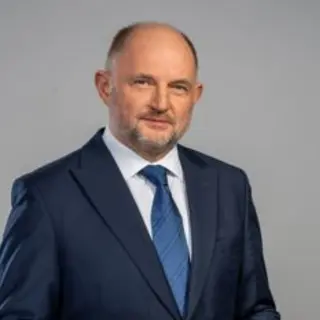
Piotr CAŁBECKI
Member
Councillor of the Kujawsko-Pomorskie Voivodeship

EPP (European People's Party)
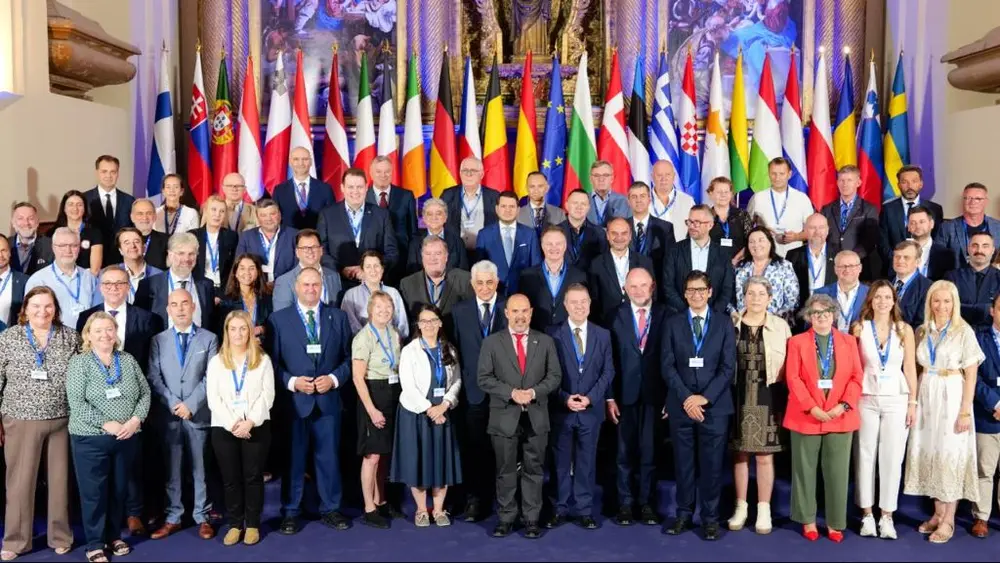
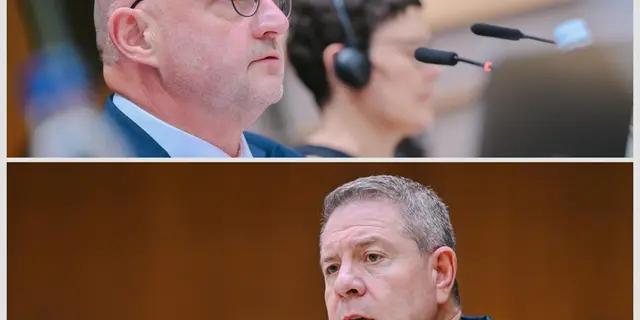
Members addressed the ‘Right to Stay’, the future of the rice sector and geographical indications in meetings hosted by Castilla-La Mancha President Emiliano García-Page Sánchez.
Members of the Commission for Natural Resources (NAT) of the European Committee of the Regions (CoR) gathered on 1-2 October in Castilla-La Mancha, Spain, to address the growing wildfire risk across Europe and discuss how local and regional authorities can strengthen prevention, preparedness and resilience.
Wildfires are becoming more frequent, widespread and intense across Europe, driven by climate change, land-use changes and human activity, which causes up to 96% of wildfire ignitions in the EU. Beyond environmental and emergency impacts, they pose growing risks to public health, livelihoods, infrastructure, biodiversity and the EU economy, causing an estimated €2.5 billion in annual economic damage. Since the start of 2026, over 670,000 hectares of land have been lost to wildfires.
The draft opinion adopted during the meeting in Toledo calls for wildfire risk management to be adapted to local conditions and implemented at the most appropriate level, with local and regional authorities playing a central role in prevention, preparedness, response and recovery. During the discussion, the Provence-Alpes-Côte-d’Azur region in France presented a new initiative calling to set up a European coalition of wildfire-resilient regions, with the aim to boost cooperation at regional level and ensure adequate support from the EU budget.
Rapporteur Dimitrios Kafantaris (EL/EPP), Municipal Councillor of Pulou-Nestoros, said: "The success of a modern and effective European forest fire policy should not be measured only by numbers, instruments or mechanisms. It must be measured by the disasters we manage to prevent, with the societies we make safer and especially with the lives we protect. We therefore need to move immediately from ‘extinguishing the fire’ to ‘managing the danger all year round’, to quickly create a model that invests in the whole cycle – preparedness, response and recovery – and puts local communities at the centre."
Right to Stay: Europe for the rural areas
The public debate on the EU’s ‘Right to Stay’ initiative explored how EU policies can help people live, work and thrive in the places they call home, while addressing demographic decline and regional imbalances. The discussion focused in particular on the challenges facing rural and remote areas, including access to public services, healthcare and connectivity, as well as generational renewal in farming and fisheries. Members highlighted the need for coordinated EU policies to create the conditions for people to stay in, return to or build their future in their local communities, in line with the Mullingar Declaration adopted by the CoR Bureau on 23 September.
The NAT Chair, Piotr Całbecki (PL/EPP), President of the Kujawsko-Pomorskie Region, said: “The decline in the number of active farmers in the EU shows the need for strong territorial policies and targeted support for rural areas and communities. I expect the 2026 Report on the State of Regions, to be presented by the CoR President at the CoR's October plenary session, to highlight rural development and generational renewal in agriculture as key priorities. We must continue working closely with our national governments to ensure that the role of regions is clearly recognised and legally safeguarded in the next multiannual financial programming.”
The host of the meeting, Emiliano García-Page Sánchez (ES/PES), President of Castilla-La Mancha, said: "In Castilla-La Mancha, we have successfully tested legislation that protects the right to stay by guaranteeing public services and infrastructure. It is not only working, but also attracting new residents. A problem often raised is one of sustainability: it can be hard to sustain public services where few people live. But we should also look at sustainability from another perspective. As a society, what is truly unsustainable is failing to promote territorial balance. A more balanced approach means better services, delivered more effectively."
The future of the rice sector in Europe
The European rice sector faces growing agronomic, economic and trade pressures that threaten its viability and the rural economies that depend on it. Concentrated in specific regions, rice production is important for jobs, environmental management, biodiversity and cultural heritage as well as for European food security. The draft opinion adopted during the meeting calls for EU policies, including the Common Agricultural Policy and trade and environmental frameworks, to better support the resilience, sustainability and competitiveness of rice-producing regions.
Rapporteur Alberto Cirio (IT/EPP), President of the Piedmont Region, said: “Europe’s rice sector is strategic for regional and local economies, food security and environmental resilience. The opinion calls for stronger investment in water management, innovation and sustainable farming, alongside fairer trade rules and safeguards against market disruption. Indeed, EU must do more to protect producers from unfair competition, particularly from south-east Asia. European rice is not a commodity, but an excellence to be safeguarded in its varieties and characteristics: quality, environmentally friendly and produced with respect for workers’ dignity and rights. Unfair competition risks impoverishing European farmers and driving them into bankruptcy.”
Geographical indications and wine as drivers of territorial development
On the first day of the external event in Castilla-La Mancha, members of the NAT commission participated in a conference on “Protecting origin, creating value: geographical indications and wine as drivers of territorial development”, followed by a field visit of the Cooperativa Virgen de las Viñas in Tomelloso. The conference explored how geographical indications protect products and guarantee quality standards.
At European level, geographical indications generate more than €75 billion in annual sales and account for 15.5% of EU agri-food exports. They boost local employment, reinforce regional value chains and encourage activities such as tourism and, ultimately, they contribute to the vitality of rural communities.
More information:
Contact:
Hélène Dressen
Tel: +32 471502795
Helene.dressen@cor.europa.eu
Lauri Ouvinen
Tel: +32 473536887
lauri.ouvinen@cor.europa.eu
Poland
Member
Councillor of the Kujawsko-Pomorskie Voivodeship

Member
President of the Government of the Autonomous Community of Castile-La Mancha


Greece

Member
Municipal Councillor of Pulou – Nestoros

Distretto Sardegna Bio in Italy and Cussac-Fort-Médoc in France were awarded the EU Organic Awards 2026 for ‘Best organic region/bio-district’ and ‘Best organic city’ respectively, at a ceremony held…

Local and regional leaders urge a comprehensive approach to bringing new generations into farming.