Sweden
Jelena DRENJANIN
Member
Member of Municipal Council, Huddinge Municipality

EPP (European People's Party)

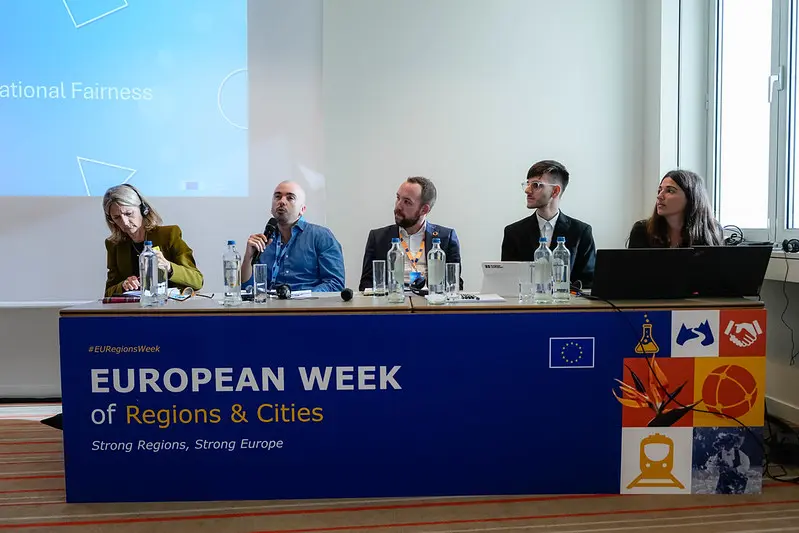
How can regions and cities give young people a stronger voice in decisions that will shape their future? This question was at the centre of the European Committee of the Regions' workshop Strategic Foresight with Youth as Key Actors, held during the European Week of Regions and Cities.
Opening the discussion, Jelena Drenjanin, CoR Foresight Coordinator, highlighted a growing paradox: while today's challenges require long-term thinking, political systems often remain focused on immediate concerns and electoral cycles. Strategic foresight, she argued, can help policymakers consider the interests of both young people and future generations.
Several speakers presented concrete examples of how young people can be involved in shaping policy.
Marie-Antoinette Maupertuis, President of the Assembly of Corsica, explained how the Corsica Pruspettiva 2050 project engaged the Assemblea di a Giuventù in debating four scenarios for the island's future, giving young people a direct role in discussions about the transformations Corsica may face by 2050. Young participants were encouraged not only to comment on existing trends but also to imagine what is unthinkable today.
Jacob Ellis from the Future Generations Commissioner for Wales pointed to the Aberfan disaster of 1966, when a collapsing coal spoil tip buried a school and claimed the lives of 116 children, as a stark reminder of the cost of short-term thinking. He argued that institutions should safeguard the interests of future generations and that future thinking should become a regular part of school education.
Nicola Spano from the Joint Research Centre presented the European Commission's work on intergenerational fairness. He showcased how the EU Policy Lab uses speculative design to stimulate imagination and connect today's decisions with the needs of future generations. Rather than predicting the future, these methods create a dialogue with people who are not yet born, helping policymakers consider the long-term consequences of present-day choices.
Representing the European Youth Forum, Marin Capan highlighted tools such as youth checks and youth tests, which assess how policies affect younger generations. He welcomed the European Commission's increasing use of these instruments and noted that the European Committee of the Regions has also advocated stronger consideration of youth perspectives in policymaking.
The key message was clear: the future should not simply happen to young people. It should be shaped with them and with future generations in mind. Through strategic foresight and meaningful participation, cities, regions and European institutions can make decisions that respond to today's needs while better safeguarding the interests of those who will inherit the consequences.
Sweden
Member
Member of Municipal Council, Huddinge Municipality
France

Member
President of the Assembly of Corsica