


EU needs stronger regional research capacity to strengthen its sovereignty
On this page
- Research, Innovation and Digital
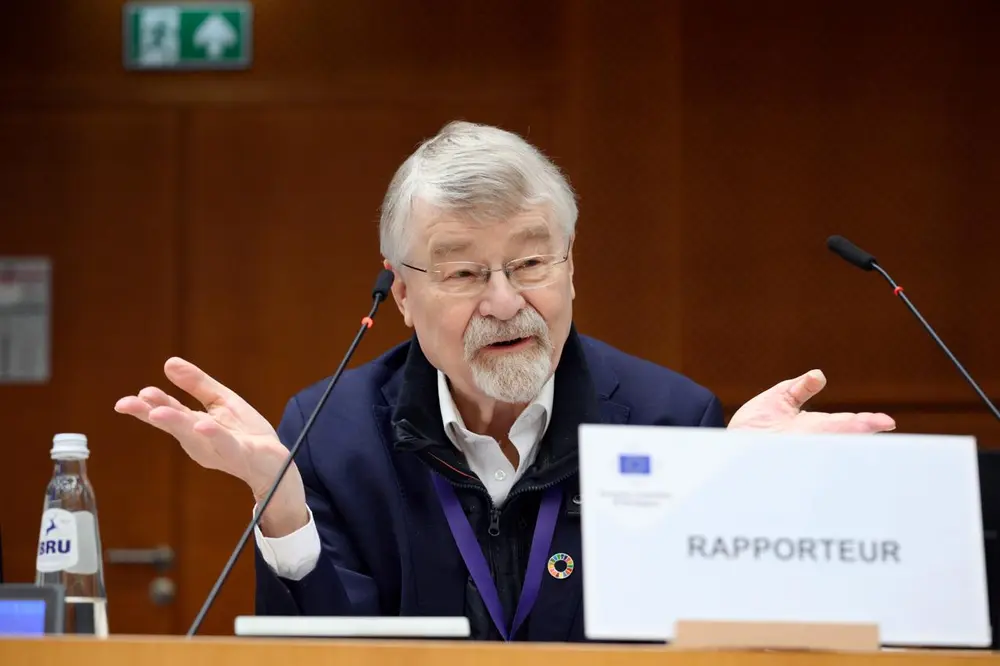
To close innovation gaps, more funding is needed for research infrastructure.
Europe’s competitiveness and technological sovereignty will depend on ensuring that all regions can participate in and benefit from innovation, local and regional leaders warned at a plenary session of the European Committee of the Regions (CoR) on 14 October. They called for stronger, more predictable investment in research and technology infrastructures under the EU budget for 2028-2034 and for more balanced access to research and technology infrastructures across the EU.
Against a backdrop of geopolitical uncertainty and rapid technological change, the opinion led by Markku Markkula (FI/EPP), member of Espoo City Council, highlighted Research and Technology Infrastructures (RTIs) as strategic assets for Europe as it seeks to increase its resilience, competitiveness and technological sovereignty. It stresses their role in sectors critical to security, such as energy and defence, and in delivering the green, digital and social transitions.
Local and regional leaders welcomed the European Commission’s communication on a European Strategy for Research and Technology Infrastructures (RTIs), and stressed that its success will depend on enabling all regions to contribute to and benefit from European innovation. They also emphasised the need for stable, adequate funding under the EU's new Framework Programme for Research and Innovation (FP10) for 2028-2034.
Regions and cities warned that unequal access to RTIS is holding back Europe's innovation potential. They called for efforts to reduce territorial disparities and ensure that regions, SMEs and start-ups across the EU can contribute and benefit from from Europe’s research and technology infrastructures. They proposed simpler access for SMEs and start-ups through digital one-stop shops and remote services, alongside targeted support for less-developed regions.
CoR members argued that regions and cities should play a central role in the strategy, connecting local businesses, universities and research organisations to European innovation networks and ensuring that investment responds to local needs. They called for local and regional authorities to have a clear role in managing and coordinating RTIs, so that research and innovation translate into practical solutions, stronger industries, jobs, growth and tangible benefits across all regions.
Local and regional leaders called for predictable, long-term funding for RTIs under FP10, the EU’s next research and innovation programme, within the new EU budget for 2028-2034. They urged better coordination of investment at the EU, national and regional levels, including stronger links between research programmes and Cohesion policy, to maintain and upgrade infrastructures and extend their reach across regions. They also called on Member States to meet the target of investing 3% of GDP in research and development.
To anticipate future challenges and guide investment, the CoR proposed establishing a European RTI Foresight Observatory, jointly managed by the European Commission Joint Research Centre and regions. It also called for regular reviews of the strategy, with regional input, to ensure that it keeps pace with societal needs and technological changes.
Quote
Rapporteur Markku Markkula (FI/EPP), member of Espoo City Council: “Research and technology infrastructures may sound highly technical. In reality, they are among the EU’s most powerful instruments for the renewal and joint progress of Europe’s regions. We must build critical mass where Europe has the potential to lead globally. Not every region needs to host every advanced infrastructure, but every region must have opportunities to access Europe’s best infrastructures and knowledge, strengthen its RDI capacity, and educate and train people of all ages. We need excellence with European access, partnerships, and spillovers - for every region.”
Background
- Photos and videos from the Plenary Session.
- Follow the Press service account on X.
- The European Commission published the European Strategy on Research and Technology Infrastructures on 15 September 2025. The upcoming ERA Act (to be published in Q3-Q4 2026) is also expected to discuss the RTIs.
- Horizon Europe - the 10th Framework Programme for Research and Innovation (CoR opinion, 2025).
- The EU Startup and Scaleup Strategy (CoR opinion, 2025).
- Ethical Artificial Intelligence and access to supercomputing for start-up (CoR opinion, 2024).
Contact
Ângela Machado
Tel: +32475413158
Members
Related news
-
The European Committee of the Regions co-hosted a high-level seminar in Brussels on 5 May to discuss how the EU's new strategy for research and technology infrastructures can strengthen regional…

-
Local and regional leaders on 7 May called for strong and stable budget and a central role for regions and cities to ensure the success of the next Horizon Europe programme (2028–2034).

-
To ensure simpler EU rules and stronger financial and technical support to implement data and AI policies, the European Committee of the Regions (CoR) adopted an opinion on ‘Digital Simplification…
