France

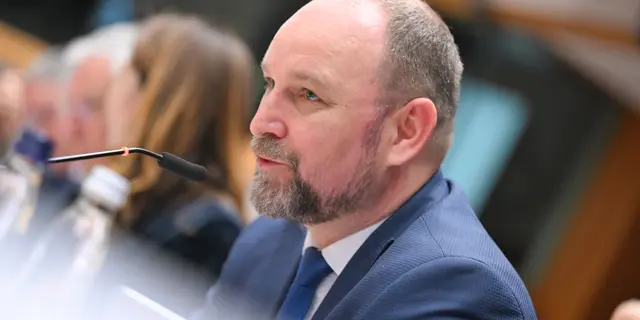
Anne BESNIER
Member
Vice-President of the Region of Centre-Val de Loire

PES (Party of European Socialists)


Stronger role for regions and cities seen as key to boosting innovation across the EU
Local and regional leaders on 7 May called for strong and stable budget and a central role for regions and cities to ensure the success of the next Horizon Europe programme (2028-2034).
The call came during a plenary session of the European Committee of the Regions (CoR) during which the EU’s assembly for local and regional politicians set out detailed responses to a set of European Commission proposals linked to the EU’s long-term budget (2028-2034).
In the opinion drafted by Anne Besnier (FR/PES), Vice-President of the Centre-Val de Loire region, on the future of EU research and innovation (R&I) policy regions and cities stressed that the proposed budget for the 10th Framework Programme for Research and Innovation (FP10) represents the minimum needed to meet the EU’s ambitions on competitiveness and cohesion, and called for it to be protected from reallocation in times of crisis. They underlined that research and innovation must, above all, improve people’s quality of life while supporting public services and fair transitions.
Local and regional leaders emphasised that regional and local innovation ecosystems are at the heart of innovation in the EU. They highlighted that regions and cities play a pivotal role in building the EU’s scientific and technological excellence by creating the conditions to develop, produce and share knowledge. As a result, the opinion calls for the involvement of local and regional authorities (LRAs) in the governance, implementation and monitoring of the programme as a means to unlock Europe’s innovation potential.
The opinion advocates for better integration of regional innovation ecosystems and calls for a strengthening of the participation of regions and cities in key instruments such Regional Innovation Valleys and EU Missions. These initiatives have proven essential in fostering collaboration across innovation ecosystems — bringing together universities, research organisations, businesses, public authorities and society — and boosting place-based innovation. It also pressed for closer links between Horizon Europe and Smart Specialisation Strategies (S3/S4), to broaden their impact.
Regions and cities expressed concerns on the national approach to the ‘Widening Participation and Spreading Excellence’ sub-programme, which is intended to strengthen the ability of regions to participate in transnational research and innovation processes. They warned that a national approach risks increasing innovation gaps between more- and less-advanced regions. They stressed that efforts to widen participation and spread excellence must also be addressed at regional level, within innovation ecosystems. They proposed using tools such as the Regional Innovation Scoreboard to better target support according to the specific needs and capacities of regions and cities.
CoR members advocated synergies between FP10, National and Regional Partnership Plans, and the European Competitiveness Fund. This would enable projects to scale up more effectively and deliver stronger results across all regions. They also highlighted that cities and regions should play a central role in managing these partnerships to ensure that investments boost competitiveness while also promoting territorial and social cohesion, benefiting all regions and avoiding concentration in areas that are already high-performing.
Finally, local and regional leaders strongly supported the creation of a European Researcher Status to enhance mobility, peer-to-peer recognition and social protection for researchers across the EU. They stressed that this would boost Europe’s attractiveness for global talent and help prevent the excessive concentration of excellence in a limited number of regions.
Quote
Rapporteur Anne Besnier (FR/PES), Vice-President of the Centre-Val de Loire region: “Research and innovation are not abstract European ambitions--they take shape in our cities and regions, where ecosystems are built, talent is supported and solutions improve people’s daily lives. The proposed €175 billion budget for FP10 is the minimum necessary to strengthen Europe’s sovereignty, competitiveness and cohesion. But beyond the figures, this is a political choice: investing in research and innovation means investing in a fair transition, strong public services and an innovation model that leaves no territory behind.”
Background
Contact:
Ângela Machado
Tel: +32 475413158
France
Member
Vice-President of the Region of Centre-Val de Loire
The European Committee of the Regions co-hosted a high-level seminar in Brussels on 5 May to discuss how the EU's new strategy for research and technology infrastructures can strengthen regional…

To ensure simpler EU rules and stronger financial and technical support to implement data and AI policies, the European Committee of the Regions (CoR) adopted an opinion on ‘Digital Simplification…

Place-based innovation and balanced territorial development are ‘key’ to Europe’s technological sovereignty.