ENVE works in fields related to the European Green Deal, which include the environment biodiversity, circular economy, zero pollution, climate change, energy, and space policies.
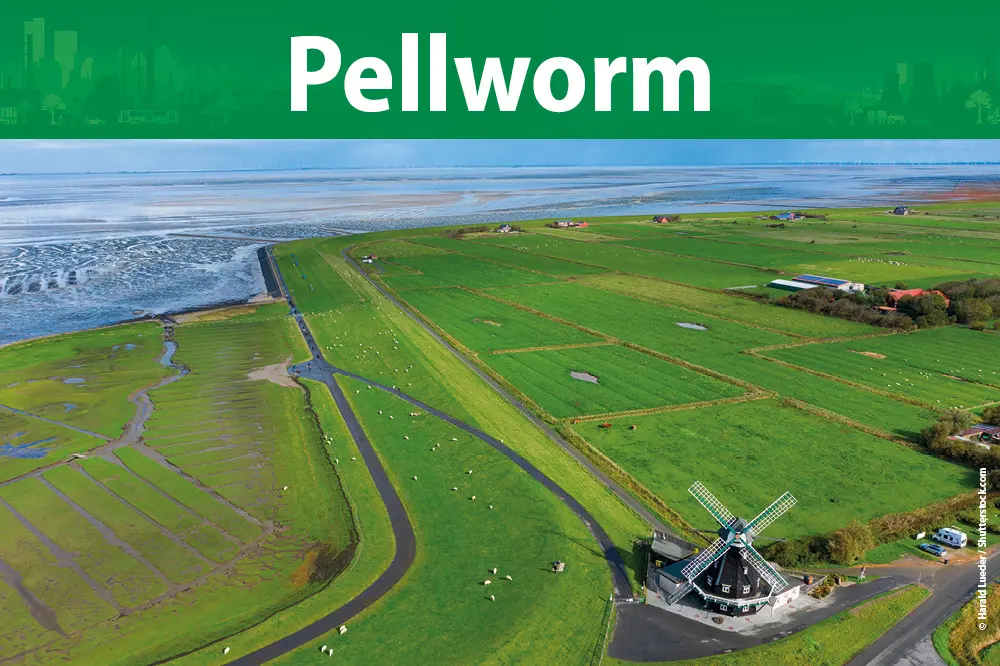
Pellworm, an island directly under threat from rising sea levels, shows what can and must be done when communities take climate change, carbon neutrality and sustainability seriously and address these issues in all areas of life if possible.
The Nordfriesland island of Pellworm lies below sea level. Only a dyke prevents it from sinking. The expected rise in sea levels due to climate change threatens the livelihoods of the island's population of around 1150. Pellworm is therefore going to make its energy supply more sustainable and climate-neutral, setting an example and putting the future of its services of general interest into its own hands.
On Pellworm, wind and photovoltaic (PV) energy have been used for decades, making its electricity generation more than 100% renewable. Moreover, a biogas plant supplies a swimming pool, an official building, a spa centre and a wellness clinic with carbon-neutral district heating. As the biogas plant can only be operated economically for a few more years through Germany's Renewable Energy Sources Act (EEG), the municipality is planning to expand heat supply through solar thermal energy and the use of surplus electricity from local wind turbines.
A municipal company, Inselwerken Pellworm, is helping to reorganise the heat supply. Pellworm is submitting a request for funding for this project to the German Federal Ministry for the Environment, Nature Conservation and Nuclear Safety (BMU) under its municipal climate action model projects programme. The following goals are being pursued: participation, public involvement, optimal use of regional renewable resources, and cooperation with Pellworm's energy suppliers (wind, solar energy and biogas) and regional players.
For Pellworm, the climate-friendly transformation of its energy supply is essential for its survival: you can only ask others to do what you are prepared to do yourself.
ENVE works in fields related to the European Green Deal, which include the environment biodiversity, circular economy, zero pollution, climate change, energy, and space policies.

