Jačanje suradnje s Europskom investicijskom bankom, regijama i gradovima 2. srpnja raspravljalo je o stambenoj politici EU-a s predsjednikom Calvinom, zastupnicima u Europskom parlamentu i udrugama…
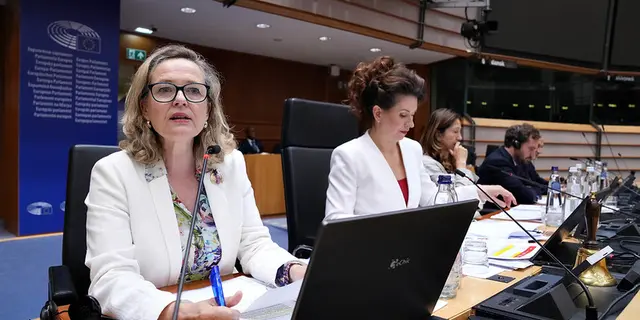

Engaging young people in political processes, closing the gap between generations, and addressing the concerns of young people, such as secure housing and employment, is essential to motivate the young European generation to vote in the upcoming European elections in June 2024. These were the main messages of a debate which took place during the plenary session of the European Committee of the Regions (CoR) on 1 February. The debate was joined by the presidents of the youth wings of the European political parties.
In less than six months, millions of citizens across regions and cities in the European Union will be called on to vote in the 2024 European elections. Ensuring a high level of voting participation will be crucial in shaping the future of the European Union. Given that the 2019 voting electoral turnout reached an unprecedented 50.6% due to greater youth participation in the election, young people continuously demonstrate their desire for active political participation in the European democratic activities, including by casting their vote. Regions and cities play a vital role in ensuring that EU policies deliver concrete results for EU citizens and especially for the young generation, and in strengthening the EU's democratic legitimacy.
While young people are increasingly becoming politically active by volunteering in associations and political groups, demonstrating, and expressing their political opinions via the digital and social media, they still feel left behind by the EU and its decision-makers in terms of a fair representation of their generation, but also in terms of access to affordable housing and employment opportunities and addressing the climate crisis, young leaders said in the debate. Representatives of the youth wings of European political parties further underlined that there is a lack of political interest amongst citizens and that it is crucial to make voting a habit and to enable young people to hold a mandate in the European Parliament at a younger age. With ongoing protests by farmers in Brussels and Europe, speakers stressed that especially in rural areas there is a lack of economic opportunities and that a balance between affordable and sustainable agriculture is needed in order to attract young professionals and families to those regions.
Local leaders highlighted during the debate that greater youth engagement is vital in order to enhance their participation in democratic processes. The CoR is committed to engaging young people in the political processes through its Young Elected Politicians Programme (YEPs), enabling young representatives to become the champions of the European project by bringing diverse views from Europe's regions and cities to the decision-making table. During the Conference on the Future of Europe in 2022 and the European Year of Youth, CoR YEPs played a leading role in putting forward proposals to tackle youth unemployment and to improve young people's participation in democratic life.
Young leaders further stressed that lowering the voting age is one way to increase youth participation in elections as they know best the immediate and longer-term challenges that their generation face. Other instruments include introducing youth quotas, providing for online or postal voting, lowering the age to stand as candidate, and promoting civic education in school curricula. They further argued that a higher eligibility age to stand as a candidate may be a key impediment to young people's participation. Some young people will also be voting for the first time in these elections. When including them in democratic processes and politics in general, they will have to be assured that politicians are listening to them and their concerns.
Participants of the debate included: Lídia Pereira (PT/EPP), President of the Youth of the European People's Party (YEPP); Enric López Jurado (ES/PES), President of the Young European Socialists (YES); Alexandre Servais (BE/Renew); member of the Board of Directors of the European Liberal Youth (LYMEC); Alice Bernard-Montini (FR/Renew), Secretary-General of the Young Democrats for Europe (YDE); Maicol Busilacchi (IT/ECR), European Young Conservatives (EYC); Valentina Servera Clavell (ES/EA), President of the European Free Alliance Youth (EFAY); and Benedetta Scuderi (IT/Greens), co-Spokesperson of the Federation of Young European Greens (FYEG).
In 2024, four Member States (Belgium, Germany, Malta and Austria) will allow their citizens to vote from the age of 16, and in Greece the voting age is 17.
More information:
The CoR and the European Youth Forum, the voice of Youth in Europe, adopted the European Charter on Youth and Democracy at the CoR plenary session on 1 December 2022. The Charter includes 49 recommendations relating to the democratic participation of young people at three levels of governance: the local and regional; the national; and the European level, focusing on education, cooperation, and information; youth empowerment, leadership, and democratic participation; the role of new technologies and digitalisation; and youth mainstreaming of policies and political representation.
In a few weeks' time, the CoR, together with the Walloon Region, will host the 10th European Summit of Regions and Cities, which will take place in Mons, on 18-19 March 2024. Thousands of mayors, councillors, regional ministers and high-level politicians will meet to discuss concrete and innovative local solutions to global challenges facing people and territories. Two dedicated sessions are planned on the European elections and on youth-friendly cities.
The CoR actively involves young people in its work through the Young Elected Politicians programme (YEPs), a network of politicians who are no older than 40 and hold a mandate at regional or local level in the EU. YEPs have the opportunity to get in contact with other young politicians through the YEP Community, to attend training sessions on EU topics, and to participate in activities organised by the CoR, including plenary sessions and commissions meetings, meetings with rapporteurs, events and seminars, and communication activities.
Ahead of the 2024 European elections, the European Parliament has set up the together.eu platform. The idea is to bring together as many people as possible, enabling them to share ideas, promote debates and events. The Parliament's campaign towards the 2024 elections will develop around two key messages: 'delivery' and 'democracy'.
The European Committee of the Regions and its locally and regionally elected representatives are working together with the European Parliament to raise awareness about why the elections matter and to further encourage EU citizens to vote. For them and for every citizen, we have put together a handful of official sources that may be useful in promoting the elections. More information on the CoR's initiatives and how to get involved can be found here.
Rewatch the debate here.
Contact:
Theresa Sostmann
Tel: +32 475999415
Theresa.Sostmann@cor.europa.eu
Jačanje suradnje s Europskom investicijskom bankom, regijama i gradovima 2. srpnja raspravljalo je o stambenoj politici EU-a s predsjednikom Calvinom, zastupnicima u Europskom parlamentu i udrugama…
Europski odbor regija (OR) izrazio je protivljenje planovima Europske komisije za spajanje Europskog socijalnog fonda (ESF) s drugim instrumentima EU-a u okviru jedinstvenih nacionalnih planova,…
zadržavanje predvidljive potpore kohezijske politike za sve regije, a ne samo za slabije razvijene; odbijanje nacionalnih planova ulaganja kada regije nisu uključene u njihovu pripremu; te obvezno…
