Prema zajedničkom savjetovanju OECD-a i Europskog odbora regija (OR) regije i gradovi diljem Europe očekuju da će u sljedećih nekoliko godina povećati javna ulaganja u prometnu infrastrukturu,…


Future state-aid rules must prioritise inclusive the green and digital transition.
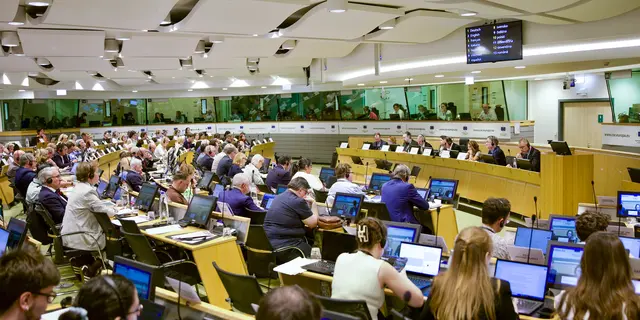
A prolonged relaxation of state-aid rules risks widening the disparities between and within Europe's member states, distorting the functioning of the Single Market, regional and local leaders argue in an opinion on the European Commission’s 2022 Annual Report on Competition Policy. The opinion, which was adopted by unanimity on 29 November during a plenary session of the European Committee of the Regions (CoR), calls for measures to mitigate market distortions prior to a return to normal state-aid rules. They also want future state-aid to help struggling regions cope with the green and digital transition.
Flexibility in state-aid rules has been key to mitigating the consequences of the COVID-19 pandemic, the war in Ukraine preventing many local and regional economies from collapsing, the CoR concludes. Regions and cities underlined that the temporary framework has not only sustained Europe's productive fabric, but has also been used by Member States to deal with domestic inequalities between regions.
In their recommendations, local and regional leaders underscore that public investment is needed to create opportunities to benefit from the green and digital transition, such as the rollout of broadband in remote regions and the development of a hydrogen industry. However, regions and cities fear that large-scale public investments could lead to a fragmentation of the Single Market, and that any negative effects on cohesion would be most felt in fragile regions. For example, France and Germany accounted for almost 80% of investments under the Temporary Crisis Framework, a disproportion that risks damaging cohesion in favour of wealthier Member States.
Prolonging competition rules will therefore lead to rural areas or areas experiencing industrial transition missing out on public support, the CoR warns. Measures to mitigate market distortions in the short and medium-long term should therefore be taken before the return to normal competition rules.
Competition and cohesion policy must complement each other to promote an inclusive economic growth
Local and regional leaders accept that state aid that supports economic development is essential to enhance regional growth to counter regional disparities within the EU, but also argue that fair competition needs to be assured across all territories in the EU. In their recommendations, they therefore call on the Commission to concentrate on reinforcing economic, social and territorial cohesion policies, so that competition and cohesion policy complement each other and promote an inclusive and balanced economic growth in European regions and cities.
Fair competition is essential to promote innovation and an efficient allocation of resources
CoR members highlighted that fair competition is crucial for fostering innovation and ensuring the provision of high-quality products and services at affordable prices, particularly at the local and regional level. Well-designed and effectively enforced regional aid rules are essential, particularly for regions facing the energy crisis and the green and digital transition challenges. The European Commission should, the CoR argues, strengthen cross-cutting provisions for island, remote, and outermost regions in state-aid legislation, considering their unique needs, especially those disconnected from the European mainland.
Quote
Rapporteur Antonio Mazzeo (IT/PES), President of the Regional Council of Tuscany, said: “Offering companies competitive and dynamic markets, saving a company in crisis, and protecting consumers are all issues that depend on EU competition policies. These are important issues for people’s lives and for the future of Europe. I am very proud of this opinion because we call for reforms that will allow us to have an adequate level of competition in the markets to make them fair and dynamic, but also an increase in investment to overcome the challenge of the twin digital and green transition. Better competition policies make the lives of us - European citizens – better and bring Europe closer to cities and regions.”
More information:
On 4 April 2023, the European Commission released the Annual Report on Competition Policy for 2022, which marks the 52nd edition of the Competition Policy Report. It provides detailed information on the most important policy and legislative initiatives, and on decisions adopted by the European Commission in application of EU competition law during the previous year.
After the COVID-19 pandemic broke out in 2020, the Commission put into place the State Aid Temporary Crisis Framework to enable Member States to use the full flexibility foreseen under state-aid rules to support the economy. In 2022, this framework has been phased out as the EU is now largely in the aftermath of the pandemic. In March 2022, after Russia’s full-scale invasion of Ukraine, the Commission adopted the State Aid Temporary Crisis Framework to enable Member States to support companies affected by the consequence of the war. On 20 November, the Commission has adopted an amendment to prolong by six months a limited number of sections of the framework that respond to Russia's invasion of Ukraine and the increase in energy prices.
Next steps
The European Parliament is currently drafting an opinion on the Annual Report, which is scheduled to be adopted during the ECON committee meeting on 4 December and during the plenary session on 15 January.
Contact:
Theresa Sostmann
Tel. +32 475999415
Prema zajedničkom savjetovanju OECD-a i Europskog odbora regija (OR) regije i gradovi diljem Europe očekuju da će u sljedećih nekoliko godina povećati javna ulaganja u prometnu infrastrukturu,…
Regije su ključne za uspjeh industrijske preobrazbe i jačanje obrambenih sposobnosti Europe. To je bila glavna poruka koju su istaknuli regionalni i lokalni čelnici jer su dali prvo zeleno svjetlo…
Tijekom njihova događanja 9. listopada: Ubrzavanje održivog razvoja, OR i Zajednički istraživački centar EU-a objavili su poziv za prijavu projekta 2030CATALYSTS, projekta za lokalizaciju ciljeva…
