Regionų vadovai ir Europos Parlamento bendrapranešėjis ES daugiametės finansinės programos klausimais išreiškė tvirtą nepritarimą naujausiam pasiūlymui dėl derybų dėl būsimo ES biudžeto, vadinamajai…

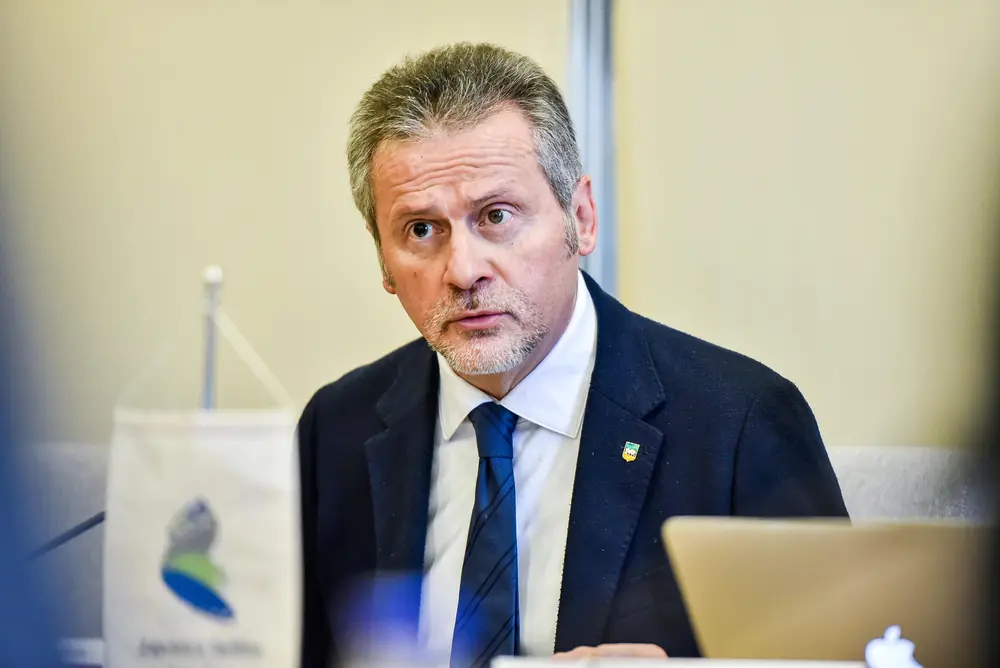
Transport reforms and capacity-building support in spotlight in talks with Montenegrin councillors and mayors.
Members of the European Committee of the Regions (CoR) on 15 December travelled to Montenegro to discuss the implications of EU-related reforms on municipalities, particularly on the transport sector, and to listen to feedback on capacity-building support for local administrations.
The meeting of the CoR's Joint Consultative Committee (JCC) with Montenegro came two days after EU and Western Balkans leaders met in Brussels for a summit, at which the EU reaffirmed the EU membership perspectives of the Western Balkans as well as the need for "irreversible" reforms. Montenegro is seen as a frontrunner on the EU integration path, though the European Commission's latest annual progress report, published in November, concluded that while the country had done "important work", the pace has recently been "slower than anticipated".
Roberto Ciambetti (IT/ECR), president of the Regional Council of Veneto and co-chair of the JCC, reiterated the CoR's support for Montenegro's integration into the EU, adding that: "Montenegro is in a crucial phase where fostering a national consensus on necessary reforms becomes imperative to invigorate the stalled EU negotiations process. Recent political developments have the potential to be decisive. We welcome that the European Council on 14 December reaffirmed its full and unequivocal commitment to EU membership perspective of the Western Balkans."
Montenegro has experienced a number of significant political changes in 2023, including the election of a new president and the formation of a new national government. The government has expressed its intention to accelerate the reform process and public support for membership remains high, at over 70%.
The meeting, which was held in Kolašin, in the north of the country, was co-chaired by Dušan Raičević, mayor of Bar, who expressed hope that the central government will continue cooperating with the local government in the process of EU integration. Vladimir Martinović, the minister for minister for tourism, environmental protection and sustainable development, was one of the speakers in a debate on Montenegro's EU integration. Minister Martinović was mayor of Kolašin until recently.
The meeting also reviewed the impact of the European Commission's recent decision to step up its support to civil servants at sub-national levels in the Western Balkans, enabling them to participate in the Technical Assistance and Information Exchange (TAIEX) programme. Darko Mrvaljević from the Union of Municipalities of Montenegro said that early feedback about the tailor-made support already provided by the EU to Montenegro's municipalities was very positive.
Transport – a policy area identified at the last JCC meeting in May 2023 as one of the principal sectors where Montenegro still needs to align itself with the EU – was the subject of a third thematic debate, with discussion about road safety, a critical area for the EU, and about how to improve mobility and connectivity both in and around relatively big cities –such as the capital, Podgorica – and in sparsely populated areas, such as municipality of Kolašin.
Expert contributors were: Radoje Vujadinović from the University of Montenegro, Podgorica; Luka Novačko of the University of Zagreb, Croatia; Tinatin Akhveldiani of the Brussels-based Centre for European Policy Studies (CEPS); and Ivan Čupić, an independent consultant.
Regionų vadovai ir Europos Parlamento bendrapranešėjis ES daugiametės finansinės programos klausimais išreiškė tvirtą nepritarimą naujausiam pasiūlymui dėl derybų dėl būsimo ES biudžeto, vadinamajai…
Gegužės 27 d. Bilbao pirmaujantys Europos automobilių pramonės regionai pasirašė bendrą politinę poziciją dėl dviejų dokumentų, kurie lems artimiausią šio sektoriaus ateitį: Pramonės spartinimo aktas…
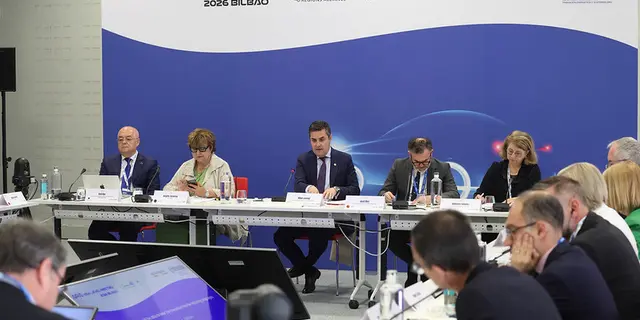
Regionai ir miestai paragino kitoje Europos infrastruktūros tinklų priemonėje (2028–2034 m.) suteikti svarbesnį vaidmenį siekiant užtikrinti, kad investicijos į infrastruktūrą būtų veiksmingai…
