The ECBP secretariat
cross-border@cor.europa.eu
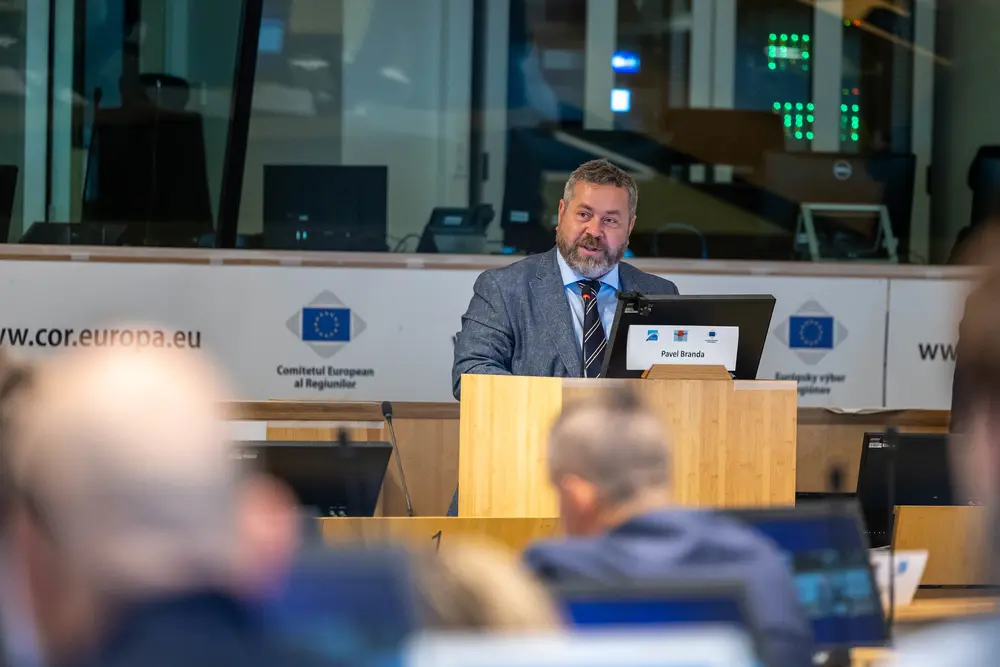
The European Committee of the Regions (CoR) hosted the 2026 annual meeting of the European Cross-Border Platform (ECBP), bringing together over 160 participants and a wide range of representatives of EU institutions and stakeholders from across the European Union and beyond. As the ECBP’s flagship event, co-organised with CESCI, the two-day meeting on 10 and 11 June provided a key platform to debate the future of cross-border cooperation, share practical experiences, and shape policy solutions for border regions. The Platform is chaired by the CoR member Pavel Branda (CZ/ECR), Deputy Mayor of Rádlo.
A central focus of the meeting was the ongoing negotiations on the post‑2027 EU budget and Cohesion Policy instruments, including Interreg, the ERDF and performance-based approaches.
The discussion, which involved also the European Parliament’s co-rapporteurs on the file and representatives of the European Commission, reflected key priorities also highlighted in CoR opinions, notably: the need for greater legal clarity in future programmes; tailor-made solutions for performance-based mechanisms in Interreg to reflect the specific nature of cross-border cooperation; stronger recognition of the role of European Groupings of Territorial Cooperation (EGTCs); and continued support for small-scale cross-border projects.
In his video-message to participants, the Executive Vice-President of the European Commission Raffaele Fitto, underlined that “cross-border cooperation remains a strategic priority for the European Union”, and advocated to strengthen the EGTC. Created for the first time 20 years ago, EGTCs are the first European public authority cooperation structures with legal personality established under EU law.
Overcoming obstacles to cross-border cooperation
As a cornerstone of European Territorial Cooperation, cross-border cooperation plays a crucial role in strengthening the Single Market and fostering European integration. However, despite significant progress, many obstacles remain for the 145 million Europeans living in border regions.
Throughout the debates, participants highlighted the everyday challenges still faced by citizens, businesses and administrations in border regions--such as accessing healthcare and employment opportunities, dealing with administrative and legal barriers in cross-border commuting, and regular border controls in several countries.
Unlocking the potential of EGTCs
Participants pointed to a persistent lack of understanding of EGTCs’ role at national, regional and EU levels, which can limit their access to funding and the effective use of their competences. Strengthening awareness and recognition of EGTCs was identified as essential to fully harness their capacity to deliver cross-border solutions and implement territorial strategies.
To demonstrate the added value of these instruments and promote them as examples for other groupings or similar structures, the event included the ceremony for the 2026 EGTC Award ‘Building Europe across Borders’, recognising innovative and impactful cross-border projects. The award was assigned to the Italo-Austrian EGTC ‘Euregio senza confini’ for improving cross-border emergency calls service. More information.
Quote
Pavel Branda (CZ/ECR), Deputy Mayor of Rádlo, Chair of the European cross-border platform, and CoR rapporteur on the opinion ‘Solving obstacles to the cooperation of emergency services in the EU's border regions’, said: “This year, it has been 20 years since the EGTC regulation came into force and the annual meeting of the European Cross-Border Platform is a living testimony of our work and how far we've come. Cross-border cooperation, as part of European Territorial Cooperation, provides not only an added value to the border regions themselves, but to the EU as a whole: it gives citizens, businesses and public authorities a direct experience of being European.”
More information
·Re-watch the two-day meeting. Photos of the event.
·During the annual meeting, the ECBP also launched a new working group aimed at developing a proposal for a cross-border workers’ status, starting with EGTC staff. This initiative responds to long-standing barriers to labour mobility in border regions. A call for participation will be launched shortly.
·Established in 2024 as the successor to the EGTC Platform, the ECBP aims to bring together all actors involved in cross-border cooperation, from border regions and cities to European Groupings of Territorial Cooperation (EGTCs) and Euroregions. The annual meeting remains its central opportunity to assess challenges faced by border regions and to explore their full potential for European integration.
·The next ECBP annual meeting will take place in the second half of 2027.
cross-border@cor.europa.eu
Czechia
Member
Member of the Local Assembly of the Municipality of Rádlo


The EGTC ‘Euregio Senza Confini’ is the winner of the 2026 edition of the 'Building Europe across borders’ award, assigned every two years by the European Committee of the Regions to actions…
