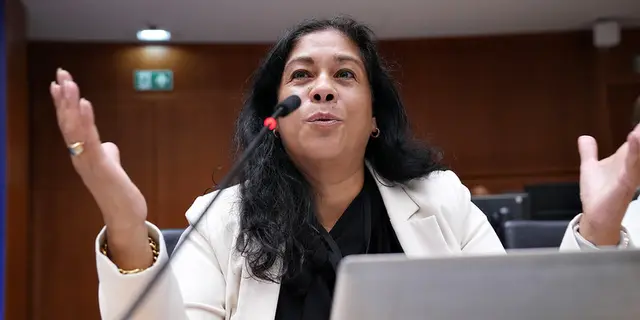
Ângela Machado
angela.machado@cor.europa.eu

Local and regional leaders have called for young people and future generations to be better protected from the consequences of political choices that prioritise short-term interests over long-term sustainability, and for more attention to be paid to ensuring that actions today do not become a burden tomorrow. This is the key message delivered by cities and regions in an opinion adopted on 2 July at the plenary session of the European Committee of the regions (CoR).
In the opinion led by Tine Radinja (SI/Greens), Mayor of Škofja Loka, local and regional leaders urge the European Union to place intergenerational fairness (IGF) and a youth perspective at the heart of its policymaking. They called for long-term, future-proof policies on public finances, environmental protection, and social care for current and future generations to thrive, stressing that responses to today’s social and environmental challenges must not compromise the rights, well-being and opportunities of future generations.
Cities and regions stated that building a fair and sustainable future for all generations is a shared responsibility that must include all levels of governance. They highlighted the key role of local and regional authorities (LRAs) in creating inclusive, sustainable communities by involving children and young people in local decision-making. In this regard, the CoR recalled its recommendation in the opinion on "The Future of Youth Policy in the EU", inviting Member States to seriously consider lowering the voting age to 16 for local and regional elections. Members called for an active contribution to the upcoming European strategy on intergenerational fairness, urged the adoption of an Interinstitutional Declaration on IGF, and advocated for a legal framework to safeguard the rights of future generations.
The CoR stressed that tackling the structural socio-economic inequalities that disproportionately affect marginalised communities, including women, migrants, and people living in poverty, is vital in order to achieve a sustainable IGF and end long-term intergenerational poverty cycles. This includes the design of inclusive youth policies tailored to rural realities and peripheral areas, targeted actions for young people not in employment, education or training (NEET), and better access to social protection for those in vulnerable situations.
Members stressed that economically sound and sustainable policies are crucial to achieving IGF, and called for a reorientation of Europe’s competitiveness priorities to ensure long-term prosperity. Key measures include an EU’s economic model that reflects intergenerational fairness, the use of alternative indicators to GDP, like the Social Progress Index, to measure economic sustainability, pension reform to ensure a fair intergenerational balance, and a sustainable and equitable tax system that takes into account its impact on youth.
Finally, local and regional leaders advocated for the systematic use of foresight tools at all levels of governance to inform policymaking and strategic planning, ensuring that the needs of future generations are systematically considered in policy design. They also supported the introduction of a 'youth policy test', to assess how measures affect young people today and in the future.
Quote:
Rapporteur Tine Radinja (SI/Greens), Mayor of the Municipality of Škofja Loka: "What kind of legacy do we leave if we fail to account for the voices of the future? Intergenerational fairness is our promise to tomorrow — a bold commitment to empower youth, safeguard the rights of future generations, and build a just, sustainable world where all can thrive, not merely survive."
Background:
Video and photos from the session.
Contact
Name: Ângela Machado
Tel: +32 475 41 31 58
angela.machado@cor.europa.eu
Slovenia
Member
Mayor of the Municipality of Škofja Loka

Regions and cities urge EU to turn political commitments into action against racism and discrimination to promote equal opportunities for all.
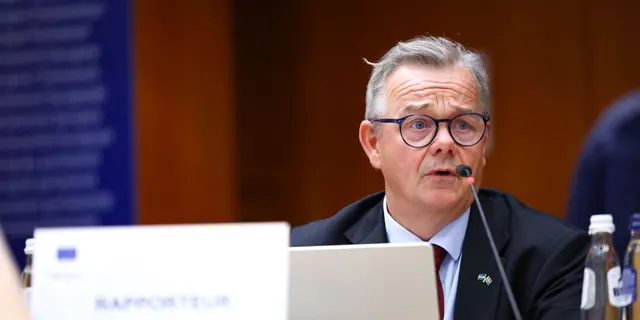
The European Committee of the Regions (CoR) joins forces with the European Commission (EC) with a renewed Joint Action Plan (JAP) for a stronger social Europe, signed on 13 October. In a plenary…
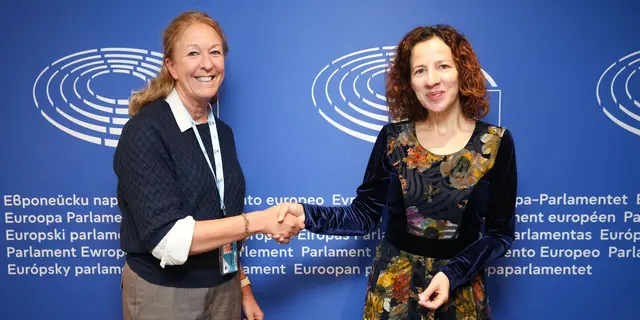
Local and regional leaders urge for protection against discrimination, harmful conversion practices and hate speech