Ângela Machado
angela.machado@cor.europa.eu

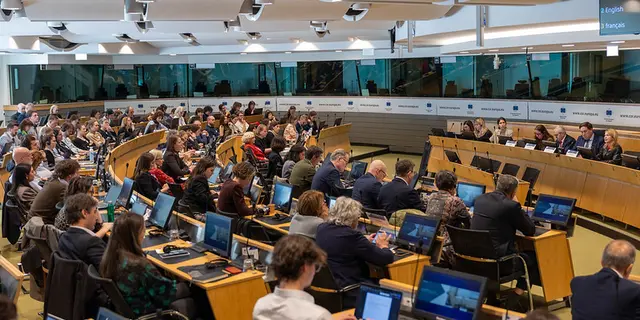
Fighting poverty, reducing the skills gap, and advancing women’s rights were the main topics discussed by local and regional leaders at the meeting of the Commission for Social Policy, Education, Employment, Research and Culture (SEDEC), held in Sliema, Malta on 17 June.
An EU Anti-Poverty Strategy
In 2023, 94.6 million people were at risk of poverty in the EU. In response, SEDEC members adopted an opinion calling for an ambitious EU Anti-Poverty Strategy by the European Commission in 2026, aligned with the UN 2030 Sustainable Development Goals and aiming to surpass the European Pillar of Social Rights target of reducing poverty by 15 million people. They stressed that poverty is a violation of human rights and urged a coordinated response across all levels of governance. Key demands included a “poverty check” in all EU policy impact assessments, an EU Anti-Poverty Coordinator, tackling homelessness, social housing, and fair wages. Members stressed that local and regional authorities are on the front lines of fighting poverty and must be given adequate resources to respond effectively.
Rapporteur Yonnec Polet (BE/PES), Member of Berchem-Sainte-Agathe Municipal Council, said: "Poverty is not a personal failure — it’s a collective political challenge. The EU must match its ambition with action by empowering local authorities, strengthening social protection, and anchoring dignity in every policy. The new EU Anti-Poverty Strategy must be bold, well-funded, rights-based, and deliver concrete solutions for families on income, quality work, housing and access to social services."
Union of Skills Strategy
In a draft opinion adopted at the meeting, SEDEC members stressed that investing in skills is crucial to Europe’s resilience, competitiveness and territorial cohesion, especially for rural, remote and less-developed regions. Local and regional authorities called for place-based strategies that align skills development with local economic needs to better address youth emigration, infrastructure gap, brain drain and teacher shortages. They also urged for a modern education system that promotes digital skills and lifelong learning, facilitating the upskilling and reskilling. Better EU funding and stronger technical support for LRAs are crucial to promote regional skills and to prepare Europe’s workforce for the future challenges of the labour market, members stated.
Rapporteur Emil Boc (RO/EPP), Mayor of Cluj-Napoca Municipality, Cluj County, said: "The Union of Skills is not just a political initiative launched by the European Commission, it’s a strategic vision and a more thoughtful Europe-wide approach. This initiative isn’t just about collecting ideas — it’s about preparing our societies for the future of work, fostering mutual understanding between regions, and transforming what were once challenges into sources of connection and diversity.”
Strengthening women’s rights in the EU: A local and regional perspective
Regions and cities welcomed the EU Roadmap for Women’s Rights and acknowledged progress on gender equality. However, in a draft opinion adopted at the meeting they highlighted the lack of recognition of their key role in implementing these policies. They called to be recognised as strategic partners in the upcoming EU Gender Equality Strategy and demanded adequate funding, institutional support, and a reformed EU budget that systematically mainstreams gender equality. Members urged urgent action to tackle gender-based violence, to address gaps in women’s healthcare, and promote equal political and economic participation. They also urged for accountability mechanisms such as independent gender-equality observatories, regular gender audits, and stronger cooperation between all levels of governance and civil society.
Rapporteur Carina Ohlsson (SE/PES), Member of Municipal Council, Lidköping Municipalit, said: "Gender equality starts locally. If the EU wants to close the gender gap, cities and regions must be recognised not just as implementers, but as strategic partners — with the resources, tools, and political space to lead. From services to leadership, equality must be embedded in every layer of governance."
Also in the meeting:
The Joint Research Centre (JRC) presented the initiative “Innovation for Place-Based Transformation”, a preparatory action launched in October 2024 and running until 2026, aimed at supporting regional and local innovation through data and evidence to inform the next Framework Programme and European Innovation Act. The initiative has three main pillars: awareness-raising, capacity building and exploratory journeys to test transformative innovation policies on key societal challenges, with around 200 territories participating. Members emphasised that innovation should not focus solely on economic growth, but must also promote social inclusion and territorial justice.
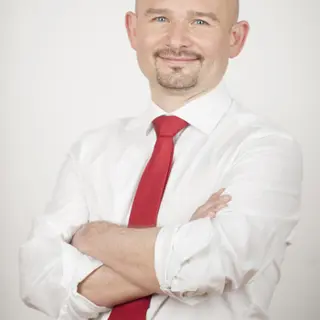
SEDEC members also appointed Jozef Viskupič (SK/Renew Europe), Chairman of the Trnava self-governing Region, as rapporteur for the opinion on EU Start-up and Scale-up Strategy.
Background
Video and photos from the meeting.
angela.machado@cor.europa.eu
Romania

Member
Mayor of Cluj-Napoca Municipality, Cluj County


Sweden

Member
Member of Municipal Council, Lidköping Municipality



Belgium

Alternate
Member of Berchem-Sainte-Agathe Municipal Council
At a conference in Slovakia, SEDEC members discussed how to bridge the innovation gap between metropolitan, rural and cross-border regions.

The European Committee of the Regions (CoR) and the European Commission signed a renewed Joint Action Plan during the meeting of the CoR’s Social Policy, Education, Employment, Research and Culture …

To mark the 100 years of Bauhaus movement in Dessau, the European Committee of the Regions (CoR), together with the European Commission’s Joint Research Centre and the Region of Saxony-Anhalt, in…