Enlargement countries
The CIVEX Commission of the CoR is responsible for the institutional position on EU enlargement policy. To promote dialogue and cooperation between local and regional authorities in the EU and the enlargement countries, and to support them on their path towards the EU, two kinds of institutional platforms have been created:
- the Joint Consultative Committees (JCCs)
- the Working Groups (WGs)
On this page
Joint Consultative Committees (JCCs)
Mission statement
A JCC provides a consistent and stable form of cooperation with the local and regional authorities of a country seeking to join the EU. Among others JCC activities contribute to:
- preparing local and regional representatives for EU membership
- assessing the impact of EU policies from a local and regional perspective
- a direct two-way information flow on political developments in the relevant countries and in the EU
- monitoring negotiations, focusing on areas of particular relevance to local and regional authorities
How is a JCC established?
- At request from the government of the country concerned
- On the basis of the Stabilization and Association Agreement (SAA)
- In an official declaration of the Stabilization and Association Council between the Council of the European Union and the candidate country
Who takes part in the JCCs?
- Half of the representatives in a JCC are local or regional representatives from the country concerned, and half are members of the European Committee of the Regions
- A JCC is co-chaired by one representative from the country concerned and one member of the European Committee of the Regions
How do JCCs work?
- Decisions are taken jointly
- Each JCC adopts its own Rules of Procedure
- JCCs meet twice a year; once in Brussels in connection with Enlargement Day, and once in the partner country.
Working Groups (WGs)
The activities of the Working Groups contribute to:
- fostering cooperation with local and regional authorities in the country or countries it covers
- assessing the impact of EU policies from a local and regional perspective
- a direct two-way information flow on political developments in the relevant countries and in the EU
- exchanging good practices in specific fields of cooperation
How is a WG established?
- Via a CoR Bureau decision, in accordance with the CoR Rules of Procedure
Who takes part in the WGs?
- Members of the CoR
- Local and regional representatives from the partner countries, depending on the topics discussed and the location of the meeting
WGs meet twice a year, once in Brussels in connection with Enlargement Day and once in a partner country
Latest news
-
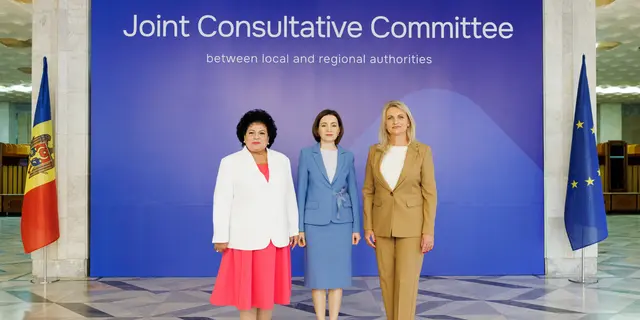
In Chișinău, the CoR also launches its new pilot Eastern Partnership Academy for local and regional civil servants.
-
A new free online programme for local and regional civil servants across the Eastern Partnership countries.

-
Need for closer cooperation with local authorities to counter disinformation stressed at meeting of local leaders from EU and enlargement countries.